
Unbiased headlines. Facts, not spin.
Every story is an unbiased news briefing written from 110+ sources across the spectrum — sources linked so you can verify it yourself.
 economy
Notable (5/10)
May 18, 2026 at 09:19 AM
economy
Notable (5/10)
May 18, 2026 at 09:19 AM
Commodity Prices Are Surging — But Your Inflation Numbers Don't Show It. Here's Why.
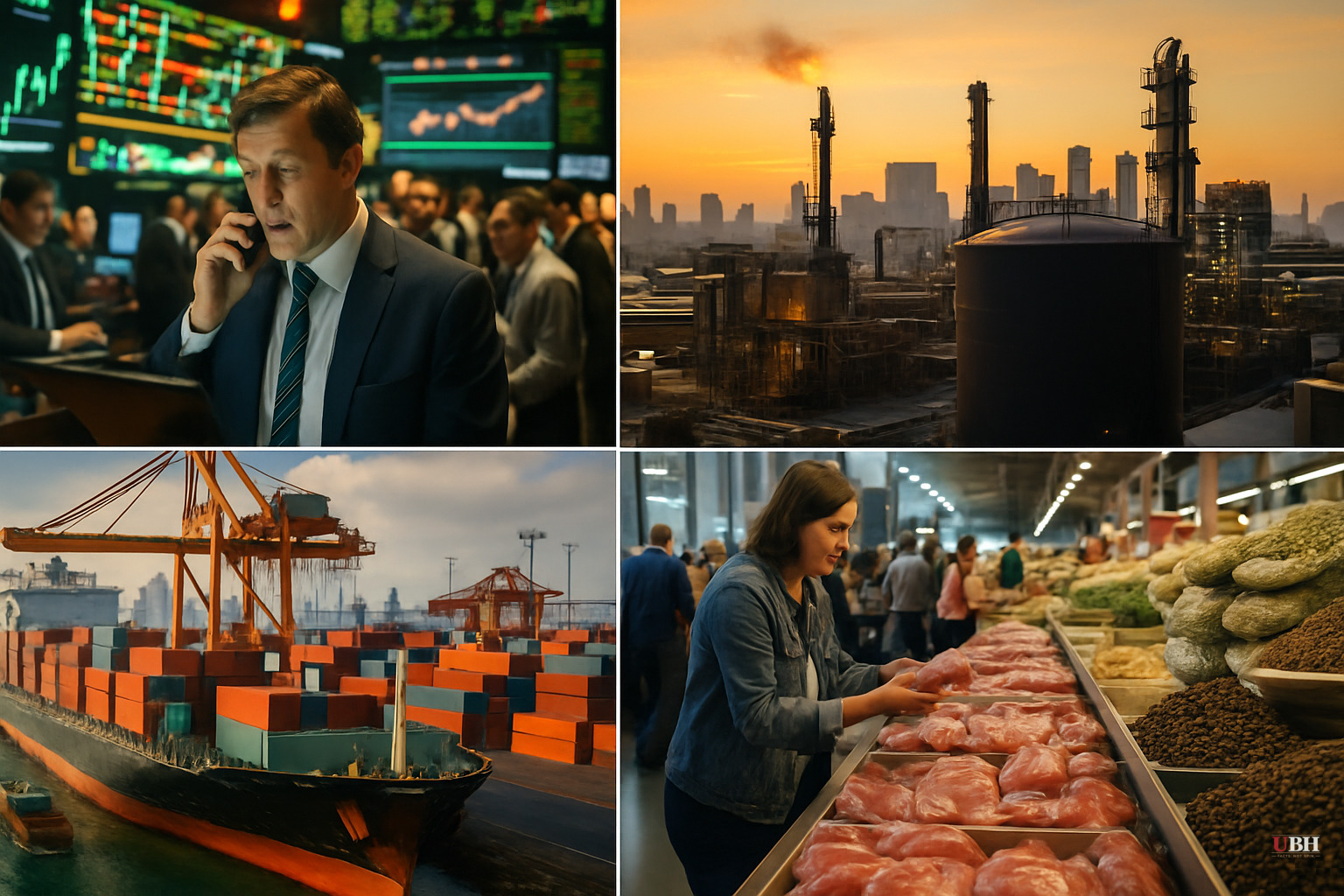
The Numbers Don't Match What You're Feeling at the Pump and the Grocery Store
You're paying more. A lot more. And the government keeps telling you inflation is basically under control.
Both things are true.
According to U.S. Bank's Asset Management Group, the Bloomberg Commodity Index — a broad basket of energy, metals, and agricultural goods — rose 16.7% year-over-year through February 2026 and 27.1% through the end of March 2026. Meanwhile, the official Consumer Price Index clocked in at 2.4% for the 12 months ending February 2026, according to U.S. Bank citing Bureau of Labor Statistics data. The CPI's commodity-specific component rose just 1.3% for the same period.
How does a 27% commodity surge produce a 1.3% CPI reading? The answer lies in methodology.
The CPI Is NOT What You Think It Is
The CPI does not track commodity markets directly. It tracks a curated basket of consumer prices, weighted and calculated in ways that dampen raw commodity swings before they hit the official number.
According to U.S. Bank, commodities make up 36% of the CPI — but the CPI anchors mostly on energy and food, not the broader investable commodity indices that include precious metals, industrial metals, and agricultural products. Gold hit record highs in 2025. Silver too. None of that moves your CPI number directly.
When Bloomberg's commodity index rises 27%, the CPI barely flinches — because they're measuring different things. The index reflects what it costs to buy raw materials. The CPI reflects a smoothed, adjusted, substitution-weighted estimate of consumer costs.
Regular people aren't buying "commodity indices." They're buying beef and gas and electricity. And those prices follow a different trajectory.
Beef, Coffee, and Oil: The Real Hits to Your Wallet
Food price inflation in the CPI rose 3.1% year-over-year through February 2026, according to U.S. Bank, driven specifically by beef and coffee tied to constrained supplies. That's faster than the overall CPI. Families feel food prices immediately — there's no 90-day lag between a beef supply crunch and your grocery bill.
Energy is where the picture shifts. Rob Haworth, Senior Investment Strategist at U.S. Bank, stated directly: "The Iran conflict stopped nearly 20% of global oil supply from leaving the Strait of Hormuz, driving oil prices 50% higher in March." Fifty percent. In one month.
U.S. Bank reports energy prices — which represent just over 6% of CPI — rose modestly through most of 2025 before accelerating recently due to "unseasonably cold weather and the Iran conflict." The CPI energy component had actually fallen 2.9% in 2025 before that reversal.
The 50% oil spike from March has not yet fully registered in your CPI reading. It will.
What the Media Is Getting Wrong
Most financial media frames commodity volatility as an investor story: portfolio diversification, tactical allocation, whether you should hold commodity ETFs.
That misses the bigger picture for the vast majority of Americans not managing investment portfolios.
The core issue is the lag problem. CPI is a backward-looking measure. When oil spikes 50% in March, that doesn't fully register in CPI data for months. By the time official numbers catch up to reality, the pain is already reflected in every gas pump.
Left-leaning outlets have an incentive to emphasize the "inflation is cooling" narrative because high inflation was politically damaging to the Biden years. Right-leaning outlets sometimes overclaim "hidden inflation" without explaining the specific mechanics. Both miss the technical explanation.
The World Bank's research on commodity markets confirms what anyone paying attention already knows: energy commodity prices are uniquely volatile, prone to sharp shock-driven spikes, and heavily influenced by geopolitical disruption. The Iran-Strait of Hormuz situation exemplifies this pattern.
What This Means Going Forward
CPI at 2.4% sounds manageable. A Bloomberg Commodity Index up 27% sounds like an investor concern. Neither framing captures what's actually materializing.
When oil stays 50% higher than it was, gas prices follow. When gas prices rise, trucking costs rise. When trucking costs rise, everything in every store costs more. That transmission takes three to six months to fully show up in consumer prices.
Beef is already expensive and getting worse. Coffee is up. The Iran situation shows no signs of quick resolution.
The 2.4% CPI headline is technically accurate for the period it covers. It is also a number looking backward in a car accelerating forward.
Watch the commodity indices. Watch the Strait of Hormuz. Watch the beef supply chain. Those are your leading indicators. The official number will catch up eventually. Your wallet already knows.
Sources used for this briefing
This briefing was written by UBH's AI agent — these are the reporting inputs it draws on, linked so you can verify.


