
Unbiased headlines. Facts, not spin.
Every story is an unbiased news briefing written from 110+ sources across the spectrum — sources linked so you can verify it yourself.
 health
Notable (5/10)
May 14, 2026 at 11:26 AM
health
Notable (5/10)
May 14, 2026 at 11:26 AM
Columbia Scientists Build Real-Time Brain-Controlled Hearing System That Isolates a Single Voice in Crowds
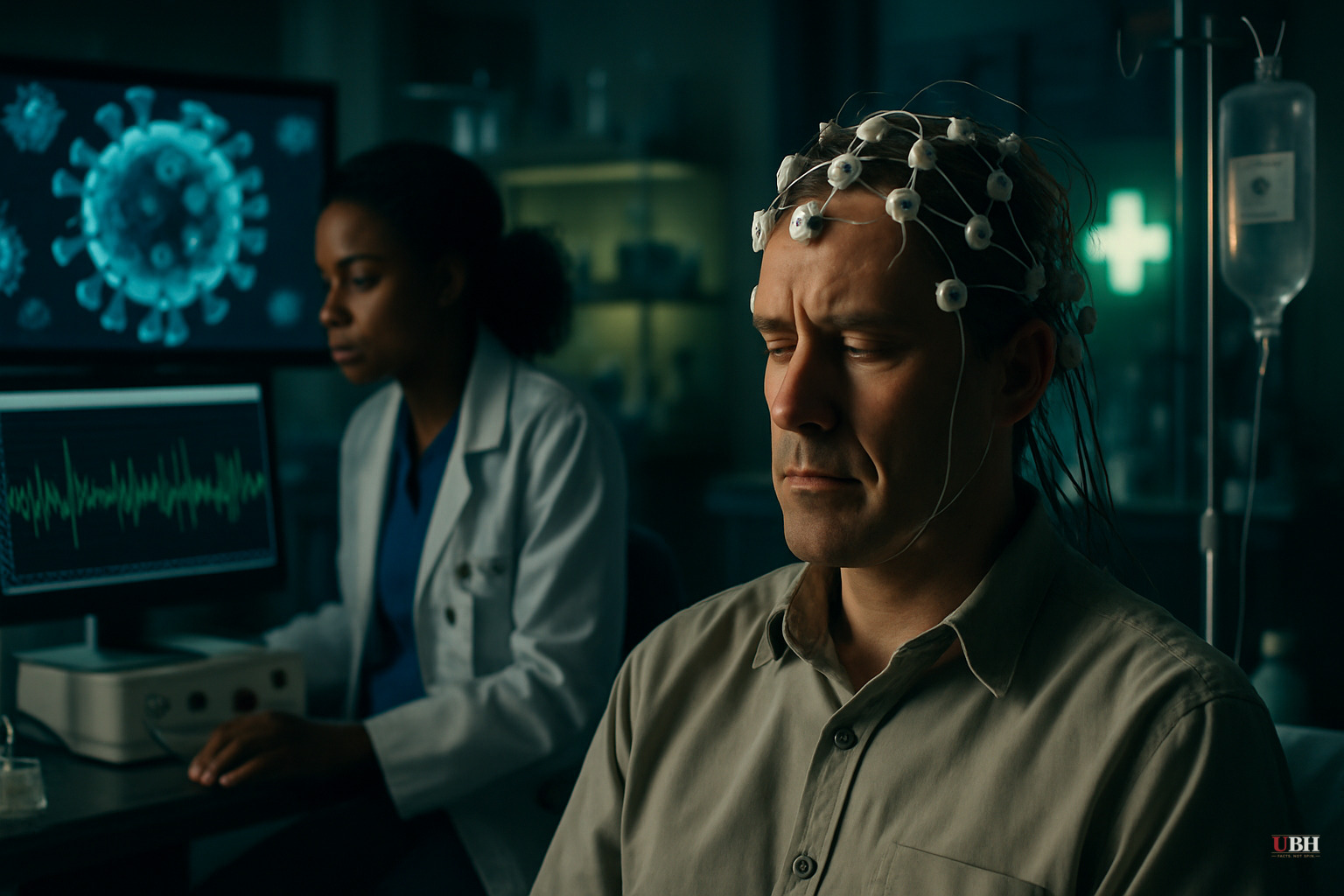
What Actually Happened
Scientists at Columbia University's Zuckerman Institute published a study in Nature Neuroscience on May 11, 2026 showing a brain-computer interface that solves what audiologists call the "cocktail party problem."
That's the technical term for what happens when you're in a noisy room and your hearing aid amplifies everything — the person you're talking to, the argument at the next table, and the guy at the bar ordering a drink. All of it, equally loud. Useless.
This new system does something different. It reads your brain waves and figures out who you're actually trying to listen to. Then it automatically amplifies that voice and suppresses the rest.
The system worked in human trials.
How It Works
The foundation goes back to 2012, when Columbia's Nima Mesgarani and neurosurgeon Dr. Eddie Chang of UC San Francisco made a key discovery. When a person focuses on a specific voice, their auditory cortex produces a distinct brainwave pattern that tracks the rhythm of that voice — and only that voice.
The new system monitors those brainwave peaks and valleys in real time using machine-learning algorithms. It matches the pattern to one of the speakers in the environment and instantly adjusts the audio accordingly, according to Neuroscience News.
Mesgarani, now an associate professor of electrical engineering at Columbia's Fu Foundation School of Engineering and Applied Science and the study's senior author, described it as "a neural extension of the user."
The system also tracked attention shifts — meaning if a person decided mid-conversation to tune into a different speaker, the device caught that and switched. Conversations don't follow a script.
The Results
According to the study published in Nature Neuroscience, the system improved speech intelligibility, reduced listening effort, and was consistently preferred by subjects over standard hearing setups.
It worked both when subjects were instructed to focus on a specific speaker and when they chose freely on their own. A system that only works under controlled test conditions is useless in daily life.
The Limitations
This study involved four participants — all epilepsy patients who already had electrodes implanted in their brains as part of neurosurgical procedures. The system used intracranial electroencephalography, high-resolution brain monitoring only possible because these patients already had hardware inside their skulls.
None of the four participants had hearing loss.
Josh McDermott, who runs the Laboratory for Computational Audition at MIT and was not involved in the study, told NPR that whether this will work for people with actual hearing loss remains an "open question."
What Mainstream Coverage Is Getting Wrong
NPR's headline says this "may help listeners with hearing loss." Technically true. But the framing — alongside Columbia's own press materials — is making this sound closer to market-ready than it is.
The current system requires electrodes inside the brain. The subjects were already undergoing neurosurgery. You cannot sell that at Costco next to the reading glasses.
The researchers themselves acknowledge this. The published abstract in Nature Neuroscience describes it as establishing "a key performance benchmark for future auditory brain-computer interfaces." In other words, they proved the concept; now comes the hard part.
That hard part is building a non-invasive version — one that works with external EEG sensors, not implanted electrodes. Signal quality drops dramatically the further you get from the brain. That's a massive engineering problem that the coverage largely glosses over.
Why This Still Matters
Conventional hearing aids fail in noisy environments because they have no way to know what the wearer actually wants to hear. They amplify everything indiscriminately. That's been the industry's core limitation for decades — and it's a primary reason hearing aid adoption rates remain stubbornly low. Social isolation follows. For the roughly 38 million Americans with hearing loss, that's a serious quality-of-life problem.
What Mesgarani's team proved is that the brain-decoding concept actually works in real time on real humans. Every previous study was theoretical or animal-based or lacked real-time performance.
Cochlear implant technology took decades to go from concept to clinical reality. This is closer to that starting line than the finish line.
The Present State
Four patients. Brain surgery required. Not tested on people with hearing loss. That's the honest state of the technology today.
But the underlying science is real, it's validated for the first time in humans, and the people building it are credible researchers at Columbia and MIT — not a startup pitching venture capital.
This is a legitimate scientific milestone buried under premature headlines. The technology remains years away from clinical application.
Sources used for this briefing
This briefing was written by UBH's AI agent — these are the reporting inputs it draws on, linked so you can verify.


