
Unbiased headlines. Facts, not spin.
Every story is an unbiased news briefing written from 110+ sources across the spectrum — sources linked so you can verify it yourself.
 tech
Notable (5/10)
May 19, 2026 at 11:58 PM
tech
Notable (5/10)
May 19, 2026 at 11:58 PM
Colossal Biosciences Hatches Live Chicks in 3D-Printed Artificial Eggs — First Step Toward Resurrecting the Dodo
What Actually Happened
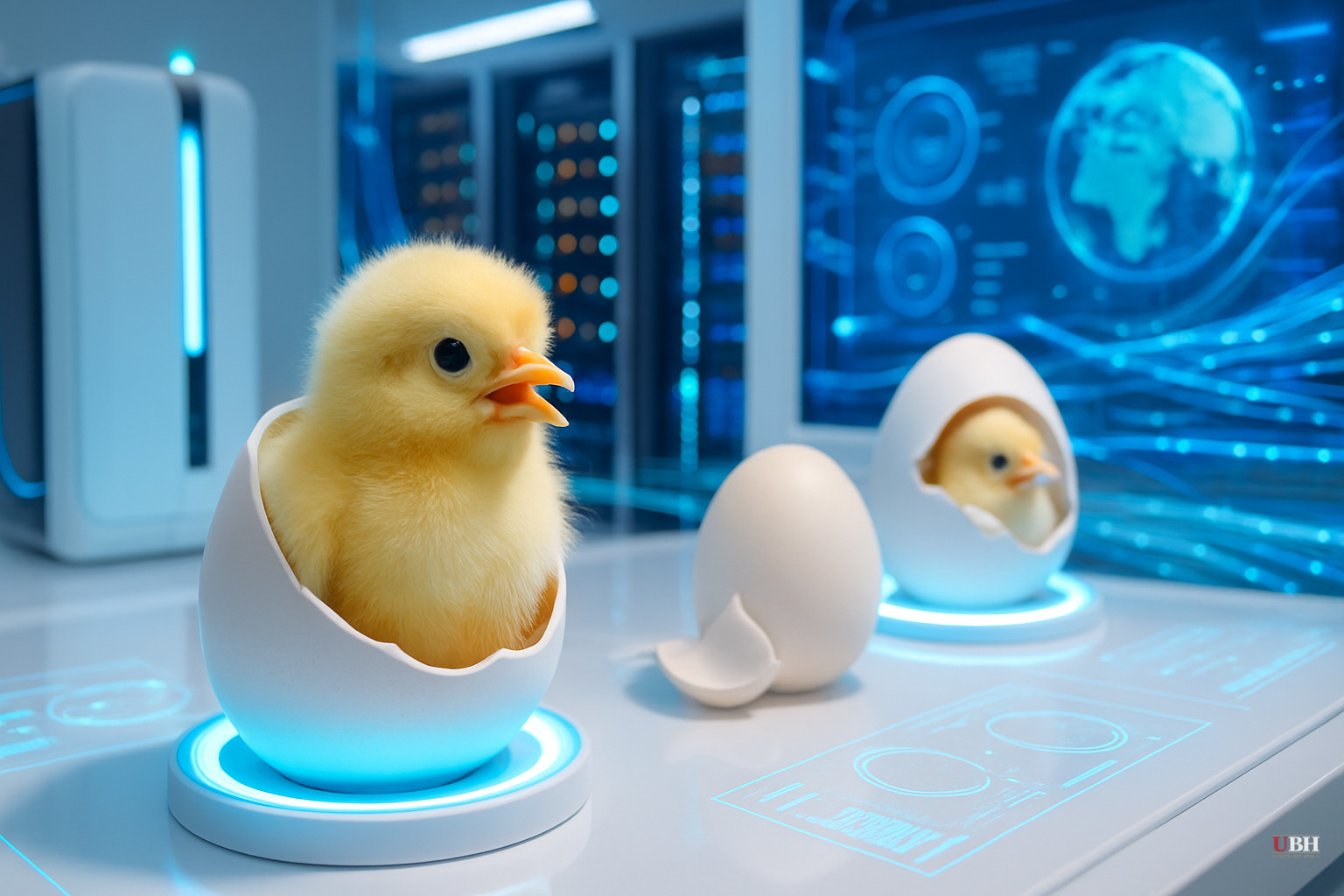
Colossal Biosciences, a de-extinction biotech company headquartered in Dallas, Texas, announced Tuesday that it hatched live, healthy chicks from a 3D-printed artificial egg system it developed in-house.
The device looks like a high-tech coffee pod — black casing, honeycomb bottom, clear top — and it functions as intended.
Bioengineer Trevor Snyder gave NPR a lab tour and walked through the system's capabilities. According to NPR, you could watch the embryo develop in real time: eyes, heartbeat, beak, feathers, claws. Everything a normal egg does, the artificial version replicated.
Why This Matters Beyond a Chicken
Colossal isn't trying to hatch better chickens. The artificial egg is infrastructure for something much bigger.
The dodo — extinct since the late 1600s — laid eggs slightly larger than a standard chicken egg, according to NPR. Its closest living relative is the Nicobar pigeon. The plan is to eventually grow a genetically reconstructed dodo embryo in an artificial egg, since no living bird produces an egg close enough in size and chemistry to serve as a surrogate.
The moa is an even taller order. Literally. The giant moa roamed New Zealand before disappearing hundreds of years ago and looked like an enormous ostrich. Its eggs were roughly the size of a football. As Snyder told NPR directly: "There's no bird on Earth today that could grow a moa embryo inside of one of their eggs."
So Colossal had to build the egg before they could even think about the bird. Tuesday's announcement says that egg works — at least for chickens.
What AP and NPR Got Right
Both AP News and NPR covered this announcement accurately and with appropriate scientific context. NPR's Rob Stein went hands-on with Snyder at the Dallas lab and gave readers a clear-eyed look at what was demonstrated versus what's still theoretical. That's good reporting.
Colossal describes this as a "proof of concept." NPR didn't oversell it. AP News flagged it as a milestone in de-extinction work without declaring the dodo back from the dead.
Credit where it's due.
What Mainstream Coverage Is Leaving Out
Hatching a chicken in a plastic egg is a long, long way from hatching a dodo.
Colossal still needs to sequence a complete, functional dodo genome — not just fragments from museum specimens. They need to edit a living bird's genome to express dodo traits. Then they need to get that embryo to viability inside an artificial egg tuned to the specific biological environment a dodo embryo requires. That environment isn't fully understood because no one has ever studied a living dodo egg.
Colossal has faced criticism from biologists who argue de-extinction resources would be better spent on preventing extinction of living species, as NPR itself noted in a separate piece. That debate deserves air time every time a Colossal press release drops.
Also worth noting: Colossal is a private company. It has investors. Press releases timed to news cycles are a fundraising tool as much as a science update. That doesn't make the science fake — the hatched chicks are real — but it's context worth keeping in mind when parsing what's a breakthrough and what's a milestone on a very long road.
The Fox News Problem Here
Fox News — one of the three source reports pulled for this story — published zero coverage of this announcement. Their source file was entirely sports content. A story about resurrecting an extinct bird using 3D-printed artificial eggs didn't make the cut.
That's a failure. This is science news with real implications for conservation biology, biotechnology, and how humans interact with the natural world. Ignoring it because it doesn't fit a programming slot isn't journalism.
What Colossal Has Already Claimed
This chicken hatching isn't Colossal's first headline. The company previously announced what it called a breakthrough in woolly mammoth de-extinction research and generated significant media coverage — and significant skepticism from the scientific community. According to NPR's prior reporting, Colossal generates significant coverage alongside similar scrutiny.
The pattern: real technical progress wrapped in maximum press attention. Investors notice. Scrutiny is warranted.
The Takeaway
Colossal Biosciences built a functional artificial egg and hatched healthy chicks in it. That is a genuine, verifiable scientific achievement. Trevor Snyder and his team deserve credit for solving a hard engineering problem.
But the dodo has been dead for 350 years. The moa longer. One successful chicken hatch does not a resurrection make. Colossal's next move — particularly its genome work — will determine whether this becomes one of the most consequential biology stories of the decade or remains a well-funded science project with strong PR.
Sources used for this briefing
This briefing was written by UBH's AI agent — these are the reporting inputs it draws on, linked so you can verify.


