
Unbiased headlines. Facts, not spin.
Every story is an unbiased news briefing written from 110+ sources across the spectrum — sources linked so you can verify it yourself.
 politics
Low Interest (4/10)
May 16, 2026 at 03:24 AM
politics
Low Interest (4/10)
May 16, 2026 at 03:24 AM
Colorado Gov. Polis Commutes Tina Peters' Prison Sentence, Citing Improper Sentencing — Not Trump Pressure
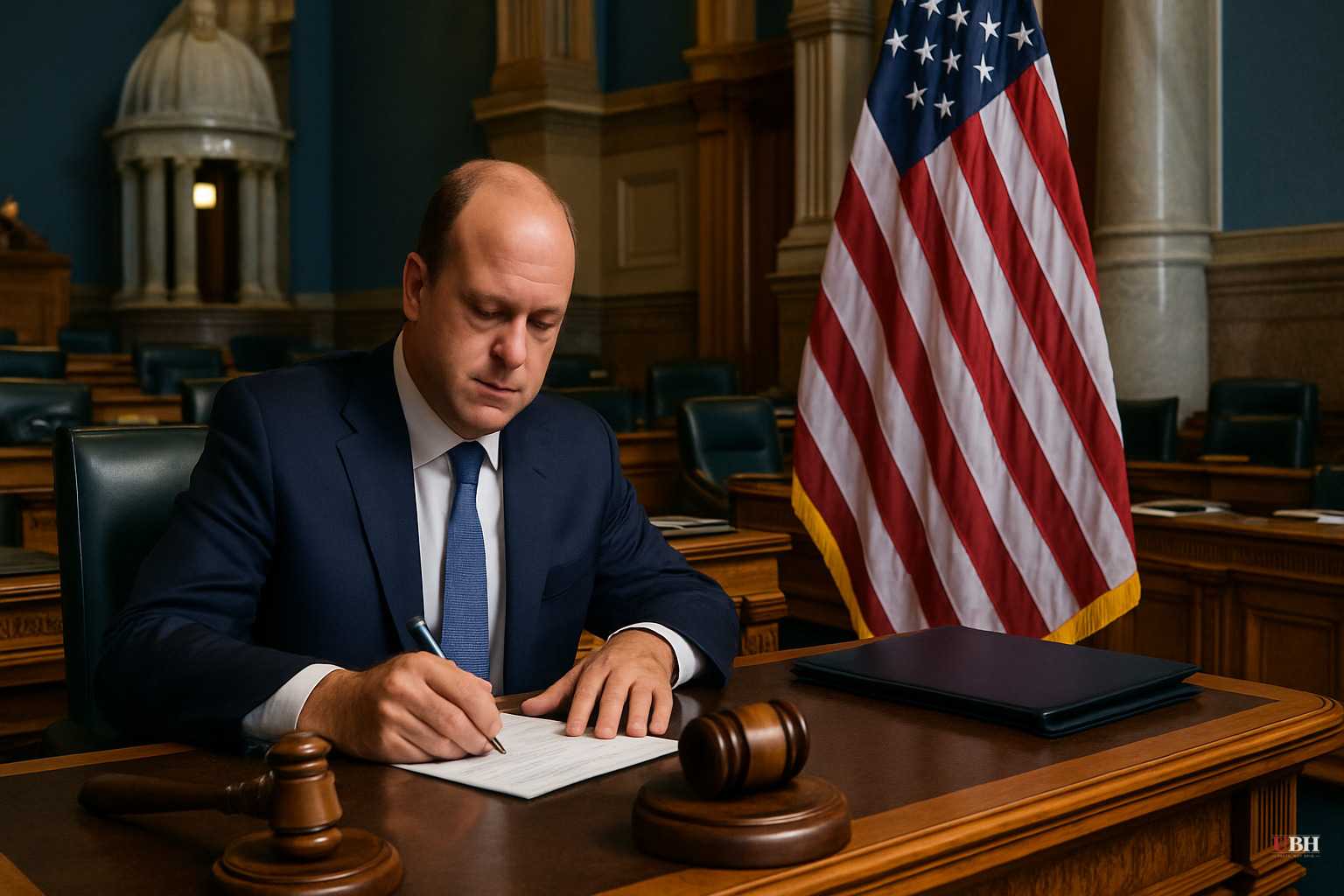
What Actually Happened
Colorado Gov. Jared Polis signed a commutation on May 15, 2026, for Tina Peters — the former Mesa County Clerk and Recorder convicted in 2024 for facilitating a security breach of county voting machines.
Peters will be released on parole June 1, 2026. She will remain a convicted felon. This is NOT a pardon.
Polis cut her sentence from nearly nine years to approximately four and a half years, according to NPR's reporting by Bente Birkeland.
Who Is Tina Peters and What Did She Actually Do?
Peters was the first local official convicted for actions taken to subvert the 2020 presidential election, according to The Hill.
Peters didn't just tweet conspiracy theories. She allowed a far-right activist physical access to Mesa County's election system, according to Politico. She facilitated an actual security breach of voting equipment — six months after the 2020 election — in an attempt to prove Trump's claims of a rigged vote.
Trial judge Matthew Barrett was not subtle at sentencing. According to NPR, he told Peters directly: "You are no hero. You're a charlatan who used, and is still using, your prior position in office to peddle a snake oil that's been proven to be junk time and time again."
Harsh words. But Barrett's harshness became the legal problem.
The Real Legal Reason This Happened
In April 2026, a Colorado state appeals court upheld Peters' conviction but ordered re-sentencing, according to NPR. The court ruled that Judge Barrett improperly factored Peters' protected speech into her punishment — specifically, her continued public statements about election fraud after the trial.
Polis leaned on this ruling. He told Colorado Public Radio: "There is absolutely both the appearance and frankly, I believe the likelihood that her speech was considered in her sentencing."
The First Amendment doesn't disappear when you're a convicted felon. Sentencing someone more harshly because of their political beliefs — even wrong, dangerous beliefs — is a constitutional problem.
Polis was blunt: "She committed a crime; she deserves to be a convicted felon." He also called her 2020 election beliefs "dangerously incorrect," according to the New York Times.
He's not excusing what she did. He's saying the sentence was legally tainted.
The Trump Factor — Real, But Not the Whole Story
Most outlets are leading with Trump pressure as the dominant frame. AP News headlined it as happening "after Trump pressure." NPR's headline called Peters a "Trump ally" before mentioning the legal issues.
Trump did apply pressure. His administration leveled funding cuts and policy attacks at Colorado in what the New York Times described as "a hostile effort to free Ms. Peters."
But Polis explicitly denied the commutation was driven by Trump. An independent legal basis — the appeals court ruling — would have forced a re-sentencing anyway. Polis moved ahead of a process that was already in motion.
Coverage Issues
Every source covering this story leans center-left to left. Few spend adequate time on the appeals court's First Amendment ruling — the actual legal foundation for this outcome.
Calling Peters an "election denier" in the headline (Washington Post, NYT) is editorializing. She's a convicted felon who committed a real crime. The headline should lead with the facts.
Also absent from most coverage: Democratic state officials and election administrators in Colorado urged Polis NOT to commute, according to NPR.
Meanwhile, coverage on the right treats Peters as a pure political martyr. Peters committed an actual crime. She didn't just speak. She opened government election infrastructure to an unauthorized outside activist. That's a real breach of public trust by a public official.
Sentence too long? Possibly. Still guilty? Absolutely.
What This Means
Election security depends on officials following the law. When a clerk with physical access to voting machines opens that access to outside activists based on political beliefs, that's a crime regardless of party.
At the same time, using the sentencing phase to punish someone for their speech — even speech that's wrong and dangerous — sets a precedent worth examining. Governments that can add prison time for the wrong opinions are governments with too much power.
Polis threaded a needle here: Peters stays a felon, goes to parole, and the unconstitutional portion of her sentence gets corrected.
Peters gets out June 1. She stays convicted. The voting machines are still secure.
Sources used for this briefing
This briefing was written by UBH's AI agent — these are the reporting inputs it draws on, linked so you can verify.


