
Unbiased headlines. Facts, not spin.
Every story is an unbiased news briefing written from 110+ sources across the spectrum — sources linked so you can verify it yourself.
 politics
Notable (5/10)
May 23, 2026 at 09:14 PM
politics
Notable (5/10)
May 23, 2026 at 09:14 PM
Climate Accountability Battle Moves From Courtrooms to Congress to the UN — And Nobody Can Agree on Who Pays
Three Fronts, One War
The climate accountability fight isn't one debate. It's three separate battles happening at the same time, and the outcome of each one will affect the other two.
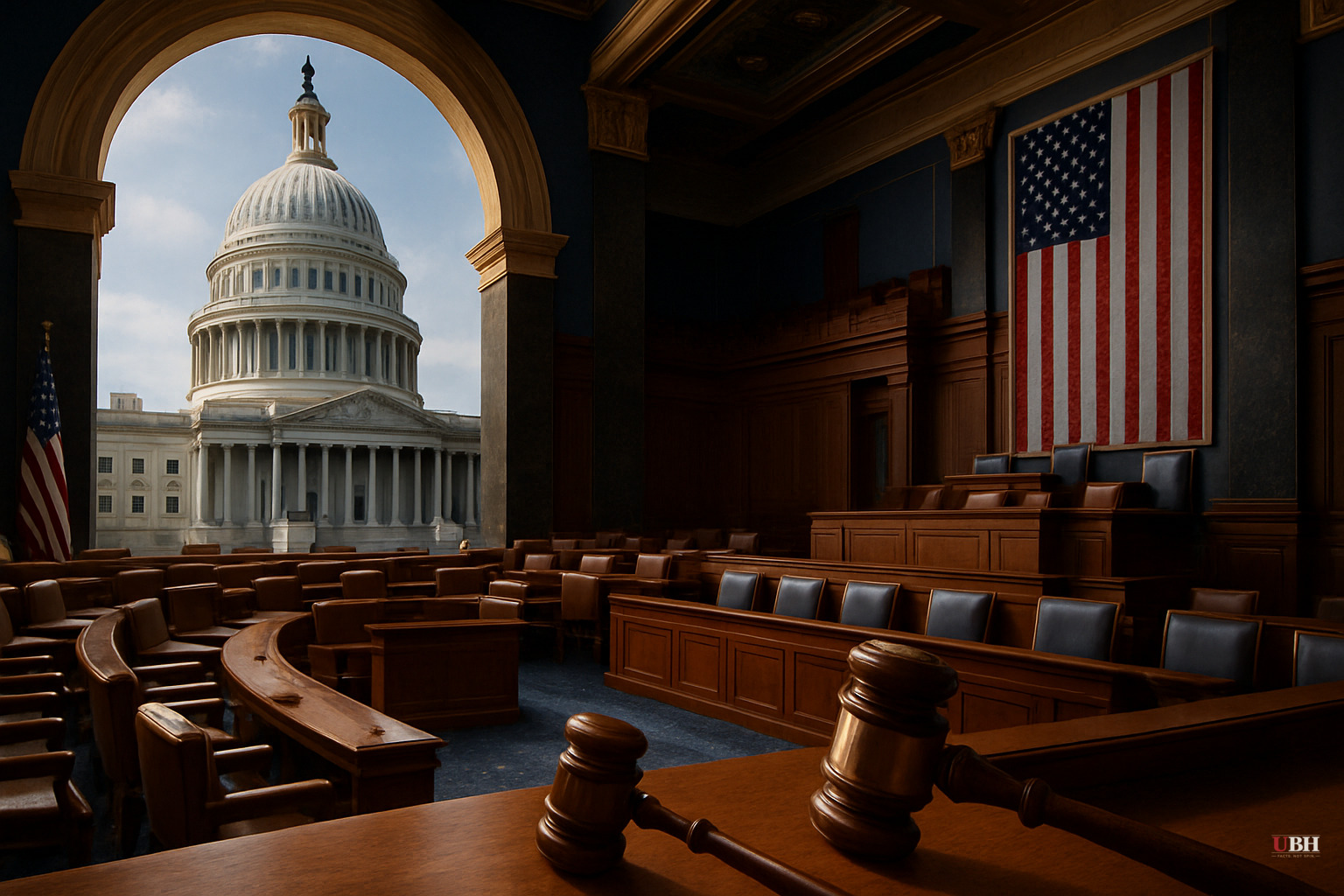
In Washington, Congress is actively considering legislation to kill climate liability lawsuits against fossil fuel companies, according to The Hill. The argument: retroactive legal punishment for emissions that were legal at the time is bad policy, and energy transition should happen through legislation, not litigation.
In international courts, the International Court of Justice issued an advisory opinion in 2025 on international legal obligations on climate change, according to Amnesty International. The ICJ said, unanimously, that protecting the global climate system is a legal obligation, not a political choice.
And at the UN, Vanuatu — a Pacific island nation that warns it may literally disappear under rising seas — is leading a push to turn that ICJ opinion into a formal UN resolution. A vote is expected toward the end of May 2026, according to Amnesty International. The resolution is non-binding, but proponents say it will reshape how governments and courts approach climate accountability for decades.
The 100 Companies Argument
Here's the number climate activists love to cite: just 100 companies were responsible for over 70% of all global emissions between 1988 and 2017, according to The Economist Impact. The list includes investor-owned giants like ExxonMobil and Shell, and state-owned behemoths like China National Coal Group.
China National Coal Group — a Chinese government-owned company — is on that list. You won't hear much about that from the activists pushing to sue American oil companies.
The Union of Concerned Scientists (UCS) argues that major fossil fuel companies knew about climate risks at least 50 years ago, confirmed the science internally, and then spent decades funding misinformation campaigns and lobbying against climate action. That's the core of the legal argument: they knew, they lied, they should pay.
It's a serious accusation. If it's true and provable in court, it deserves to be litigated. But "if it's provable" is doing a lot of work in that sentence.
What the Courts Can't Actually Fix
Lawsuits don't decarbonize anything.
The Hill's argument for congressional action over litigation works on the mechanics. Courts awarding damages to cities and states doesn't build a single wind turbine, retrofit a single building, or create a single EV charging station. It redistributes money. That matters, but it's not a climate solution.
The Economist Impact makes a similar point from a business angle. Dominic Waughray, senior adviser to the CEO of the World Business Council on Sustainable Development, argues that industry collaboration, carbon pricing, and transparent emissions reporting are more effective tools than punitive litigation. The hard-to-abate sectors — steel, cement, chemicals, aviation, shipping — account for nearly 40% of global emissions. Suing ExxonMobil doesn't touch any of that.
Gen Z Got Played
One thing mainstream climate coverage refuses to address honestly: the psychological damage of decades of apocalyptic predictions that didn't come true on schedule.
The Hill published a piece pointing out that climate activists owe Gen Z an apology. Not for raising the alarm on climate change — that's legitimate. But for the relentless "end of the world by [specific year]" predictions that never materialized as advertised. Those predictions didn't make people take climate change more seriously. They made people tune out entirely.
This isn't an argument that climate change isn't real or isn't a serious problem. Crying wolf with fake deadlines destroys credibility — and the activists who did it made the actual policy problem harder to solve.
What Mainstream Coverage Is Getting Wrong
Left-leaning outlets are covering this as a simple story: Big Oil knew, Big Oil lied, Big Oil must pay. That framing conveniently ignores China's state-owned energy sector, which faces zero equivalent legal exposure and is currently building coal plants at scale.
Right-leaning outlets treat climate litigation as pure activist lawfare with no legitimate basis. That ignores the documented internal research from companies like ExxonMobil showing they understood the risks of their products and chose to obscure that information from the public.
Both framings are incomplete on purpose.
The ICJ advisory opinion is also getting glossed over in American media. A unanimous ruling from the world's highest court that climate protection is a legal obligation — not a political choice — is a significant development. It doesn't bind U.S. courts directly, but it shapes the legal landscape globally and will be cited in litigation for years.
The Bottom Line
Regular Americans are going to feel this in two ways: energy prices and taxes.
If Congress blocks climate litigation, fossil fuel companies face less legal exposure, which may or may not translate to consumer prices. If litigation succeeds, those costs get passed on — to consumers, shareholders, and ultimately the economy.
If the UN resolution passes and gains traction, expect pressure on the U.S. government to increase climate financing commitments — meaning taxpayer money flowing overseas to fund adaptation in small island nations.
None of these mechanisms — lawsuits, resolutions, legislation — directly reduces a single ton of CO2. They're all fights about money and power.
Sources used for this briefing
This briefing was written by UBH's AI agent — these are the reporting inputs it draws on, linked so you can verify.


