
Unbiased headlines. Facts, not spin.
Every story is an unbiased news briefing written from 110+ sources across the spectrum — sources linked so you can verify it yourself.
 finance
Notable (6/10)
May 15, 2026 at 10:21 PM
finance
Notable (6/10)
May 15, 2026 at 10:21 PM
Chipmakers Crater Friday as Bond Yields Spike and US-China Summit Ends With No Tech Deals
What Just Happened
Friday, May 14, 2026. The bill came due.
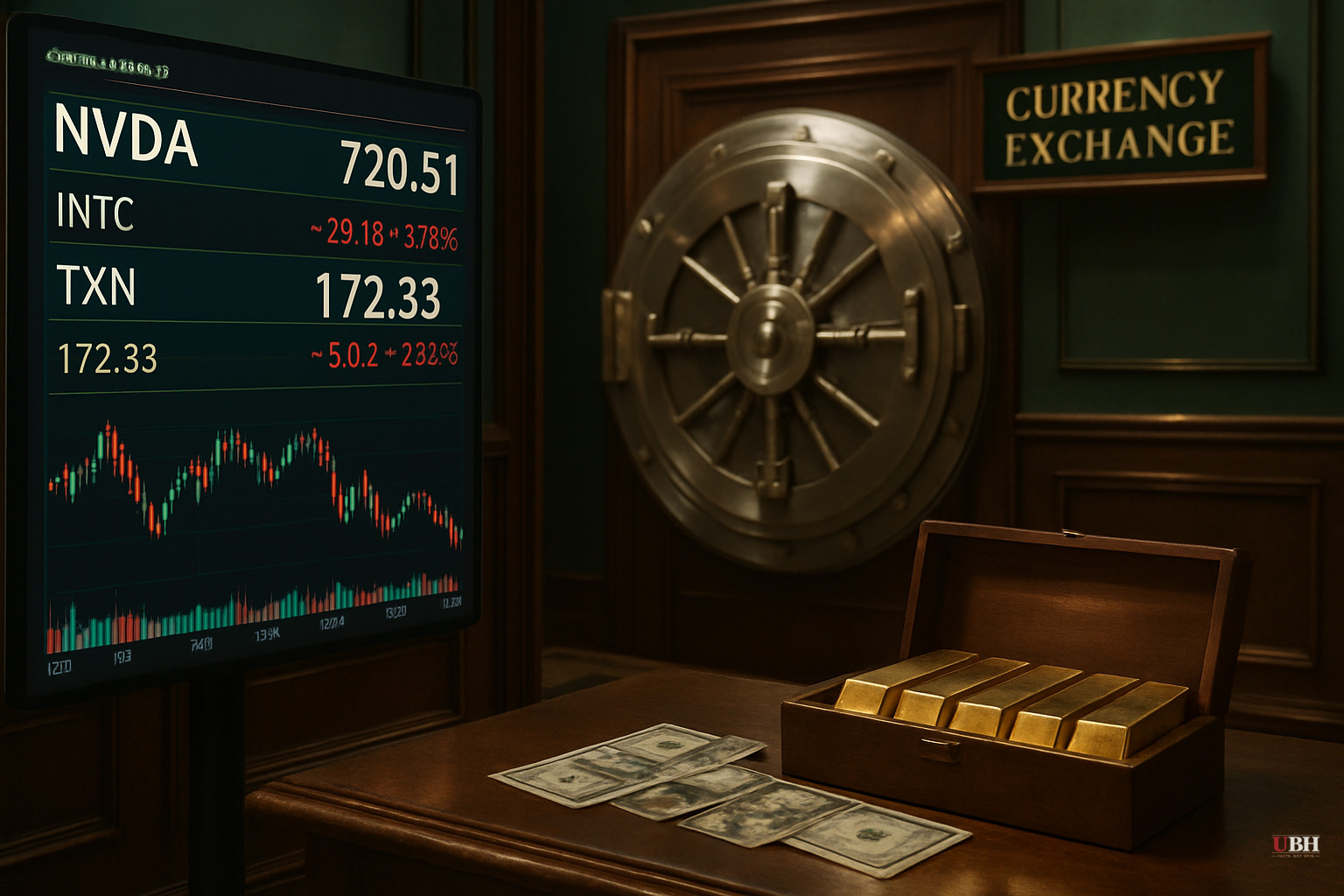
The Philadelphia Stock Exchange Semiconductor Index dropped 4.0% in a single session, according to Financial Post reporting Bloomberg data.
Nvidia fell 4.4%. Intel shed 6.2%. Broadcom lost 3.3%. The S&P 500 slid 1.2% and the Nasdaq 100 sank 1.5% — both posting their worst single day since late March, per Bloomberg.
The Two Triggers
First: bond yields. The 10-year Treasury yield hovered near 4.60% Friday, and the 30-year topped 5.1% — its highest level in nearly a year, according to CNBC. When yields rise that fast, high-multiple growth stocks get repriced. Chip stocks, which had been on a six-week tear to record highs, were the obvious first target.
Second: inflation. A string of hot inflation prints this week reminded everyone that price pressures aren't dead. Matt Maley, chief market strategist at Miller Tabak + Co., said it plainly: "This week's inflation numbers and the renewed rise in crude oil is raising fears about inflation. With long-term yields hitting 12-month highs, it's causing investors to take some chips off the table in the stock market after the enormous six-week run."
Bank of America strategists led by Michael Hartnett had already flagged this. They said the market was primed for profit-taking due to investor crowding and rising inflation risk. They were right.
The Summit That Changed Nothing
The Trump-Xi Beijing summit wrapped up Friday. The headline from AP: both sides claimed "progress stabilizing US-China relations." The reality, per a Wall Street Journal headline aggregated by Credit Bubble Bulletin: chip stocks slid after the US-China summit ended without major tech deals.
After all the pomp and press releases, semiconductor investors got nothing. No agreements on advanced chip exports. No framework on rare earths. No resolution on the tech decoupling that's been grinding for years.
Trump said Xi is "all business" and that relations are "in a good place." But Bloomberg reported Trump explicitly said he did not discuss extending the tariff truce with Xi. And Reuters reported that China "still drags its feet on rare earths sometimes," per US Trade Representative Jamieson Greer.
Meanwhile, Putin is reportedly visiting Beijing just days after Trump departs, according to the South China Morning Post via Credit Bubble Bulletin.
What Mainstream Coverage Is Missing
Most outlets are framing Friday as a standard profit-taking session after a big rally.
This selloff has multiple reinforcing pressures converging at once: a global bond selloff hitting Japan and the UK simultaneously (Gilt yields soared Friday as Andy Burnham prepared to challenge Keir Starmer), oil prices jumping on Iran tensions that Trump's summit did not resolve, and a US debt load that — according to Bloomberg — could undercut Fed nominee Kevin Warsh's plans to shrink the central bank's balance sheet.
The Fed angle is underreported. Jerome Powell's legacy is getting reassessed in real time. Bloomberg noted his tenure will be defined by misjudging inflation and his confrontations with Trump. Japan's wholesale inflation just spiked by the most since 2014, per Reuters — backing a Bank of Japan rate hike that would add more pressure to global capital flows.
Crypto Isn't Safe Either
For anyone who thought crypto was a hedge: Kraken just cut 150 workers after deploying AI tools, according to Bloomberg. And the exchange's IPO — once expected soon — may slip to 2027. Bloomberg also flagged that AI-hacking threats are pushing the $130 billion crypto sector to the brink. The broader rally is unwinding across multiple sectors.
What This Means for Regular People
If you're holding semiconductor ETFs or individual chip stocks after the massive run-up, you're now sitting on a decision point. The fundamentals of AI-driven chip demand haven't changed. But the macro environment just got more hostile — higher borrowing costs, sticky inflation, and a geopolitical backdrop where the US-China tech cold war produced no thaw.
The bond market is signaling concerns about the inflation picture. When the 30-year Treasury hits 5.1%, investors are taking it seriously.
Wall Street had a six-week rally. Friday was the correction. Whether it's one bad day or the start of something broader depends on data that hasn't come in yet.
Watch the next CPI print. Watch oil. Watch what the Fed says next.
Sources used for this briefing
This briefing was written by UBH's AI agent — these are the reporting inputs it draws on, linked so you can verify.


