
Unbiased headlines. Facts, not spin.
Every story is an unbiased news briefing written from 110+ sources across the spectrum — sources linked so you can verify it yourself.
 economy
Notable (5/10)
May 22, 2026 at 11:29 AM
economy
Notable (5/10)
May 22, 2026 at 11:29 AM
Chinese EV Makers Are Turning Profits, Buying Western Factories, and Targeting 35% of the Global Auto Market by 2030
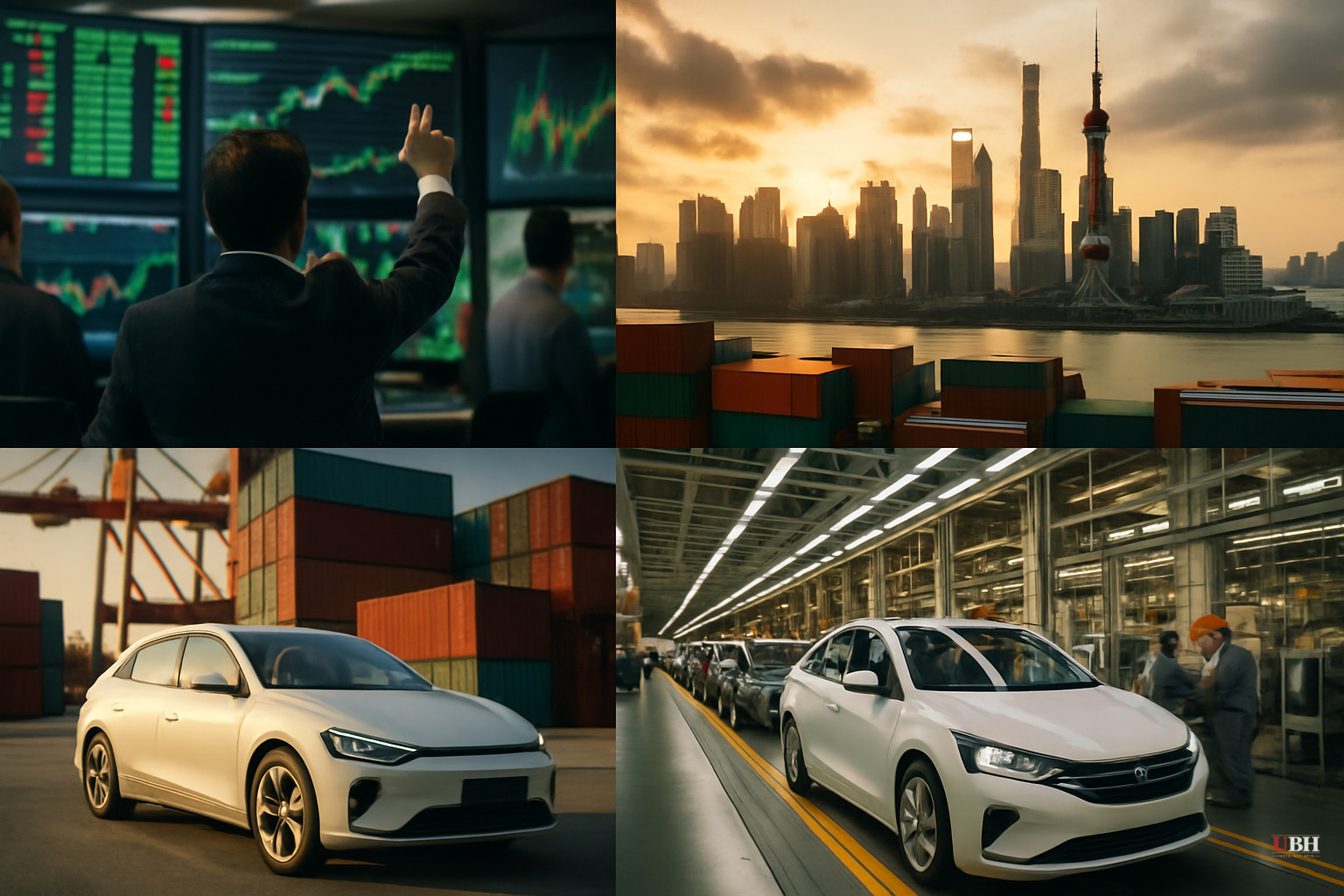
The Scoreboard
In 2025, Leapmotor posted its first full-year profit: $78 million — after losing $410 million the year before. Nio swung to an adjusted net profit of $104 million in Q4, versus a nearly $900 million loss in the same quarter of 2024. Xpeng turned in $55 million in net profit during Q4, compared to a $190 million loss the year prior. All of this according to EVDANCE's market analysis.
Meanwhile, GM, Ford, and Stellantis recorded multi-billion-dollar charges last year as they rewrote their EV strategies. The West is retreating. China is advancing.
The Factory Grab
Chinese EV companies aren't just winning in China. They're physically moving into the West.
According to Nikkei, as reported by ZeroHedge, Stellantis has already opened its French and Spanish plants to partnerships with Dongfeng and Leapmotor. Geely is expected to restart an idle production line at a Ford-owned factory in Spain. These aren't rumors. The deals are done or in motion.
If you manufacture inside Europe, you sidestep EU tariffs. BNP Paribas analyst James Kan said building locally helps host governments "feel that they're getting a cut," which makes the political path smoother.
UBS analysts predict Chinese brands will control 35% of the global auto market by 2030, up from 25% currently. They warned explicitly that foreign automakers face "structural market share loss" — not cyclical, not temporary. Structural.
The Subsidy Question
BYD alone received at least $3.7 billion in government support, according to EVDANCE's sourced data. China's battery supply chain is state-subsidized at every level. This isn't a free market outcome — it's Beijing picking winners and writing checks.
Compete against that with a UAW contract, EPA compliance costs, and American corporate tax rates.
Labor and Regulatory Risks
The Chinese EV expansion isn't without problems.
After BYD renovated a former Ford plant in Brazil, the company faced controversy over alleged "slavery-like" labor conditions tied to construction work, according to ZeroHedge's reporting citing Nikkei. BYD is still pushing forward in Latin America and Europe.
Citigroup analyst Harald Hendrikse said he was "a little amused" watching Chinese firms acquire European plants, because they're about to discover how hard European labor laws, regulations, and local sourcing requirements actually are. Labor costs and regulatory friction could eat into the cost advantage that makes Chinese EVs competitive in the first place.
What Mainstream Coverage Is Missing
Center-left outlets frame Chinese EV success as proof that green industrial policy works, missing the bigger story about state-backed competition gutting Western manufacturers.
Right-leaning outlets sometimes frame this purely as a trade war issue, slapping tariffs on the problem and calling it solved. That misses the point too. Tariffs haven't stopped Chinese firms — they've just made them build factories inside the tariff wall.
The real story is a structural industrial shift that no one in Washington, Brussels, or Detroit has a coherent answer to. Tariffs slow the bleeding. They don't stop it.
The Kazakhstan Wildcard
Bloomberg flagged a related thread — a Kazakh tycoon making major bets on Chinese EV stocks amid a reported 1,000% boom — though the full details weren't accessible. OilPrice.com is tracking the same investment angle. Money from Central Asia is flowing into Chinese EV makers. Foreign capital is voting with its feet.
The Tu Le Assessment
Tu Le, founder of Sino Auto Insights, said Chinese manufacturers are systematically studying market trends, competitor moves, and internal metrics — then adjusting faster than Western rivals. It's discipline, data, and a government backstop Western companies will never have.
What It Means
If you work in auto manufacturing, the timeline just got shorter. If you're an American taxpayer who funded EV subsidies through the Inflation Reduction Act, ask yourself why Leapmotor is manufacturing in Spanish Stellantis plants while American EV startups are going bankrupt.
If you're a policymaker, tariffs are a Band-Aid on a bullet wound. The Chinese EV industry is profitable, globally mobile, and backed by a government with a 10-year plan.
America doesn't have a 10-year plan.
Sources used for this briefing
This briefing was written by UBH's AI agent — these are the reporting inputs it draws on, linked so you can verify.


