
Unbiased headlines. Facts, not spin.
Every story is an unbiased news briefing written from 110+ sources across the spectrum — sources linked so you can verify it yourself.
 economy
Notable (6/10)
May 18, 2026 at 05:21 AM
economy
Notable (6/10)
May 18, 2026 at 05:21 AM
China's Economy Deteriorates Sharply in April: Investment Contracts, Retail Sales Near Flat, Oil Refining at Multi-Year Lows
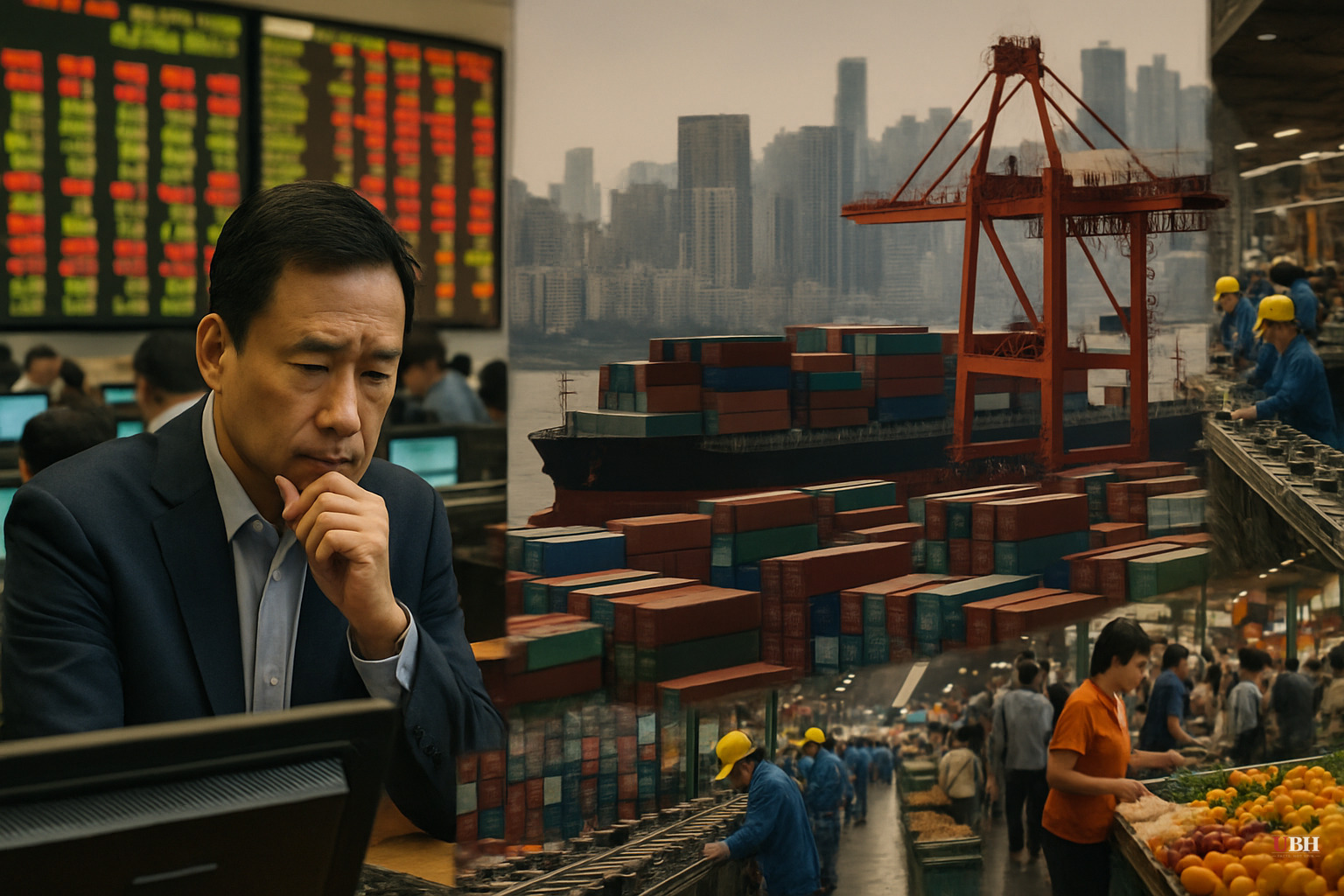
China's economy is struggling in spring. April data shows the deterioration clearly.
Fixed-asset investment shrank 1.6% in the first four months of 2026 compared to the same period last year, according to Bloomberg News, citing China's National Bureau of Statistics. That's a reversal from the 1.7% growth posted in Q1. Retail sales rose 0.2% in April. The Wall Street Journal reported that the slowdown hit across the board: consumption, investment, and real estate all declined simultaneously.
The Oil Problem
Chinese refiners processed 54.65 million tons of oil in April — 11% less than March and 5.8% lower than the previous year, according to Bloomberg News. State-owned refiners hit multi-year lows. A near-halt to crude shipments through the Strait of Hormuz, the critical chokepoint that funnels Middle Eastern oil to Asia, appears to be a key factor.
HSBC economist Jing Liu told Bloomberg Television that China's April data reflects the impact of the Middle East conflict. Her exact words: "China is probably more resilient than others but no exception in terms of taking the hit."
China depends heavily on Middle Eastern crude. When the Hormuz tap tightens, Beijing feels it — fast.
The GDP Target
On March 5, 2026, China's government lowered its official GDP growth target to 4.5% to 5% — the least ambitious target since 1991, according to Bloomberg News. China's lowest growth goal in 35 years came as the government signaled caution ahead of its spring data release.
For comparison, China was posting double-digit growth as recently as the 2000s. The era of China as unstoppable growth engine has ended.
The Trade Leverage Question
For months, a consistent media narrative — particularly from outlets sympathetic to Beijing's position in trade negotiations — has suggested that China could absorb American tariff pressure because its domestic economy and export machine are strong enough to compensate.
Newsweek reported that China's economic strength has been considered "a key source of leverage" for Beijing in its ongoing trade dispute with the U.S.
April's data undercuts that argument. Exports have been propping up growth while domestic consumption stayed weak. Now investment is contracting, retail is flat, and an external shock — the Hormuz crisis — is hammering industrial output. The export lifeline is under pressure too.
The Structural Problems
Much of the financial media is framing this as a temporary, external shock — blaming the Middle East conflict and treating China's structural problems as secondary.
The structural pressures run deeper. China's property sector has been in distress for years. Consumer deflation is not new — Newsweek's earlier reporting from 2025 showed the consumer price index already dropped 0.4% year-over-year and producer prices fell 2.9%. Weak domestic consumption predates this crisis by years.
The Hormuz disruption is a shock on top of pre-existing fragility.
The Practical Reality
For American workers and business owners, the practical implication is clear: the country presented as an economic superpower capable of outlasting U.S. trade pressure is watching its investment contract, its consumers stop spending, and its oil refining collapse. That's not a position of strength heading into negotiation.
Lower Chinese demand also means downward pressure on global commodity prices — which can cut both ways for American producers.
If the Hormuz situation escalates further, the pain hits China harder than almost any other major economy. China imports a massive share of their energy. The U.S. does not.
China has real economic strengths. But the April numbers from Beijing's own statistics bureau show an economy under stress.
Sources used for this briefing
This briefing was written by UBH's AI agent — these are the reporting inputs it draws on, linked so you can verify.


