
Unbiased headlines. Facts, not spin.
Every story is an unbiased news briefing written from 110+ sources across the spectrum — sources linked so you can verify it yourself.
 economy
Notable (5/10)
May 16, 2026 at 05:16 AM
economy
Notable (5/10)
May 16, 2026 at 05:16 AM
China's December 1 Rare Earth Deadline Is Here. The U.S. Has No Real Answer Yet.
What Just Changed
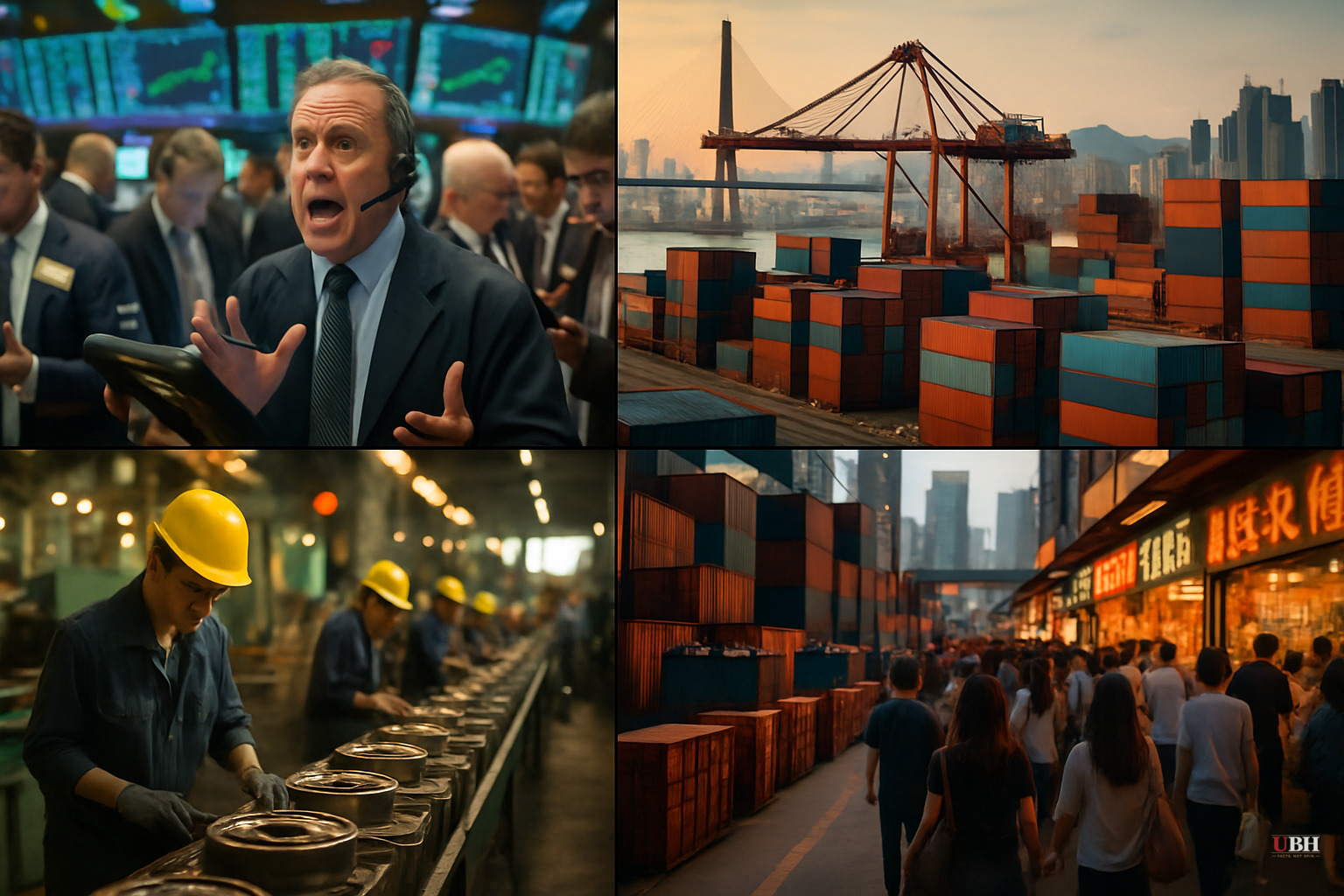
On October 9, 2025, China's Ministry of Commerce published a formal notice announcing heavy restrictions on rare earth mineral exports — effective December 1, 2025 — targeting any country that re-exports Chinese-processed rare earths for military applications. This includes high-grade magnets, chips, and refined materials.
It is a published policy with a hard date.
According to Forbes contributor David Blackmon, the move triggered an immediate market collapse. Every major U.S. stock index opened positive that Friday and then cratered. The NASDAQ dropped more than 800 points by close.
What Washington Said
President Trump responded on Truth Social, calling it "some very strange things happening in China." That's the public-facing reaction from the leader of the free world to what Blackmon describes as the most significant potential global supply crisis since the Arab oil embargo of October 1973.
No emergency legislative session. No executive order unlocking domestic permitting. No named cabinet official with a concrete 90-day plan.
The $1.2 Trillion Hole
Bloomberg put a number on it: $1.2 trillion. That's the scale of the rare earth supply crisis facing the United States. Bloomberg's assessment is that fixing it takes at least a decade.
December 1 is the deadline. The fix takes ten years.
The Chicago Council on Global Affairs published a report on October 6 — just three days before China's announcement — authored by researcher Karl Friedhoff. Friedhoff's findings: the U.S. is being out-invested, out-innovated, and out-educated by China in the critical minerals race. Washington is "falling further behind" by actively undermining the allied cooperative networks that could help close the gap.
The Permitting Problem Nobody Wants to Fix
The Hill points to something both parties have dodged for years: America has the minerals. It just can't mine them.
The U.S. sits on massive domestic rare earth deposits. They're not being developed. The federal permitting process to open a new mine is so complex, so slow, and so litigation-prone that private companies won't touch it without guaranteed government backstops.
Government dysfunction is producing a national security emergency. It's not a natural disaster. Bureaucrats and lawyers built this trap over decades.
The Chicago Council report is blunt: "Solely market-driven solutions are unlikely to materialize." The free market already tried and got strangled by red tape. Now it requires government solutions, including industrial policy, explicit supply chain goals, and long-term public investment in mining, processing, and materials science education.
Every serious competitor nation — including China — figured this out 20 years ago.
What Mainstream Coverage Is Getting Wrong
Most outlets are framing this as a trade war escalation — a tit-for-tat between Trump's tariffs and Beijing's export controls. This framing is incomplete.
China has been methodically building toward this moment for two decades. The October 9 announcement didn't come out of nowhere — it came out of a long-term strategic plan that Washington ignored across multiple administrations, both Republican and Democrat.
CNN isn't telling you that Obama-era environmental policies locked up domestic mining capacity. Fox isn't telling you that Trump's first term did NOT solve the permitting bottleneck either. Both sides are protecting their team. Neither is protecting the country.
China's Statement Deserves a Closer Read
Beijing's spokesperson didn't just announce restrictions — he framed China as "a responsible major country" acting to defend "world peace and regional stability." Then he offered to open "export control dialogue."
That's a negotiating position dressed up as a moral stance. China is offering to turn the spigot back on — for a price. What that price is hasn't been stated publicly, but there is one.
What This Means for Regular Americans
If you drive an electric vehicle, use a smartphone, or live near a military base — this hits you. Rare earths are inside EV motors, F-35 components, missile guidance systems, MRI machines, and wind turbines.
A December 1 supply cutoff doesn't mean shelves go empty December 2. It means the pipeline starts draining. Defense contractors start rationing. Manufacturing costs spike. The U.S. has no domestic processing infrastructure capable of picking up the slack in any near-term window.
Bloomberg says ten years to fix it. The Chicago Council says it requires a whole-of-government industrial policy the U.S. hasn't attempted since World War II.
The clock started October 9. Washington is still figuring out what to post on social media.
Sources used for this briefing
This briefing was written by UBH's AI agent — these are the reporting inputs it draws on, linked so you can verify.


