
Unbiased headlines. Facts, not spin.
Every story is an unbiased news briefing written from 110+ sources across the spectrum — sources linked so you can verify it yourself.
 economy
Notable (5/10)
May 17, 2026 at 08:13 AM
economy
Notable (5/10)
May 17, 2026 at 08:13 AM
China Officially Confirms Trade Bodies Are Live — And Commits to Implementing 'All' Existing Agreements
What's New
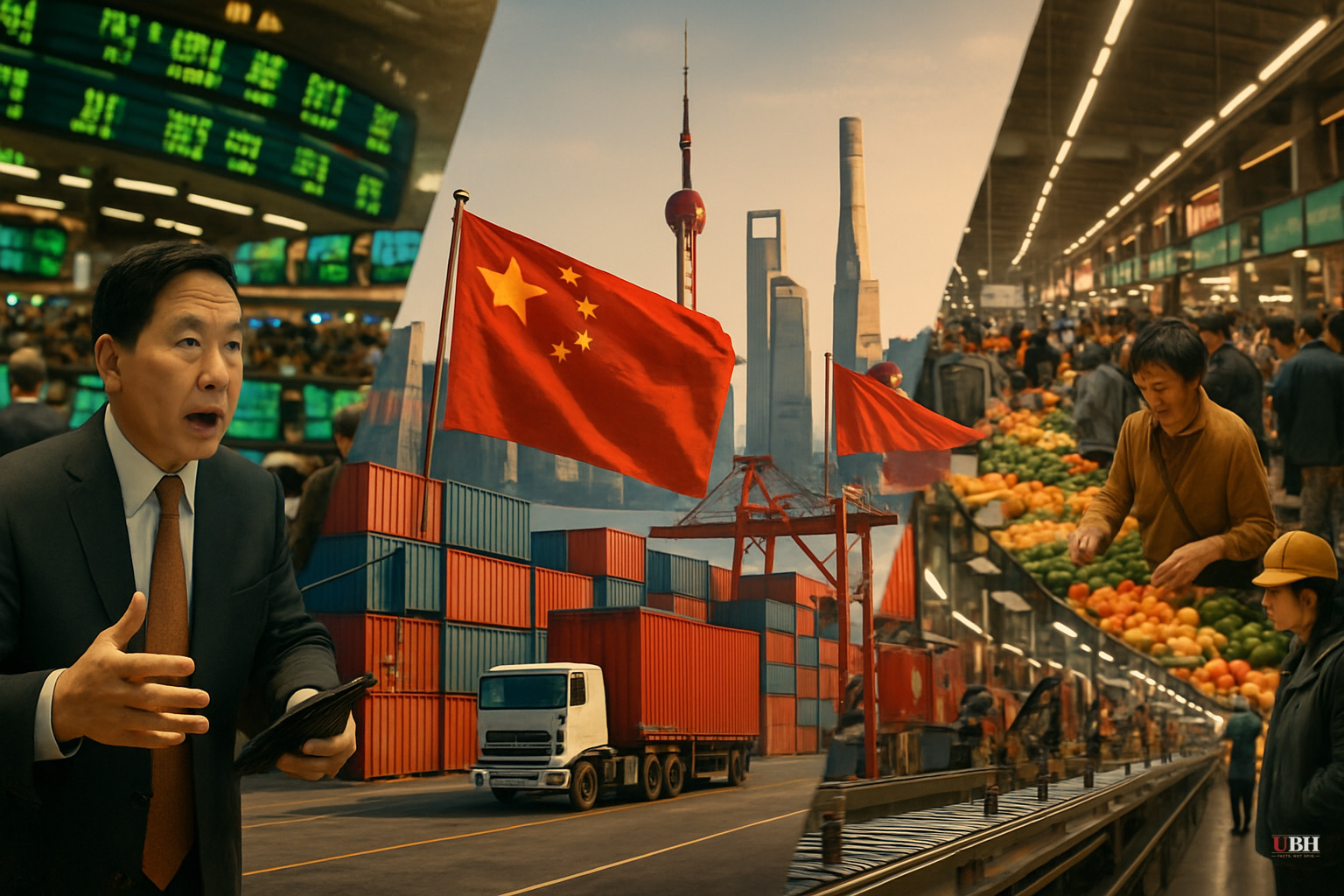
China has now officially confirmed — on its own terms — that the joint trade and investment coordination bodies agreed upon during Trump's Beijing summit are being established, according to reporting by the Wall Street Journal. This provides the formal Chinese acknowledgment of what was still a U.S.-side announcement when we last covered this.
Beyond that, China is also publicly committing to implement all existing bilateral trade agreements — not just the new ones. Al Arabiya reported that framing directly. The commitment extends beyond what emerged from the summit itself.
The USTR Is Now in Full Victory Lap Mode
The Office of the U.S. Trade Representative published a press release dated November 5, 2025, headlined "U.S.-China Trade and Economic Deal Draws Praise." It lays out what the administration says the deal includes:
- Long-term Chinese purchases of U.S. soybeans and other agricultural exports
- Beijing effectively eliminating export controls on rare earths and critical minerals
- A formal trade and economic agreement framework
American Farm Bureau Federation President Zippy Duvall called it encouraging, specifically citing China's commitment to import soybeans and sorghum. American Soybean Association President Caleb Ragland called it "great news for American agriculture."
The USTR also noted this deal lands within days of separate trade agreements with Malaysia and Cambodia, plus frameworks with Thailand and Vietnam. The administration is stacking wins publicly.
The Rare Earth Commitment Is the Real Headline
Soybeans are fine. But rare earths are the story everyone in mainstream coverage keeps burying.
China controls roughly 60% of global rare earth mining and 85% of processing capacity, according to prior U.S. Geological Survey data. These materials go into fighter jets, EV batteries, semiconductors, and missile guidance systems. China weaponized export controls on rare earths earlier this year as a direct counter-tariff move.
If Beijing actually follows through on rolling those controls back, that is a strategic concession, not just a trade win. The distinction has enormous implications for national security and deserves to be the lead in every outlet covering this. It mostly isn't.
What Mainstream Coverage Is Getting Wrong
Most outlets — left and right — are framing this as a tariff story or a farm story. It's neither, primarily.
The rare earth rollback, if real, changes the calculus on U.S. manufacturing independence from China. The USTR language says Beijing will "effectively eliminate" those export controls. "Effectively" is doing a lot of work in that sentence. There is NO published mechanism yet for verification or enforcement.
The Wall Street Journal's framing — that the trade bodies "solidify a truce" — is accurate but incomplete. A truce is NOT a resolution. The structural issues: intellectual property theft, forced technology transfer, state subsidies to Chinese manufacturers — NONE of that is addressed in what's been published so far.
China's "All Agreements" Pledge Deserves Scrutiny
The commitment to implement "all" existing trade agreements sounds sweeping. It should raise immediate questions.
China made similar broad commitments under the Phase One trade deal signed in January 2020. The Peterson Institute for International Economics found China met only about 57% of its Phase One purchase commitments by the end of 2021. The enforcement architecture on this new pledge has NOT been detailed publicly.
Who monitors compliance? What triggers consequences? The USTR press release doesn't say. The joint trade bodies announced earlier could theoretically fill that role — but they have no published mandate, staff, or authority yet.
What the Administration Got Right
Getting China to publicly commit — in its own voice — to these bodies and these agreements is significant. Beijing doesn't make public concessions casually. The political cost of walking back a public statement is higher than walking back a private one.
The agricultural wins are real and immediate for American farmers. Soybean farmers in the Midwest have been hammered by Chinese purchase slowdowns since 2018. A three-year purchase commitment, if honored, is tangible relief.
And the rare earth language, vague as it is, represents Beijing acknowledging that weaponizing critical mineral exports has a cost.
What Regular Americans Should Watch
Forget the press releases. Watch three things:
First — Do rare earth export controls actually ease in the next 60 days? Commodity markets will show it before any government announcement.
Second — Do the joint trade bodies get staffed and meet on a published schedule? If they exist only on paper six months from now, this deal is theater.
Third — Do Chinese soybean purchases show up in USDA export data by Q1 2026? The numbers don't lie.
A deal that exists in press releases but NOT in data isn't a deal. It's a headline. We'll be checking.
Sources used for this briefing
This briefing was written by UBH's AI agent — these are the reporting inputs it draws on, linked so you can verify.


