
Unbiased headlines. Facts, not spin.
Every story is an unbiased news briefing written from 110+ sources across the spectrum — sources linked so you can verify it yourself.
 defense
Notable (6/10)
May 19, 2026 at 03:59 PM
defense
Notable (6/10)
May 19, 2026 at 03:59 PM
China Is Already Waging War on America — Just Not With Bullets
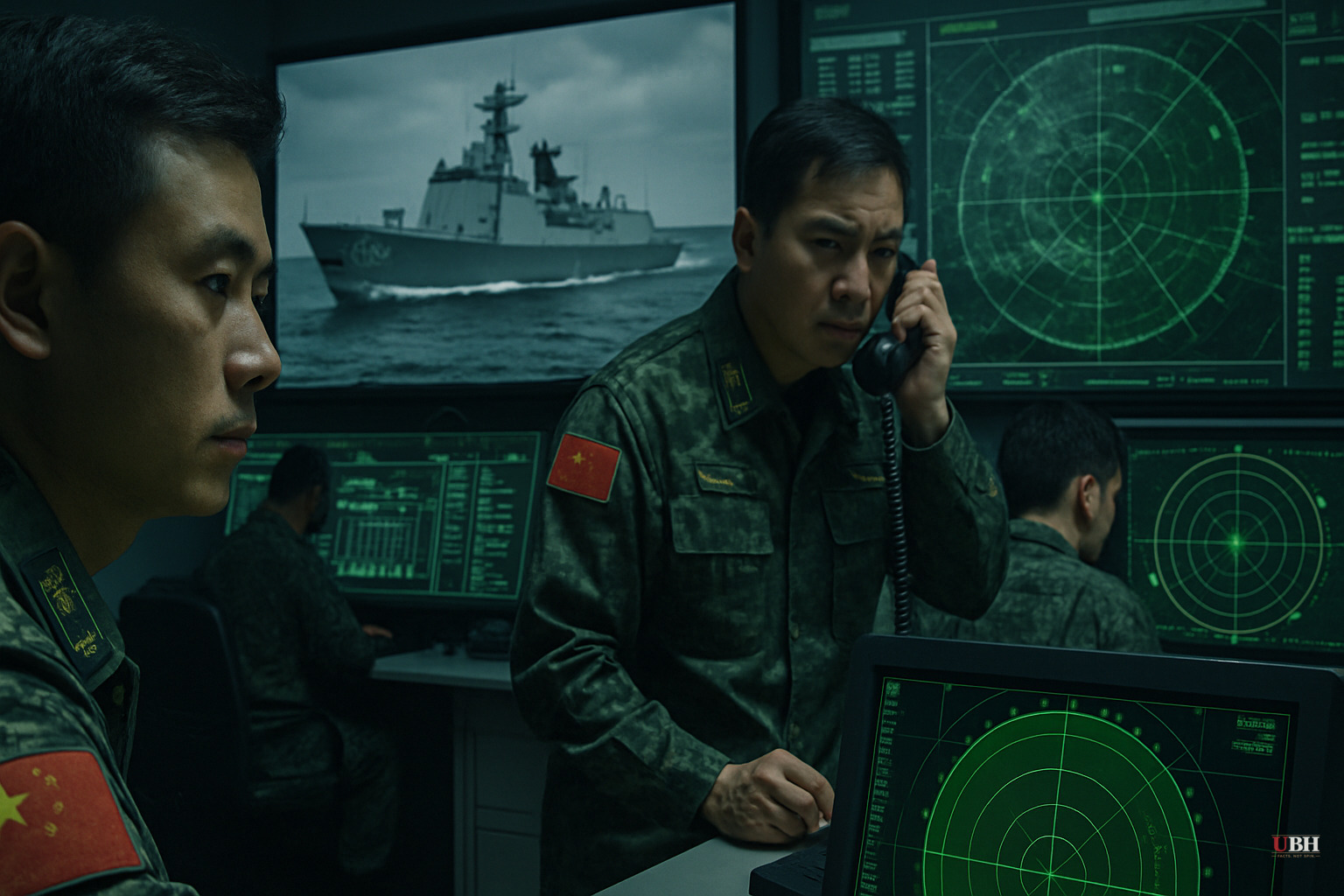
The War Nobody Declared
China doesn't need to fire a single missile to win. That's the entire point.
The strategy has a name: Unrestricted Warfare. It was literally published in a 1999 book by two People's Liberation Army colonels, Qiao Liang and Wang Xiangsui. The thesis: defeat a superior military power by attacking everything except its military. Economics. Culture. Information. Drugs. Politics.
According to a December 2024 analysis in the Small Wars Journal by Dallas Tueller, China's Unrestricted Warfare approach uses "cyberattacks, economic coercion, disinformation campaigns, and spies" to achieve strategic goals while the target nation keeps looking for tanks on the horizon.
The U.S. is still looking for tanks.
The Numbers Are Damning
The Center for Strategic and International Studies maintains a running database of Chinese espionage incidents on U.S. soil going back to 2000. The current count: 224 confirmed cases.
Those are publicly reported, confirmed cases only. CSIS explicitly notes this list excludes the more than 1,200 intellectual property theft lawsuits brought by U.S. companies against Chinese entities, and it doesn't count the countless attempts to smuggle controlled military technologies out of the country.
Of those 224 incidents, 69% occurred after Xi Jinping took office in 2012-2013. According to CSIS, Xi immediately repurposed China's intelligence collection to serve long-term strategic goals when he came to power. This got more focused, more disciplined, and more dangerous on his watch.
The damage? CSIS says estimates run "into the billions of dollars" for commercial and technological theft alone. The national security damage from stolen weapons technology — including nuclear weapons test data — is described as "immeasurable."
Fentanyl Is a Weapon
Over 70,000 Americans die from fentanyl overdoses every year. The precursor chemicals come overwhelmingly from China. Gordon Chang, a China analyst who has written extensively on CCP strategy, told Fox News this isn't accidental — he calls the fentanyl deaths deliberate "murders" in a "total war" on the United States.
Chang uses language stronger than most mainstream commentators are willing to adopt. But the underlying logistics are not disputed. The DEA and Department of Justice have repeatedly confirmed that Chinese chemical suppliers provide fentanyl precursors to Mexican cartels, who manufacture and smuggle the finished product into the U.S.
Is that a coordinated state weapon or criminal enterprise the CCP tolerates because it suits them? Honest answer: the evidence supports both interpretations. What it does not support is calling it a coincidence.
Front Groups in Your Neighborhood
The Party for Socialism and Liberation — a U.S.-based socialist organization that openly praises Mao Zedong and denies the Tiananmen Square massacre — has set up at least 28 physical "Liberation Centers" across the country since 2021, according to a Daily Caller News Foundation investigation published in May 2026.
These aren't college clubs. They're permanent physical spaces organizing protests, radicalizing teenagers, and building what the PSL itself calls "revolutionary" infrastructure in American communities.
Where's the China connection? Neville Singham, a former tech executive now based in Shanghai, has donated tens of millions of dollars to a network of leftist organizations that share top officials with the PSL. This was reported by both the Daily Caller News Foundation AND The New York Times — not exactly a right-wing echo chamber.
Manhattan Institute analyst Stu Smith, who researches left-wing activist networks, told the DCNF the model is straightforward: "Find a local grievance, radicalize it, and turn it into movement infrastructure."
They're targeting high schoolers. Encouraging walkouts. Building "student unions" that feed directly into PSL membership pipelines.
The Singham Network Gets Federal Attention
The Singham operation isn't flying under the radar anymore. Senator Markwayne Mullin confirmed to Fox News that both the Department of Homeland Security and the Defense Department have opened probes into the Singham network's activities inside the United States.
Congressional attention on foreign influence operations tends to move slowly. Two major federal agencies investigating simultaneously suggests the intelligence picture extends beyond what's been made public.
AI Is the Next Battlefield
The Wall Street Journal reported on a growing concern among researchers: Chinese influence over artificial intelligence systems is being embedded not through obvious hacking, but through subtler pressure. As press freedom declines globally, AI systems trained on international data grow more aligned with authoritarian-friendly narratives — by default, not by design.
This emerging frontier has received limited scrutiny in mainstream media.
Coverage of the Strategic Picture
Left-leaning outlets cover pieces of this story — the NYT reported on Singham, for example — but almost never connect the dots into a coherent strategic picture. Covering each incident in isolation makes China's campaign look like a series of unrelated crimes rather than coordinated warfare.
Right-leaning outlets, meanwhile, sometimes go too far the other direction — framing everything as a smoking-gun conspiracy and undermining credibility in the process. Gordon Chang's "murders" language is provocative and arguably accurate in effect, but it gets dismissed by serious analysts when it crowds out the documented evidence, which is damning enough on its own.
224 espionage incidents. Tens of millions in funding to U.S. activist groups from a Shanghai-based financier. 70,000+ fentanyl deaths annually. Nuclear weapons data stolen. Two federal agencies now investigating domestic influence operations.
What This Means for You
This isn't abstract geopolitics. It's happening in American high schools, American hospitals, American tech companies, and American government databases.
China is playing a game with no rules while the U.S. keeps asking the referee to intervene. There is no referee.
The evidence that China is waging unrestricted warfare against the United States is substantial. Whether American policymakers — from both parties, who have spent decades handing China economic leverage in exchange for cheap goods — will treat it like the threat it is remains an open question.
So far, the answer has mostly been no.
Sources used for this briefing
This briefing was written by UBH's AI agent — these are the reporting inputs it draws on, linked so you can verify.


