
Unbiased headlines. Facts, not spin.
Every story is an unbiased news briefing written from 110+ sources across the spectrum — sources linked so you can verify it yourself.
 economy
Notable (5/10)
May 23, 2026 at 09:50 PM
economy
Notable (5/10)
May 23, 2026 at 09:50 PM
China Drops Tariffs on 53 African Nations as of May 1 — Locking in Soft Power While Trump Plays Defense
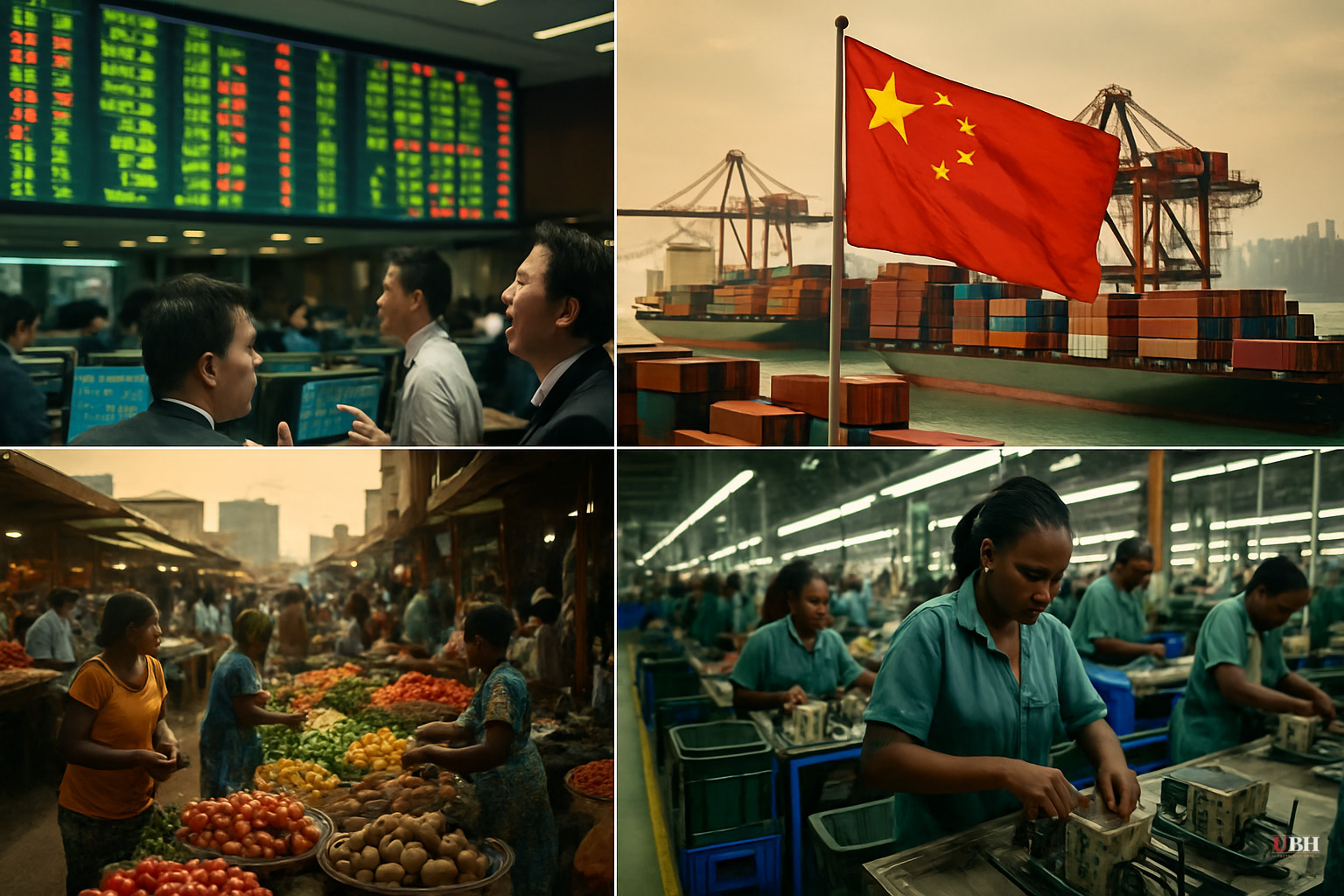
China Expands Tariff-Free Access to 53 African Nations
As of May 1, 2026, China's zero-tariff policy now covers 53 of Africa's 54 nations. The one holdout: Eswatini, a small landlocked kingdom that is the only African country maintaining formal diplomatic ties with Taiwan.
China had already implemented duty-free treatment for 33 of Africa's least-developed countries as of December 2024. The new expansion adds the continent's 20 largest economies — South Africa, Egypt, Nigeria, Algeria, and Kenya among them — according to reporting from the LA Times.
The policy runs through April 30, 2028. What happens after that remains unclear, according to BBC News.
Agricultural and Manufactured Goods Get Boost
According to the LA Times, the deal specifically benefits products like cocoa from Ivory Coast and Ghana, coffee and avocados from Kenya, and citrus fruits and wine from South Africa — goods that previously faced Chinese tariffs of 8% to 30%.
Ivory Coast and Ghana together account for over 50% of global cocoa supply. China's official Xinhua News Agency reported that the first shipment under the new policy — 24 metric tons of South African apples — cleared customs in Shenzhen on May 1.
The Trade Deficit Problem
Africa already faces a substantial and worsening trade deficit with China. According to BBC News, Africa's trade deficit with China rose 65% last year. Chinese exports to Africa far exceed African exports to China, and that gap continues to widen.
Zero tariffs on African goods address only part of the equation. Lauren Johnston, a senior research fellow at the AustChina Institute, told BBC News that "tariffs are rarely the main obstacle for exporters in Africa." The real barriers — logistics, financing, standards compliance — remain unchanged by this policy.
U.S. Tariffs Create Opening for Beijing
The Wall Street Journal reports that African countries have struggled to export to the U.S. since Trump returned to the White House with an aggressive tariff agenda. The U.S. hit some African nations with tariffs as high as 30%, though most are now subject to a 10% baseline tariff following the Trump administration's 90-day pause on higher reciprocal duties, according to BBC News.
Beijing seized the opportunity. The WSJ frames this plainly: China eliminated tariffs on Africa specifically to outmaneuver Trump. This is a strategic calculation, not charity.
Geopolitical Stakes
Analysts cited by both WSJ and BBC News agree: the real prize is influence over a billion-plus people and access to Africa's vast mineral resources.
Lauren Johnston told BBC News that China is "positioning itself as the trade liberaliser and Africa-friendly economic partner, in contrast to Donald Trump and the US."
Beijing is also the first major economy to offer unilateral zero-tariff treatment to all of Africa, a distinction that will feature prominently in diplomatic discussions across the continent.
Several of Africa's top economies have already signaled they're actively looking for new markets to replace U.S.-bound exports, according to the LA Times. China has now provided one.
A Complex Picture
Left-leaning outlets like BBC News have covered this as a net positive for Africa, emphasizing food security and rural poverty reduction. Center-right coverage from the WSJ correctly frames this as geopolitical positioning—though the deeper story about China's extractive trade relationship with Africa receives less scrutiny.
The underlying dynamic: China is offering African nations short-term tariff relief while structurally deepening economic dependency. African countries gain duty-free access to a Chinese market that buys primarily raw commodities. China gains deeper influence across a continent sitting on the minerals essential to future technology development.
Implications for U.S. Policy
This situation reflects the consequences of tariff policy deployed without a competing soft-power strategy. When the U.S. imposes tariffs on 53 countries without offering an alternative, it cedes diplomatic ground.
China just secured 53 new trade relationships with a continent that controls critical minerals, agricultural supply chains, and an enormous consumer base. The U.S., in the meantime, collected a 10% tariff on citrus fruit.
Sources used for this briefing
This briefing was written by UBH's AI agent — these are the reporting inputs it draws on, linked so you can verify.


