
Unbiased headlines. Facts, not spin.
Every story is an unbiased news briefing written from 110+ sources across the spectrum — sources linked so you can verify it yourself.
 defense
Major Story (7/10)
May 19, 2026 at 12:34 PM
defense
Major Story (7/10)
May 19, 2026 at 12:34 PM
China Deploys Liaoning Carrier Group to Western Pacific as Taiwan's Premier Names Beijing the Region's Biggest Threat
What Just Happened
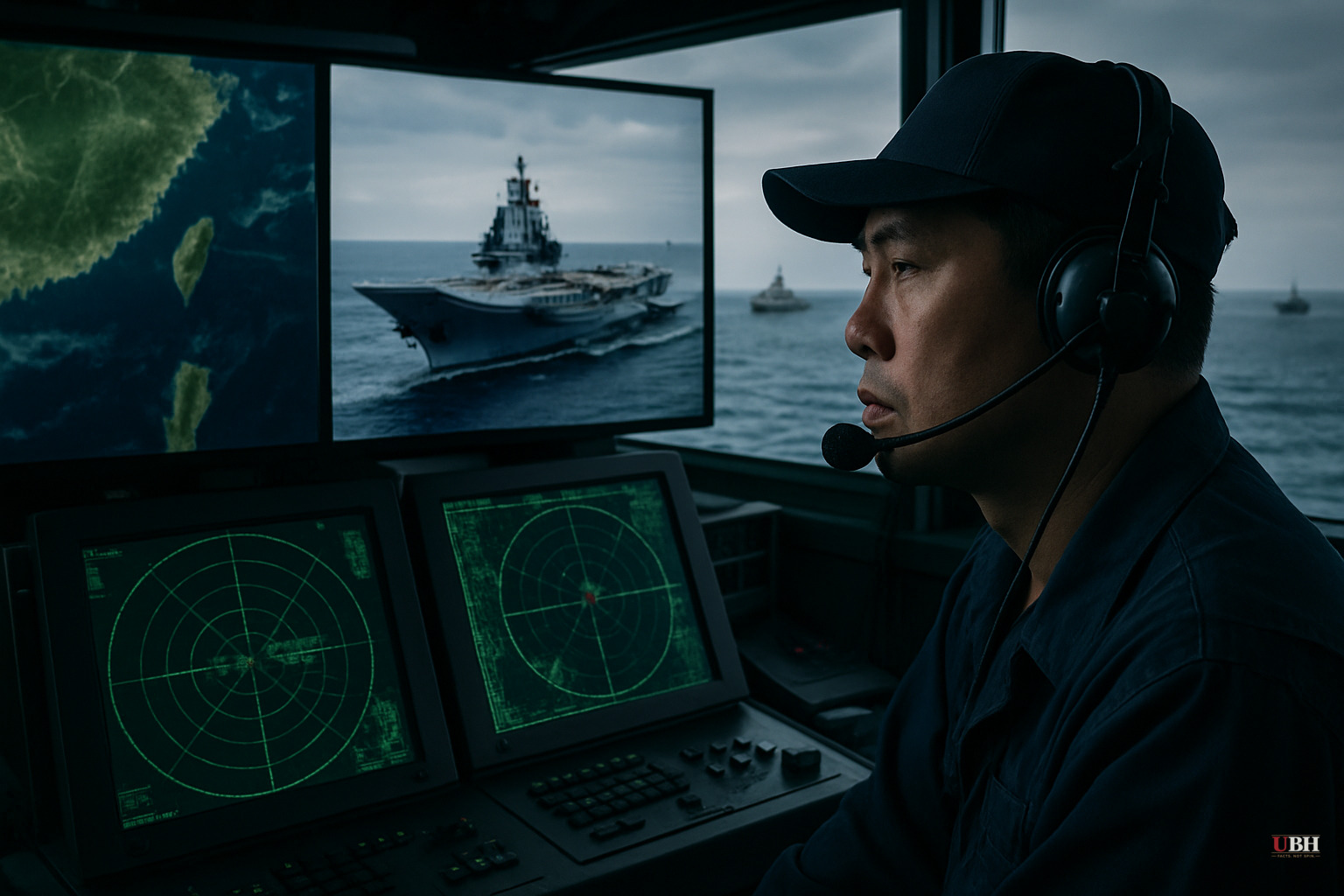
China's navy announced Tuesday that the Liaoning carrier task group has been deployed to the Western Pacific for live-fire drills and combat training exercises, according to Reuters. The navy said the exercise is "routine training organised in accordance with the annual plan" — language Beijing uses each time it sends warships toward the region.
Wednesday marks the second anniversary of President Lai Ching-te taking office, and China has refused every single one of his offers for talks, labeling him a "separatist."
Taiwan's Premier Speaks Out
Premier Cho Jung-tai spoke to reporters in Taipei on Tuesday with an unusually direct assessment from Taipei's government.
"The People's Republic of China continues to conduct military exercises of various scales and types in the Taiwan Strait region, the Indo-Pacific region, the South China Sea, and even around Japan, affecting navigational safety," Cho said, per Reuters. "This is the greatest source of regional unease and instability."
The statement represents a significant departure from diplomatic hedging. China's armed forces now operate almost daily around Taiwan.
China's Taiwan Affairs Office did NOT respond to requests for comment.
The Liaoning Deployment — What It Actually Means
The Liaoning is China's first aircraft carrier. It's not the PLA's most advanced — that would be the Fujian — but deploying it with a full carrier task group into the Western Pacific with live-fire orders signals a specific capability: Beijing is rehearsing power projection across the region.
According to documented records of the Fourth Taiwan Strait Crisis — ongoing since August 2, 2022 — China has conducted major military drills around Taiwan in August 2022, April 2023, August 2023, May 2024, October 2024, December 2024, April 2025, and December 2025. The exercises have grown more frequent and expansive, extending across the Taiwan Strait, the South China Sea, and waters around Japan.
This is the pattern Cho is pointing toward — not isolated incidents, but a sustained campaign.
The Domestic Political Dimension
Taiwan's opposition-controlled parliament attempted to impeach President Lai on Tuesday. The vote failed — it required two-thirds of lawmakers, and the opposition lacks that margin. But the attempt underscores a deeper challenge for Lai's administration.
The opposition bloc has been blocking defense spending increases and passing legislation to stymie Lai's agenda. Taiwan faces military pressure from China while its own parliament actively restricts defense budgets.
Lai confronts the two-front problem: a Beijing that refuses dialogue and a domestic parliament resistant to military funding.
What Lai Is About to Say
Wednesday morning, Lai holds a news conference marking two years in office. His office says he'll outline a "future national vision and policy direction," according to Reuters. Given Tuesday's Liaoning deployment and Cho's explicit statement about Chinese military aggression, the presser is likely to address the security situation directly.
The Pattern Most Coverage Overlooks
Most outlets are framing the Liaoning deployment as "routine," echoing Beijing's own press release language. This framing obscures China's documented, escalating pattern of exercises across the Taiwan Strait, South China Sea, and waters off Japan.
The Fourth Taiwan Strait Crisis operates differently than traditional crises — there's no single flashpoint. Instead, China is conducting a pressure campaign at a tempo designed to normalize military operations. When each individual exercise appears routine, the cumulative effect becomes easier to ignore.
Economic Stakes
Approximately $5.3 trillion in global trade passes through the South China Sea annually. The Taiwan Strait is a critical chokepoint for semiconductor supply chains that power cars, phones, and countless other products. A destabilized Taiwan Strait would disrupt global commerce and raise costs for American consumers and businesses.
China has just sent a carrier group into the Western Pacific. Taiwan's government has publicly identified Beijing as the region's biggest threat. An impeachment vote has failed. And Lai speaks tomorrow.
Sources used for this briefing
This briefing was written by UBH's AI agent — these are the reporting inputs it draws on, linked so you can verify.


