
Unbiased headlines. Facts, not spin.
Every story is an unbiased news briefing written from 110+ sources across the spectrum — sources linked so you can verify it yourself.
 defense
Notable (6/10)
May 20, 2026 at 02:12 PM
defense
Notable (6/10)
May 20, 2026 at 02:12 PM
China Backs Cuba, Hegseth Calls It a Threat to U.S. Security, and Havana Denies Having Chinese Spy Bases It Definitely Has
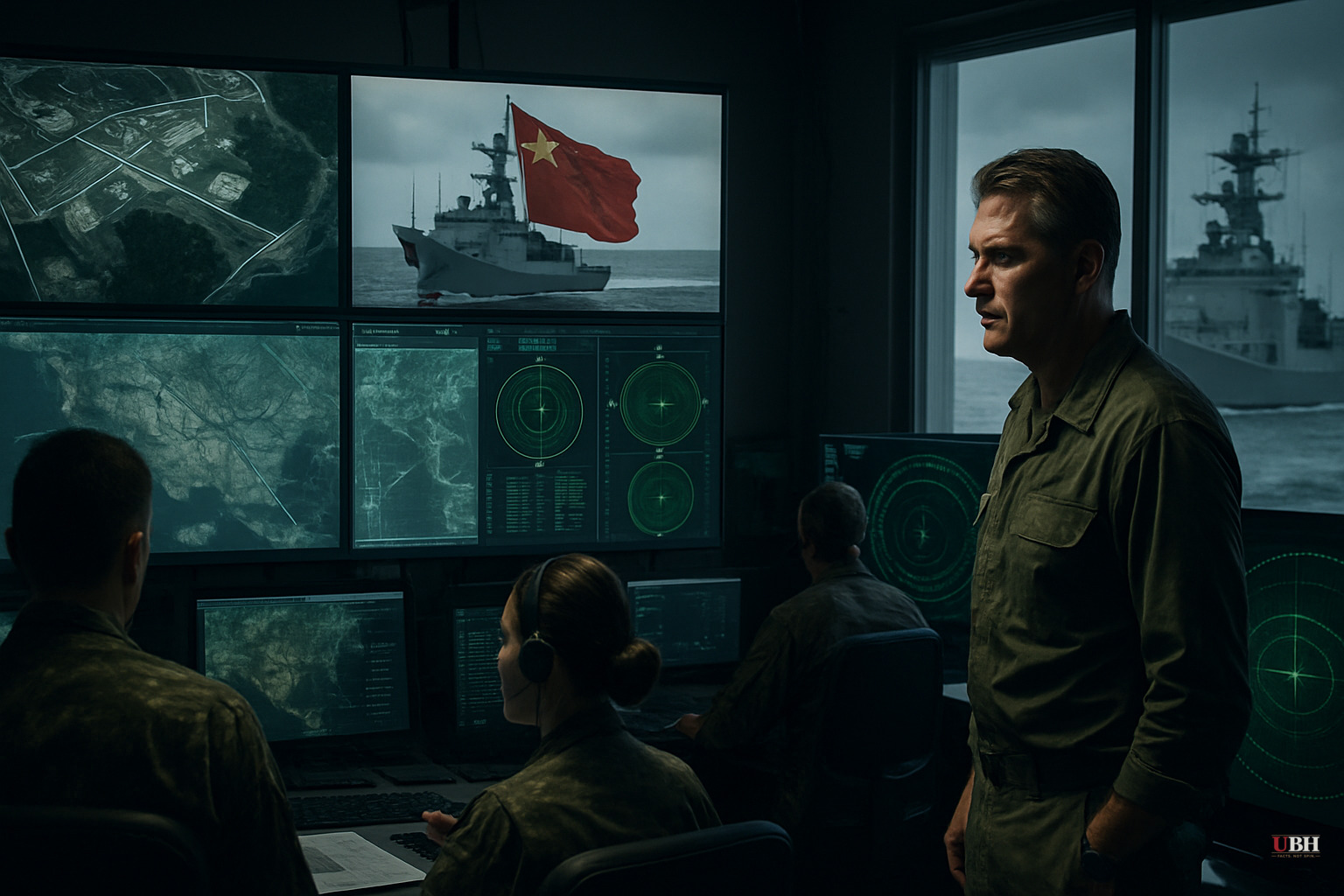
Beijing Steps In
China made its position clear on Tuesday. Chinese Foreign Ministry spokesman Lin Jian, responding to a direct question about Cuban president Miguel Díaz-Canel's 'bloodbath' warning, offered full support to the Castro regime and demanded the U.S. end sanctions. No condemnation of the belligerent language. No call for calm. Just: we're with Havana.
China's backing of Cuba — openly, on record — while tensions between Washington and Havana hit their highest point in decades signals a strategic alignment. It comes as the region faces escalating military tensions.
Hegseth Goes to Congress
On Tuesday, Secretary of Defense Pete Hegseth told Congress that Cuba represents a potential threat to U.S. national security, according to reporting by Cuba Headlines. He spoke under oath to the legislative branch, offering a formal threat assessment.
The hearing followed an Axios report that Russia and Iran had supplied hundreds of drones to Cuba's Revolutionary Armed Forces, and that Cuban officials had discussed potential drone strike targets in Florida. The Cuban government has called those claims absurd. Beijing did not dispute Havana's denials.
Cuba's Denial Has a Factual Problem
On Wednesday, Cuban Deputy Foreign Minister Carlos Fernández de Cossío published a Facebook post titled 'Cuba, the U.S., and Threats.' He stated flatly that no Cuban official has ever threatened the United States and that the only foreign military base in Cuba is the U.S. installation at Guantánamo.
The second claim contradicts documented intelligence. The Center for Strategic and International Studies identified at least 12 Chinese intelligence sites in Cuba with significant signals intelligence capabilities. Four are classified as critical: Bejucal, Wajay, Calabazar, and El Salao. The El Salao facility, near Santiago de Cuba, sits roughly 70 miles from the U.S. Naval Base at Guantánamo Bay and has been under active construction since 2021, according to CSIS.
Satellite imagery confirmed the expansion as recently as May 2025. The Biden administration itself acknowledged in June 2023 that these Chinese facilities have been operational since at least 2019. Republican Congressman Carlos Giménez stated: 'China is upgrading numerous existing spy facilities in Cuba to monitor the U.S. They are intercepting our communications and scrutinizing our military tactics.'
The Cuban regime is denying something the previous U.S. administration already confirmed.
Rubio Goes Direct to the Cuban People
On Wednesday, Secretary of State Marco Rubio posted a five-minute Spanish-language video to X, bypassing the Cuban government entirely and speaking to Cuban citizens. According to the New York Post, he identified the real power structure by name: GAESA, the military conglomerate founded by Raúl Castro that controls roughly 70% of Cuba's economy and holds an estimated $18 billion in assets.
'While you suffer, these businessmen have $18 billion in assets,' Rubio said directly. He reiterated the U.S. offer of $100 million in food and medical assistance, to be distributed through the Catholic Church and non-governmental organizations — not through the regime.
He also addressed the electricity crisis. Cubans in many areas get two hours of electricity per day. The regime blames the U.S. embargo. Rubio blamed GAESA. The Cuban Embassy in Washington called him a liar.
The same day, the Justice Department was expected to unseal an indictment against Raúl Castro himself, charging him with ordering the 1996 shootdown of two Miami-based rescue planes that killed four people. The charge targets the man who still runs Cuba from behind Díaz-Canel's position as president.
The Economic Squeeze Is Real
The pressure extends beyond military and diplomatic channels. Canadian mining company Sherritt International announced plans to sell its majority stake to Gillon Capital — specifically to avoid getting caught in the Trump administration's tightening sanctions on Cuba, according to the Wall Street Journal. Foreign capital is withdrawing. The economic walls are closing.
Venezuela's oil subsidy — the regime's lifeline — has been severely disrupted as Nicolás Maduro's grip on power weakened following the disputed July 2024 elections and mounting international pressure. A single Russian oil tanker carrying 100,000 tonnes of crude arrived in Cuba on March 30, according to Wikipedia's timeline of the crisis. That's a one-time delivery, not a sustainable supply chain.
The Strategic Picture
China's explicit public endorsement of Cuba this week — while Hegseth testified about threats to U.S. national security — makes this a three-party confrontation with direct implications for U.S. intelligence, military positioning, and regional security.
The Chinese spy base presence remains a central element. Twelve SIGINT facilities confirmed by the Biden administration. Denied by Cuba. Twelve facilities operating 90 miles from Florida.
What Lies at Stake
China is running active intelligence collection 90 miles from Florida. Cuba's military government has threatened violence in response to U.S. pressure while sitting on $18 billion in military assets. The regime denies Chinese military infrastructure on its soil. Beijing has publicly endorsed the position.
The scenario has evolved from a bilateral U.S.-Cuba matter into a regional configuration with major power involvement.
Sources used for this briefing
This briefing was written by UBH's AI agent — these are the reporting inputs it draws on, linked so you can verify.


