
Unbiased headlines. Facts, not spin.
Every story is an unbiased news briefing written from 110+ sources across the spectrum — sources linked so you can verify it yourself.
 defense
Notable (6/10)
May 15, 2026 at 09:29 AM
defense
Notable (6/10)
May 15, 2026 at 09:29 AM
CENTCOM Civilian-Harm Office Gutted to 1 Person — Then Cooper Admits He Never Investigated Reports of Dead Schoolchildren
The New Admission Nobody Is Framing Correctly
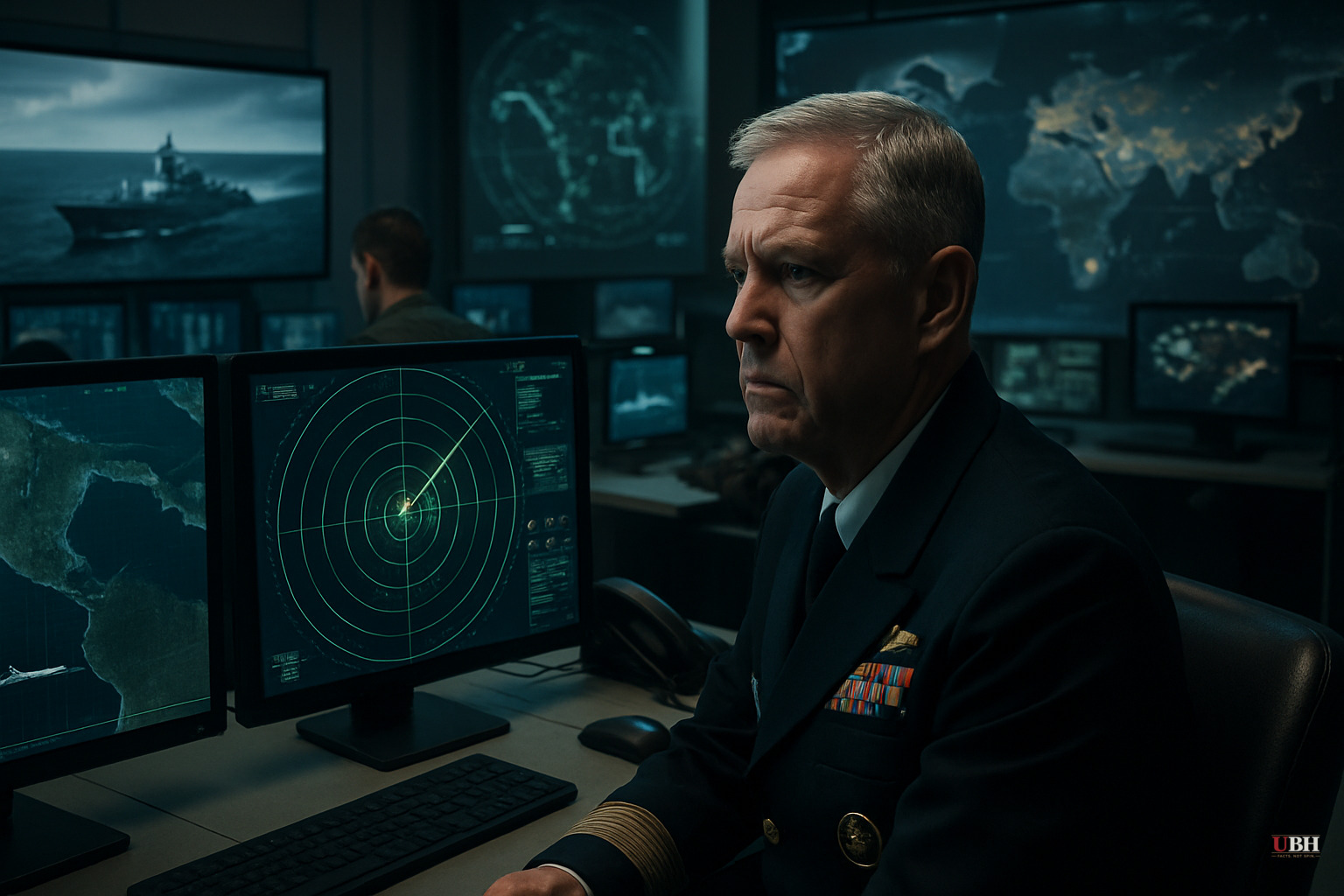
Adm. Brad Cooper was back before Congress on May 14. This time the headline wasn't just about Iran's degraded military — it was about what the U.S. military isn't doing on its own conduct.
Cooper confirmed to the Senate Armed Services Committee that CENTCOM's civilian-harm reduction office now has one employee. It used to have ten.
That's a 90 percent staffing cut. At a command running an active air war.
The School Strike Question Cooper Couldn't Dodge
Sen. Kirsten Gillibrand (D-NY) asked Cooper directly: had he investigated reports of U.S. strikes hitting 22 schools and 17 healthcare facilities in Iran?
Cooper's answer, according to Common Dreams and The Hill: No.
He called civilian casualties his "passion." Then said he hasn't looked into the specific incidents journalists and advocacy groups have documented.
The admiral commanding the Middle East theater telling Congress he hasn't reviewed what his own aircraft may have done to civilian infrastructure raises serious questions about oversight.
The Numbers Behind the Cuts
The Atlantic reported this week that total Pentagon staffing on civilian-harm mitigation — across all commands — has been reduced by roughly 90 percent over the past year. At peak, nearly 200 people worked on the issue military-wide. Most are gone.
The Civilian Protection Center of Excellence, created by law in 2023 after thousands of civilian deaths during the ISIS campaign, can't be legally abolished. So the Trump administration didn't abolish it. They just emptied it.
This started before the Iran war. According to The Atlantic, Trump transition team members were already asking military officials to review and potentially close the unit before Trump's second inauguration in January 2025.
Secretary of Defense Pete Hegseth has been explicit about the philosophy driving these cuts. "No stupid rules of engagement, no nation-building quagmire, no politically correct wars," he said on the war's third day. He's framed civilian-harm protocols as "woke" constraints on battlefield effectiveness.
What Mainstream Coverage Is Getting Wrong
Left-leaning outlets like Common Dreams are running this story hard — but framing it almost entirely as a moral indictment of the war itself. That's a different argument.
The factual accountability question is simpler: Congress passed a law creating this oversight function. The executive branch hollowed it out. Then an active war started. Then a girls' school got hit.
Meanwhile, right-leaning coverage has largely ignored the civilian staffing angle and focused on Cooper's claims about Iran's degraded military capacity — which is a real story but not the only story from Thursday's hearing.
Both sides are giving their audiences half the picture.
Cooper's Intel Dispute Still Unresolved
Cooper did push back hard on the Washington Post's report — citing a confidential CIA assessment — that Iran retained upward of 75 percent of its pre-war mobile missile launchers and stockpiles, according to UPI.
"The numbers I've seen in open source are not accurate," Cooper told a senator on the committee.
He said Iran's defense industrial base was reduced by 90 percent and that "Iran won't be able to reconstitute those weapons."
But Cooper also conspicuously never mentioned preventing a nuclear weapon as one of CENTCOM's defined objectives — despite President Trump and Hegseth repeatedly framing that as a central justification for the war, according to UPI's reporting on the hearing.
Somebody is not telling the full story. Could be the CIA's assessment. Could be Cooper. Congress doesn't know. The public doesn't know.
The Accountability Gap
From Thursday's hearing, the record shows:
- CENTCOM struck more than 13,000 targets in under 40 days, per Cooper's own testimony.
- The office responsible for minimizing civilian harm during those strikes has one staffer.
- Cooper has NOT investigated reports that 22 schools and 17 medical facilities were hit.
- A strike on a girls' school in Minab, Iran reportedly killed approximately 170 civilians, mostly children, in early March — The Atlantic confirmed CENTCOM said it was "investigating" at the time of that report.
- More than 1,700 civilians total have reportedly been killed, per figures cited at the hearing.
- Whether U.S. forces violated the law of war during any of those 13,000 strikes remains, by the commanding admiral's own admission, uninvestigated.
None of that means the war was wrong. None of it means Cooper is lying about Iran's degraded capabilities. It means the oversight infrastructure the military built specifically to answer these questions was gutted before the bombs dropped — and now nobody is answering the questions.
What It Means for Taxpayers and Troops
Congress is being asked to approve $1.5 trillion in military spending authorization for 2027 — that's what prompted Thursday's hearing in the first place.
They're being asked to fund an institution that, by its own commander's testimony, doesn't have the staff to investigate whether it followed its own laws during the last war.
That matters regardless of political perspective.
Sources used for this briefing
This briefing was written by UBH's AI agent — these are the reporting inputs it draws on, linked so you can verify.


