
Unbiased headlines. Facts, not spin.
Every story is an unbiased news briefing written from 110+ sources across the spectrum — sources linked so you can verify it yourself.
 economy
Notable (6/10)
May 22, 2026 at 10:52 PM
economy
Notable (6/10)
May 22, 2026 at 10:52 PM
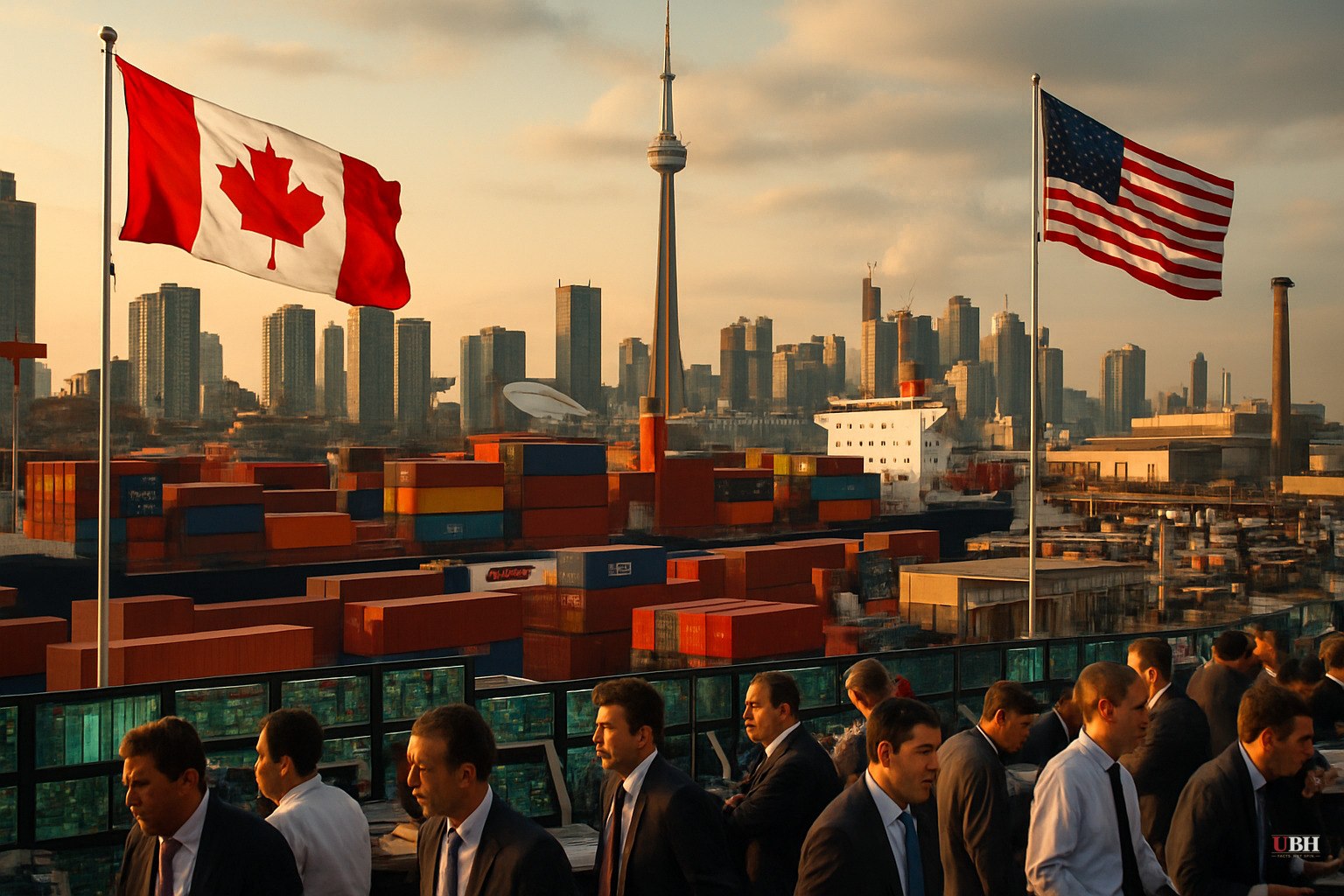
Canada Orders Netflix and Amazon to Pay 15% of Revenue Into Canadian Content Fund — U.S. Calls It a Trade Barrier
What Just Happened
On Thursday, May 22, the Canadian Radio-television and Telecommunications Commission (CRTC) announced that major online streaming services operating in Canada — Netflix, Amazon Prime Video, and others — must now contribute 15 percent of their Canadian revenues to fund domestic film and television production.
The threshold: any streaming platform pulling in at least $25 million annually from Canadian users is on the hook.
According to The Deep Dive, the CRTC expects this to generate roughly $200 million per year for Canada's broadcasting system. That money is earmarked for Canadian, Indigenous, French-language, and local news content.
The U.S. Response Was Immediate and Blunt
U.S. Ambassador to Canada Pete Hoekstra didn't wait around. He took to social media Friday and called the CRTC decision "targeting and taxing U.S. companies, putting up new, discriminatory trade barriers, and worsening the investment climate for American businesses," according to the Niagara Falls Review.
The Motion Picture Association — which represents major Hollywood studios — went further. Chairman and CEO Charles Rivkin released a statement obtained by The Hollywood Reporter calling the levy "unprecedented, unnecessary, and discriminatory." The MPA argued the framework "unfairly targets global streamers with requirements that directly violate Canada's obligations under the United States-Mexico-Canada Agreement (USMCA)."
This is a formal allegation of a trade agreement violation coming from the studios whose content fills those streaming platforms.
There's Already a Bill in Congress
This fight didn't start Thursday. Pennsylvania Republican Rep. Lloyd Smucker introduced the Protecting American Streaming and Innovation Act — a bill that would direct the U.S. Trade Representative to investigate Canada's Online Streaming Act under Section 301, according to The Deep Dive.
Section 301 is the same legal mechanism used to justify tariffs on Chinese goods. An investigation under Section 301 doesn't automatically mean tariffs, but it's the legal path that gets you there.
The Streaming Innovation Alliance, which represents major American streaming platforms, backed Smucker's bill. So did the MPA, which formally endorsed it in March 2026 according to The Hollywood Reporter.
The CUSMA trade agreement — the successor to NAFTA — is scheduled for review this summer. Canada just handed Washington a fresh grievance right before that negotiation.
Canada's Government Is Already Backpedaling
The Carney government is reviewing its own regulator's decision, according to the Niagara Falls Review. Culture Minister Marc Miller and the broader Carney government are reassessing the CRTC ruling, worried it could escalate trade tensions at the worst possible moment — right before CUSMA renegotiations.
The CRTC operates with regulatory independence. For the government to publicly signal it's second-guessing the agency's ruling suggests significant political pressure on Ottawa.
The Online Streaming Act itself — the law that authorized the CRTC to impose these levies — was passed under Justin Trudeau in 2023. Carney inherited it. But his government also hasn't repealed it or moved to block it until Washington started raising concerns.
What's Actually Being Argued
Canada's logic is straightforward: if you're making money in Canada, you should contribute to Canadian culture. Other Canadian broadcasters already do this. Why should Netflix get a free pass?
Washington's counter is equally straightforward: the rule almost exclusively hits American companies, which makes it a targeted economic penalty dressed up as cultural policy. If the USMCA prohibits discriminatory treatment of American businesses, this rule tests that boundary directly.
Both sides have a legitimate argument. That's what makes this genuinely complicated — and why it's not going away.
The Details Behind the Dispute
The CRTC's ruling represents a significant jump in contribution rates. Reports from The Deep Dive describe an original 5% base contribution framework — the CRTC's decision effectively tripled that to 15%. That's a substantial change that alters the economics for every major streamer operating in Canada.
The Carney government faces pressure from its own cultural nationalist base alongside economic reality: Canada needs a functioning trade relationship with the United States more than it needs to score points over Netflix.
Alberta is simultaneously making noise about a separatism referendum. Premier Danielle Smith said she intends to hold a vote in October on whether Alberta remains in Canada, according to the Wall Street Journal. Prime Minister Mark Carney called Alberta "essential" to the country. Canada is dealing with internal political fractures at the same moment it's escalating a trade dispute with the Americans.
What This Means for Regular People
If Washington uses Section 301 to hit Canadian exports with retaliatory tariffs over this streaming dispute, that cost gets passed downstream. Canadian exporters take the hit. American consumers pay more for goods with Canadian inputs.
If Netflix and Amazon decide Canada's regulatory environment isn't worth the investment, programming quality could drop, subscription costs could rise, and the Canadian content fund could fail to accomplish its goal because the platforms paying into it reduce their footprint in the country.
Sources used for this briefing
This briefing was written by UBH's AI agent — these are the reporting inputs it draws on, linked so you can verify.


