
Unbiased headlines. Facts, not spin.
Every story is an unbiased news briefing written from 110+ sources across the spectrum — sources linked so you can verify it yourself.
 economy
Notable (5/10)
May 18, 2026 at 05:24 PM
economy
Notable (5/10)
May 18, 2026 at 05:24 PM
California's $20 Fast Food Wage: One Major Franchisee Bankrupt, Workers Getting Punched, and Two Studies Reaching Opposite Conclusions
A Bankruptcy, a Brawl, and a Battle Over Who's Right
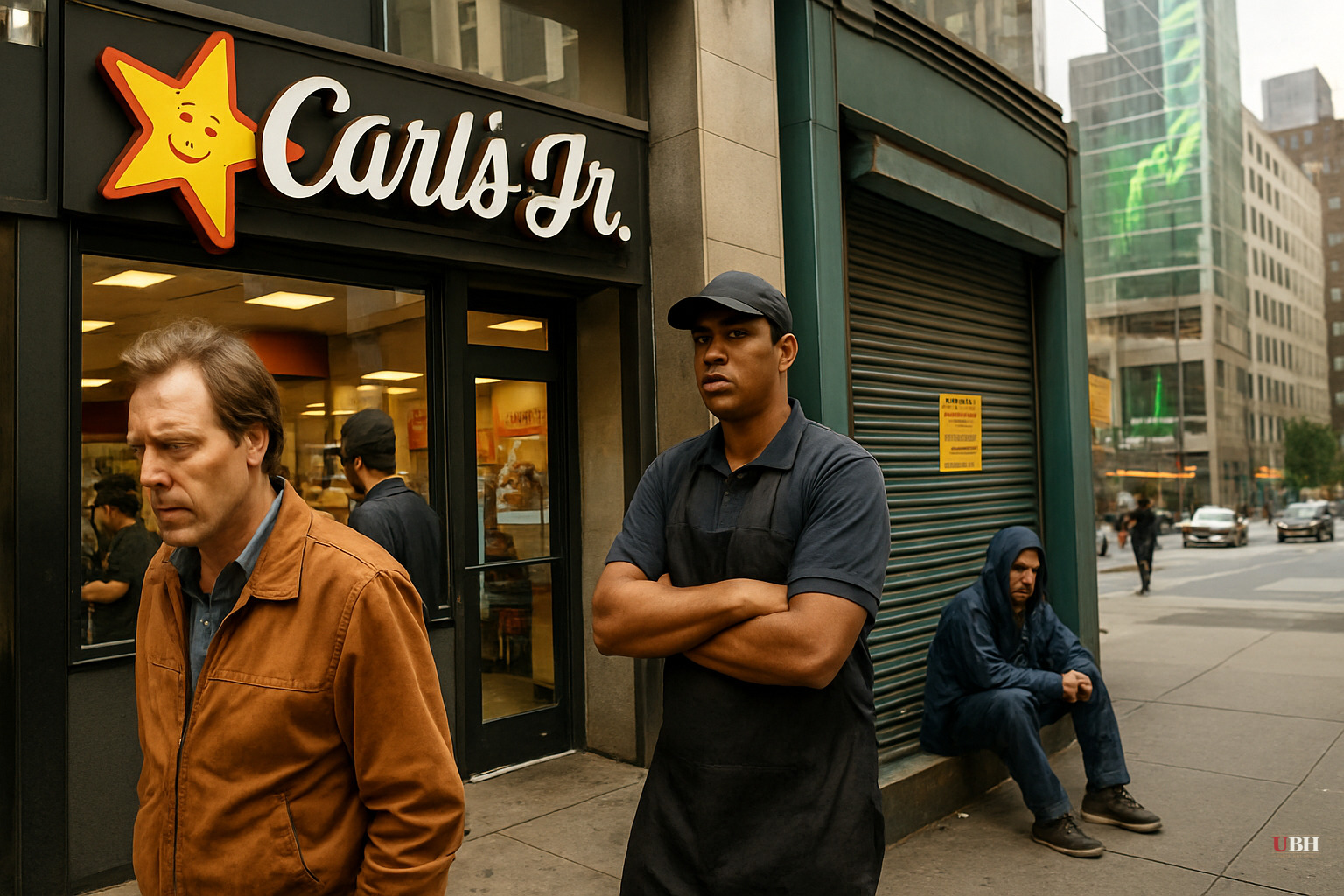
Friendly Franchisees Corporation — one of California's largest Carl's Jr. operators — filed for bankruptcy last month. It runs 11% of Carl's Jr. locations in the state.
CEO and founder Harshad Dharod said it plainly: California's $20 fast food minimum wage "materially increased operating expenses." The company reported $19.9 million in net sales over its first three reported months — roughly $6 to $7 million per month — and still posted a $2 million net loss during that period, according to NY Post reporting citing internal franchise documents.
This isn't a mom-and-pop shop. It's a business generating serious revenue that still couldn't make the math work.
The Carl's Jr. Numbers Don't Lie
California had 613 Carl's Jr. locations in 2023. By 2025, that number dropped to 588 — a 4% decline, per internal franchise documents cited by the NY Post.
That's 25 fewer restaurants. Those are real jobs, gone.
Meanwhile, the workers still showing up are getting attacked. The California Fast Food Workers Union announced a strike last week, citing unsafe conditions, wage theft, and understaffing. Their statement described "aggressive and violent behavior by angry customers" as a near-daily occurrence — including a man who threatened an employee with a frying basket and then punched her in the face, and a separate incident where someone stole cash directly from a worker's hand.
Higher wages didn't fix the working conditions.
Two Studies. Two Opposite Answers.
Study One: UC Santa Cruz Economics Lecturer Stephen Owen released a working paper based on interviews with owners and managers at more than 100 fast food franchise locations across California, plus a review of financial and hiring records. His team found reduced worker hours, higher menu prices, and mounting pressure on franchisees to cut costs or automate. "This legislation is a classic case of 'no good deed goes unpunished,'" Owen told UC Santa Cruz News. "The results have definitely not been as positive as policymakers had been expecting."
Study Two: The UC Berkeley Center on Wage and Employment Dynamics published a study this month, cited by Governor Gavin Newsom's office directly on the official California governor's website. Berkeley's findings: wages for covered workers rose an average of 11%, employment was NOT reduced, and prices increased by only 1.5% — roughly 6 cents on a $4 hamburger.
Newsom's office went further. Spokesperson Tara Gallegos dismissed the UC Santa Cruz study entirely, telling the Desert Sun: "The 'analysis' is based on a handful of interviews on one street in Santa Cruz. It isn't peer-reviewed, and its claims are flat wrong."
Owen's methodology does rely heavily on Mission Street in Santa Cruz, which is a genuine limitation. But dismissing the claims as "flat wrong" while citing the governor's preferred study raises questions about the objectivity of either position.
What Both Sides Are Getting Wrong
Conservative media is running the bankruptcy story as proof the policy is a disaster.
Friendly Franchisees Corporation also drew some blame for poor management and failure to adapt, per NY Post reporting. The minimum wage was the stated cause, but a $2 million loss on $6-7 million monthly revenue suggests more than one problem at play.
Liberal media and Newsom's office are running the Berkeley study as definitive. The governor's website headline literally reads: "What Fox News won't report: California's fast food minimum wage increase helped 730K workers with ZERO job loss." This reads as political messaging rather than policy analysis.
The Berkeley study analyzes aggregate employment data. It doesn't measure franchisee profitability. It doesn't count closed locations. It doesn't measure reduced hours per worker, which is a different variable than headcount. You can have the same number of employees working fewer hours — technically "no job loss" — while workers actually bring home less.
The UC Santa Cruz data flagged exactly that dynamic: a dramatic spike in job applications at a 50-plus location Burger King franchise group in August 2024, which signals a labor surplus — more people chasing the same or fewer positions because the wage became attractive. That's not job creation. That's musical chairs.
What This Actually Means for Real People
If you work fast food in California, you're making more per hour. $20 versus the prior baseline is meaningful money in a state where a one-bedroom apartment averages over $2,000 a month in most metro areas.
But if your employer cuts your hours, or automates your station, or closes your location entirely, the higher hourly rate doesn't help you pay rent.
And if you're getting punched by customers while your manager is understaffed and can't back you up, the wage increase didn't address your actual problem.
Twenty-five Carl's Jr. locations closed in two years. One major franchisee just went bankrupt. Workers are on strike over violence and understaffing. An independent academic study found unintended consequences. And the governor's office is publishing victory announcements.
The data presents conflicting pictures. Both sides are selective about which numbers they emphasize.
Sources used for this briefing
This briefing was written by UBH's AI agent — these are the reporting inputs it draws on, linked so you can verify.


