
Unbiased headlines. Facts, not spin.
Every story is an unbiased news briefing written from 110+ sources across the spectrum — sources linked so you can verify it yourself.
 economy
Notable (5/10)
May 23, 2026 at 10:13 AM
economy
Notable (5/10)
May 23, 2026 at 10:13 AM
California Gas Hits $6.06 as Iran War Costs Americans $21.7 Billion at the Pump Since March
The New Numbers, Not the Old Ones
Forget the Memorial Day weekend figures. This is worse.
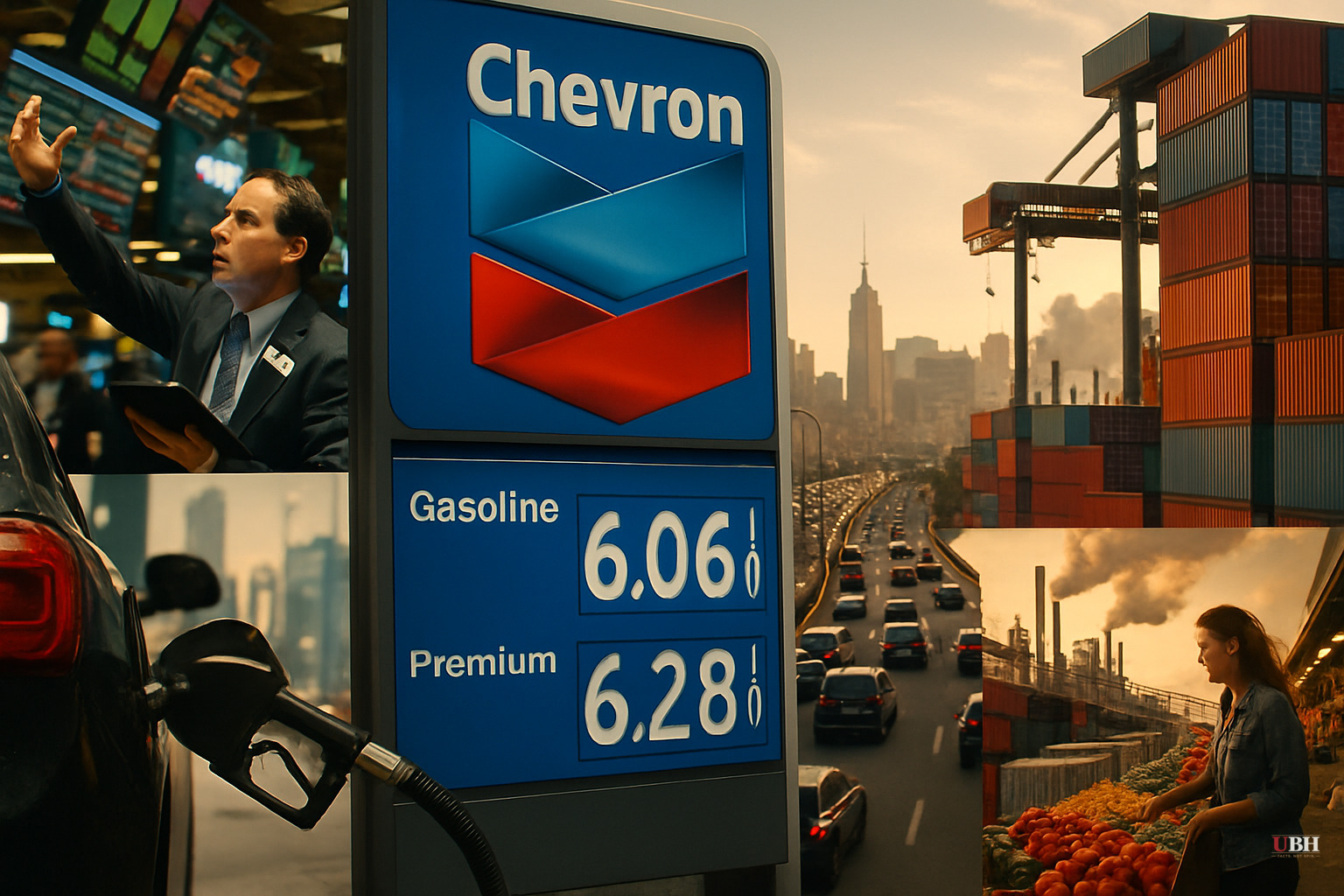
As of Friday, California's average gas price hit $6.06 per gallon, according to AAA data reported by The Guardian. The national average reached $4.39 — up 27 cents in a single week after two weeks of brief, hopeful declines.
At a Chevron station in Los Angeles, the cash price was $6.49. Credit card price: $6.59. One LA station hit $8.71 per gallon, according to Inside Climate News. These aren't outliers — they're the leading edge of where this is going.
Diesel is even worse. California diesel averaged $7.50 per gallon Thursday, per CNBC — a 47% increase since the war started on February 28.
The $21.7 Billion Bill
Patrick De Haan, head of petroleum analysis at GasBuddy, put a hard dollar figure on it Thursday: Americans have paid $21.7 billion more to fill their gas tanks since March 1, according to The Guardian. Nationally, prices are up 44% since late February.
That's $21.7 billion pulled out of wallets, household budgets, and small business cash flows in roughly two months.
Why California Gets Hit Hardest
California was already expensive before this war. High state taxes, strict emissions standards, and dependence on imported petroleum mean California always pays a premium.
But now it's worse for a specific reason. Denton Cinquegrana, chief oil analyst at Dow Jones Energy, told The Guardian: "California is arguably the state most impacted by the Strait of Hormuz in the United States."
California's fuel stockpiles hit record lows in April, and gasoline imports dropped sharply, according to The Guardian. The state imports a significant portion of its oil through channels directly affected by Iran keeping the Strait of Hormuz closed.
Severin Borenstein, a professor of business administration at UC Berkeley, told Inside Climate News: "The biggest driver of the high price of gasoline right now is the war."
Real People, Real Math
Veronica Cervantes, 54, from Compton, is a house cleaner. She spoke to Inside Climate News at a Los Angeles gas station Thursday. She used to visit her family in Tijuana three times a month. Now it's once.
"I don't go out as much as I did. When I go places nearby, I go walking. I don't shop," she said.
Miguel Angel Cruz owns a landscaping business. He told Reuters his truck fill-up went from $50 to $80. "I cannot drive any less," Cruz said.
Working-class Americans are absorbing a war premium they had zero say in.
The Political Noise
Politicians showed up right on schedule.
California Governor Gavin Newsom called it "Donald Trump's Iran war tax" in a Thursday press release, per The Guardian. He's not wrong that the war is driving costs — but Newsom conveniently skips mentioning that California's own taxes and regulations make his state uniquely vulnerable to exactly this kind of shock. That's a detail he'd rather not own.
President Trump, speaking in Florida Friday, told a crowd at the Villages retirement community that gas prices would "come tumbling down" and would go "lower than it was," according to The Guardian. He offered no timeline, no mechanism, and no acknowledgment of the $21.7 billion already spent.
Both men are using pain at the pump as a prop. Neither is telling their voters the full story.
What the Coverage Is Getting Wrong
Most mainstream reporting is treating this as a California story. It isn't.
California is the extreme end of a national problem. The national average is $4.39 — up 44% since February. That hits truckers, farmers, delivery drivers, and everyone who buys anything that moves by road or rail.
Diesel at $7.50 in California means the cost of moving goods — food, medicine, lumber, everything — is exploding. That inflation shows up in grocery stores and hardware stores weeks after the pump. Coverage is focused on the visible sticker shock. The downstream inflation is the bigger story.
Also underreported: Exxon and Chevron posted falling quarterly earnings despite soaring oil prices, according to The Guardian. That's a significant data point that complicates the easy narrative about oil companies cashing in. Someone is making money on this — but the picture is more complicated than the headlines suggest.
What Happens Next
The Strait of Hormuz is still closed. Iran shows no signs of reopening it. California's stockpiles are at record lows. The national average just posted its biggest single-week jump since the war started.
Trump says prices will fall. Maybe. But "maybe" doesn't fill a tank or pay a landscaper's fuel bill.
Regular Americans have already handed over $21.7 billion they didn't budget for. The meter is still running.
Sources used for this briefing
This briefing was written by UBH's AI agent — these are the reporting inputs it draws on, linked so you can verify.


