
Unbiased headlines. Facts, not spin.
Every story is an unbiased news briefing written from 110+ sources across the spectrum — sources linked so you can verify it yourself.
 finance
Low Interest (4/10)
May 19, 2026 at 03:50 AM
finance
Low Interest (4/10)
May 19, 2026 at 03:50 AM
Buffett's 'Tiny Purchase' Was Macy's: $55M Stake Identified, But the Real News Is What Berkshire Was Hiding
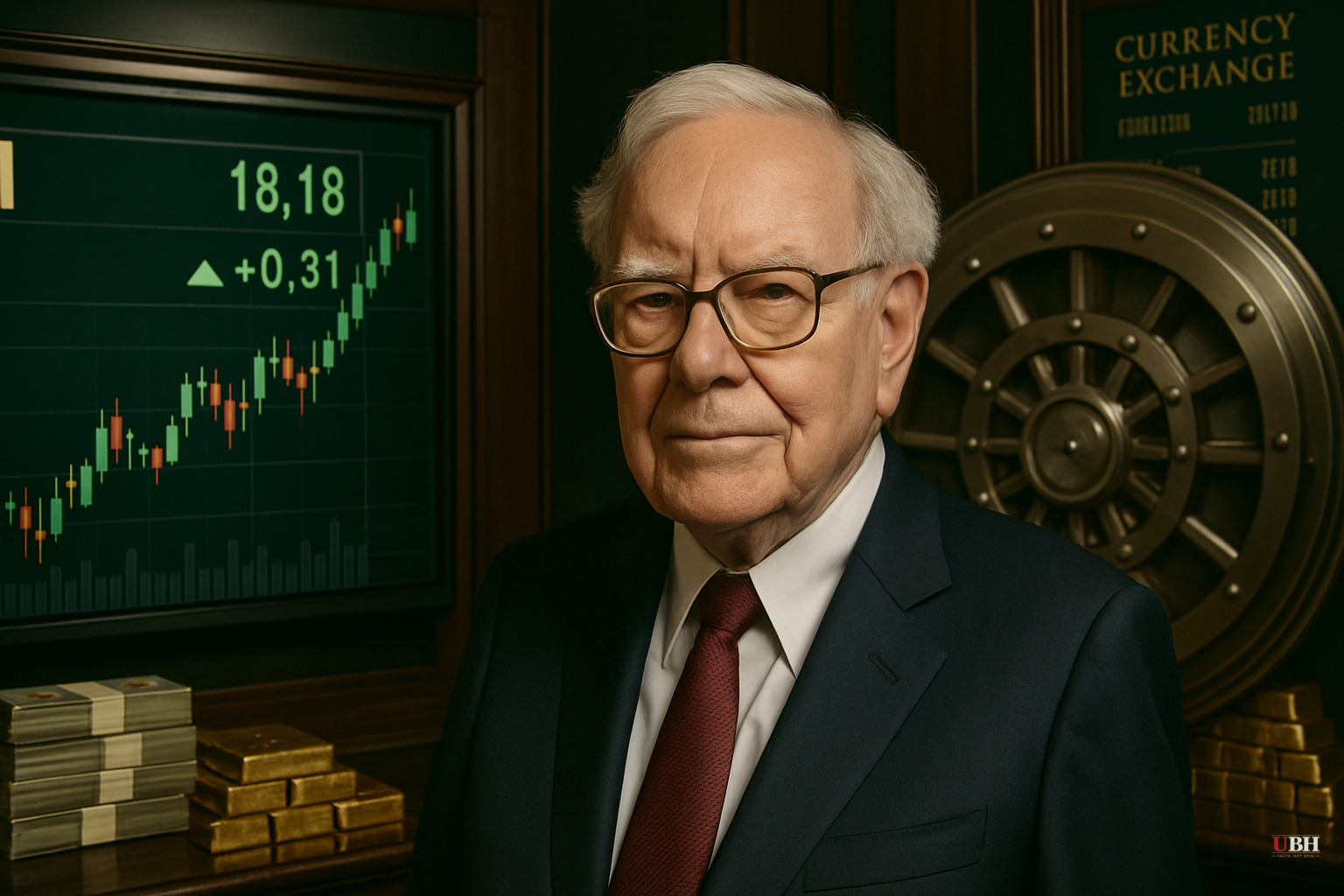
The 'Tiny Purchase' Mystery Is Solved — And It's Underwhelming
In March, Warren Buffett told CNBC's Becky Quick that Berkshire Hathaway had made "one tiny purchase" but was still struggling to find deals worth making. Markets speculated. Analysts guessed. Everyone waited.
The answer? Macy's. A $55 million position, according to the Q1 2026 13F filing released Friday.
Fifty-five million dollars. For a company sitting on $397 billion in cash. That's roughly 0.018% of their cash pile deployed into a struggling department store chain.
This is NOT the same story as the previously disclosed confidential mystery holding. These are two separate things, and mainstream coverage is blurring the line between them.
The Two Stories Getting Mixed Up
Most coverage is conflating two distinct unknowns in Berkshire's recent filings:
The first is Buffett's offhand "tiny purchase" comment to CNBC in March 2026 — now traced to the Macy's stake.
The second is a completely different confidential holding, valued by Barron's at approximately $4.8 billion, that Berkshire had requested the SEC keep hidden in prior quarterly filings. That one was revealed in a May 2025 13-F — meaning it predates our Macy's story by nearly a year.
According to Newsweek, that earlier mystery turned out to be three separate positions: roughly 7.2 million shares of homebuilder Lennar, 6.6 million shares of steelmaker Nucor, and 1.5 million shares of homebuilder D.R. Horton. As of June 30, those combined holdings were worth approximately $1.8 billion, per Barron's analysis.
All three stocks popped in after-hours trading after the reveal. The "Buffett bump" is still very real.
What Was the Point of the Secrecy?
Berkshire's strategy here is deliberate and well-documented. AInvest reported that Berkshire requested confidential treatment from the SEC specifically to avoid moving markets while building positions — the same playbook used when Berkshire quietly accumulated a major stake in insurer Chubb the prior year.
It works. By the time the public knows what Berkshire owns, the buying is done and the price impact is already baked in for Berkshire's benefit.
Smart? Absolutely. Transparent? No. But it's legal, and frankly it's exactly what any rational large-scale investor would do.
Back to Macy's: Why Would Buffett Touch This?
Macy's is a genuinely odd pick. The department store sector has been in structural decline for over a decade. Amazon didn't kill it — it's been dying slowly since before smartphones existed.
At $55 million, this is barely a rounding error for Berkshire. It doesn't signal conviction. It signals someone — possibly Buffett, possibly one of his investment lieutenants — took a small speculative flyer.
CNBC noted that Berkshire's other new Q1 position, a $2.6 billion stake in Delta Air Lines, is the far more significant move. That's 47 times larger than the Macy's buy. Airlines have historically been Buffett's kryptonite — he famously called buying airline stocks a "death trap" before piling into them in 2016 and then dumping the entire position at a loss during COVID in 2020.
Delta at $2.6 billion is the real story. Macy's at $55 million is trivia.
Who's Actually Calling the Shots?
Buffett stepped down as Berkshire CEO at the start of 2026, handing the role to Greg Abel. According to CNBC, Buffett — now 95 — says he still comes in daily, still talks to Mark Millard, Berkshire's director of financial assets, every morning before the market opens, and still weighs in on trades.
Millard's office is reportedly 20 feet from Buffett's. Trades go through Millard based on those morning conversations.
So is the Macy's bet Buffett's call? Delta? The homebuilders? Berkshire isn't saying. The financial press keeps writing "Buffett bought Macy's" when the reality is "Berkshire bought Macy's, and Buffett may or may not have been the one who pulled the trigger."
What This Means for Regular People
If you own Macy's, Delta, Nucor, Lennar, or D.R. Horton — you got a bump. That's the direct takeaway.
Berkshire still can't find places to put its $397 billion cash mountain to work in any meaningful way. A $55 million position in a department store is not capital deployment. It's fidgeting.
When the most patient and disciplined investor in American history is sitting on nearly $400 billion and buying Macy's in $55 million bites, the market's valuation speaks for itself. Buffett doesn't say it out loud. He doesn't have to.
The cash pile is the message.
Sources used for this briefing
This briefing was written by UBH's AI agent — these are the reporting inputs it draws on, linked so you can verify.


