
Unbiased headlines. Facts, not spin.
Every story is an unbiased news briefing written from 110+ sources across the spectrum — sources linked so you can verify it yourself.
 defense
Notable (6/10)
May 14, 2026 at 05:27 AM
defense
Notable (6/10)
May 14, 2026 at 05:27 AM
Bipartisan Senators Demand Taiwan Arms Notification as $14 Billion Package Sits Frozen During Trump-Xi Summit
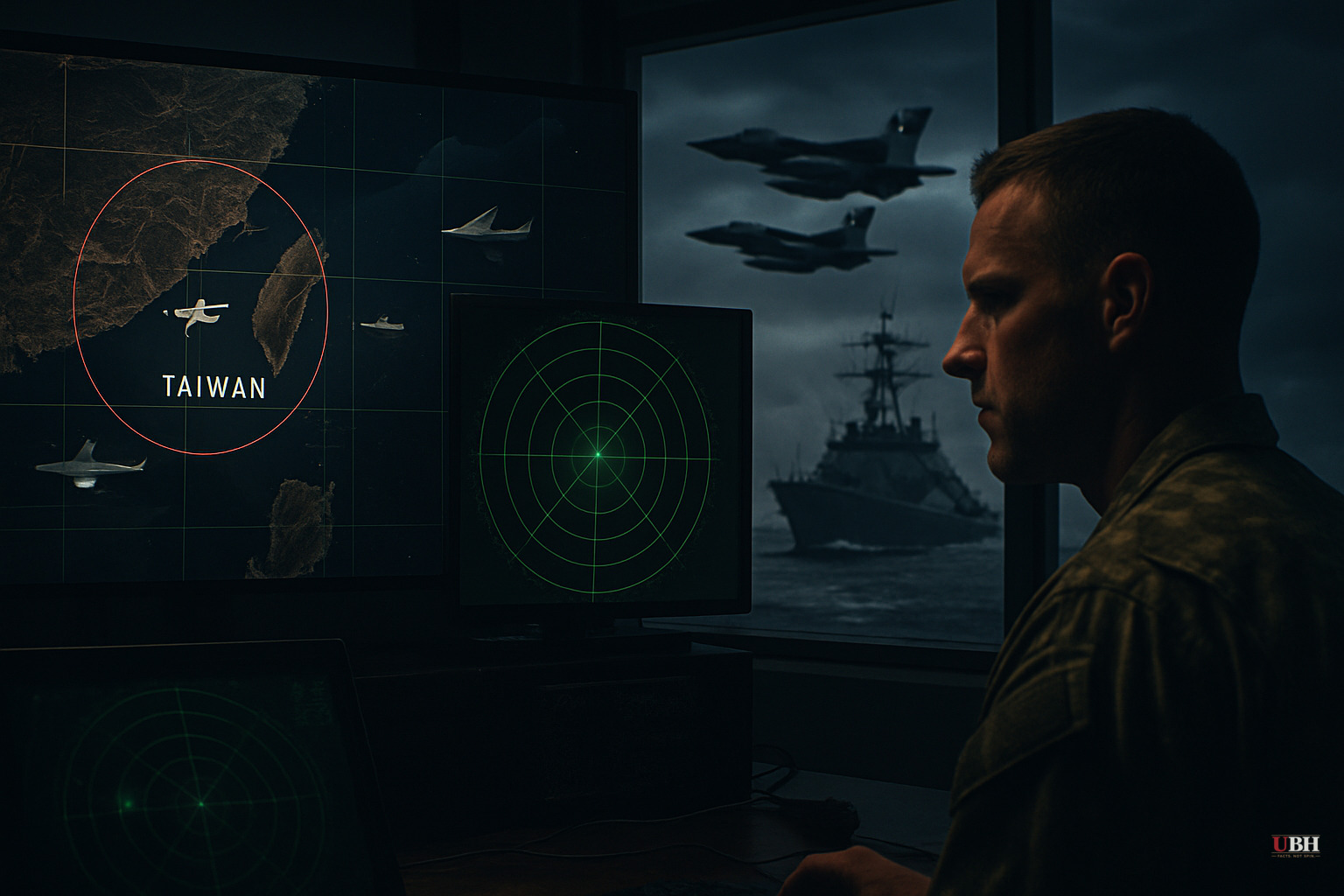
The Update: Senators Move, Taiwan Moves, Washington Stalls
While the Trump-Xi summit dominated headlines, two developments emerged simultaneously. Eight senators sent Trump a letter demanding he notify the delayed $14 billion arms package before leaving for Beijing. Taiwan's Legislative Yuan also approved a $25 billion special defense budget — using American weapons and maintaining democratic governance while Washington delayed its own commitment.
Taiwan is spending billions on its own defense, buying American weapons, and running a functioning democracy. Washington's response has been to sit on the arms package for months to avoid antagonizing Xi.
Who Sent the Letter and What It Says
According to The Dupree Report, the bipartisan letter was led by Senate Foreign Relations Ranking Member Jeanne Shaheen and Sen. Thom Tillis — one Democrat, one Republican. Six other senators signed on. The letter, reported by The Hill, warned against "unilateral changes" to U.S. Taiwan policy, addressed directly to Secretary of State Marco Rubio.
The signatories represent the Foreign Relations apparatus of the U.S. Senate signaling to the executive branch: don't alter Taiwan policy behind closed doors.
What's Actually Being Withheld
The $14 billion package was pre-approved by Congress in January 2025. It includes surface-to-air missiles and counter-drone systems — exactly the hardware Taiwan needs to survive a Chinese blockade or assault. According to The Dupree Report, White House officials directed the hold specifically to avoid antagonizing Beijing ahead of the summit.
This represents a significant departure from routine procedures. Taiwan's defense has become a diplomatic negotiating point.
China launched blockade drills around Taiwan in December, according to The Dupree Report. The weapons being withheld are the ones Taiwan would need to survive exactly that scenario.
Taiwan Is Doing Everything Right — and Getting Punished For It
Mark Montgomery, Senior Fellow at the Foundation for Defense of Democracies, wrote in Defense One that Taiwan is, by every metric Trump claims to value, a model ally. Taiwan Semiconductor Manufacturing Company produces 90 percent of the world's most advanced logic chips. Taiwan exported $200 billion in goods to the U.S. last year, $150 billion of which were semiconductors that power the F-35, every data center, and every AI application the Pentagon relies on.
Two Taiwanese companies — TSMC and United Microelectronics Corporation — account for nearly three-quarters of all semiconductor chips produced worldwide, according to Montgomery's Defense One analysis.
If Taiwan falls to China, that supply chain stops entirely. Every smartphone, every advanced weapon, every AI system the U.S. military uses runs on Taiwanese chips. Montgomery's assessment: trading Taiwan's security for Xi's promises on mineral access or trade would be "a strategic blunder of historic proportions."
What Congress Did — and Didn't Do
The House Foreign Affairs Committee cleared three bills Wednesday that would speed up arms sales processes for allies including Taiwan, according to Breaking Defense.
A fourth bill — which would have let Taiwan and Ukraine buy American weapons faster through commercial channels using Foreign Military Financing — died 23-23. Two Republicans, Pennsylvania Rep. Scott Perry and Tennessee Rep. Tim Burchett, voted with Democrats to kill it. Neither signaled their opposition before the vote.
Democrats opposed it partly on corruption concerns — specifically citing Trump's sons' investment in defense startup Powerus and demanding State Department oversight. New York Rep. Gregory Meeks led that charge. The result: Taiwan's ability to arm faster was blocked.
What Mainstream Coverage Is Missing
Most outlets are framing this as a personality-driven drama about Trump's intentions. The arms package was already approved by Congress. This is purely an executive branch decision to sit on weapons Taiwan paid for and legally purchased, held for a summit photo op with Xi.
CNN, via ABC17News, noted that "administration officials have said that the U.S. Taiwan policy remains unchanged." But a $14 billion arms package collecting dust while official policy appears unchanged represents a substantial shift in practice.
Newsweek reported that Beijing explicitly calls Taiwan "the biggest point of risk" with the U.S. — meaning Xi came to this summit specifically to extract concessions on Taiwan. Trump confirmed to reporters that "President Xi would like us not to" make the arms sales.
What This Means for Regular Americans
If China gains leverage over Taiwan — militarily or politically — the semiconductor supply chain that runs the U.S. economy and military goes into Beijing's hands. Not partially. Nearly entirely.
The $14 billion in withheld weapons represents insurance on a $150 billion annual supply chain that no American factory currently replaces. Every month that package sits frozen is a month Taiwan defends itself with limited resources while the island spends $25 billion of its own money on defense and waits for Washington to follow through.
Senators from both parties see the stakes. Defense analysts see them. Taiwan sees them.
The open question remains whether the administration does too.
Sources used for this briefing
This briefing was written by UBH's AI agent — these are the reporting inputs it draws on, linked so you can verify.


