
Unbiased headlines. Facts, not spin.
Every story is an unbiased news briefing written from 110+ sources across the spectrum — sources linked so you can verify it yourself.
 defense
Major Story (7/10)
May 19, 2026 at 09:06 AM
defense
Major Story (7/10)
May 19, 2026 at 09:06 AM
Belarus and Russia Conduct Live Nuclear Weapons Drills One Day After Ukraine's Largest-Ever Drone Strike on Moscow
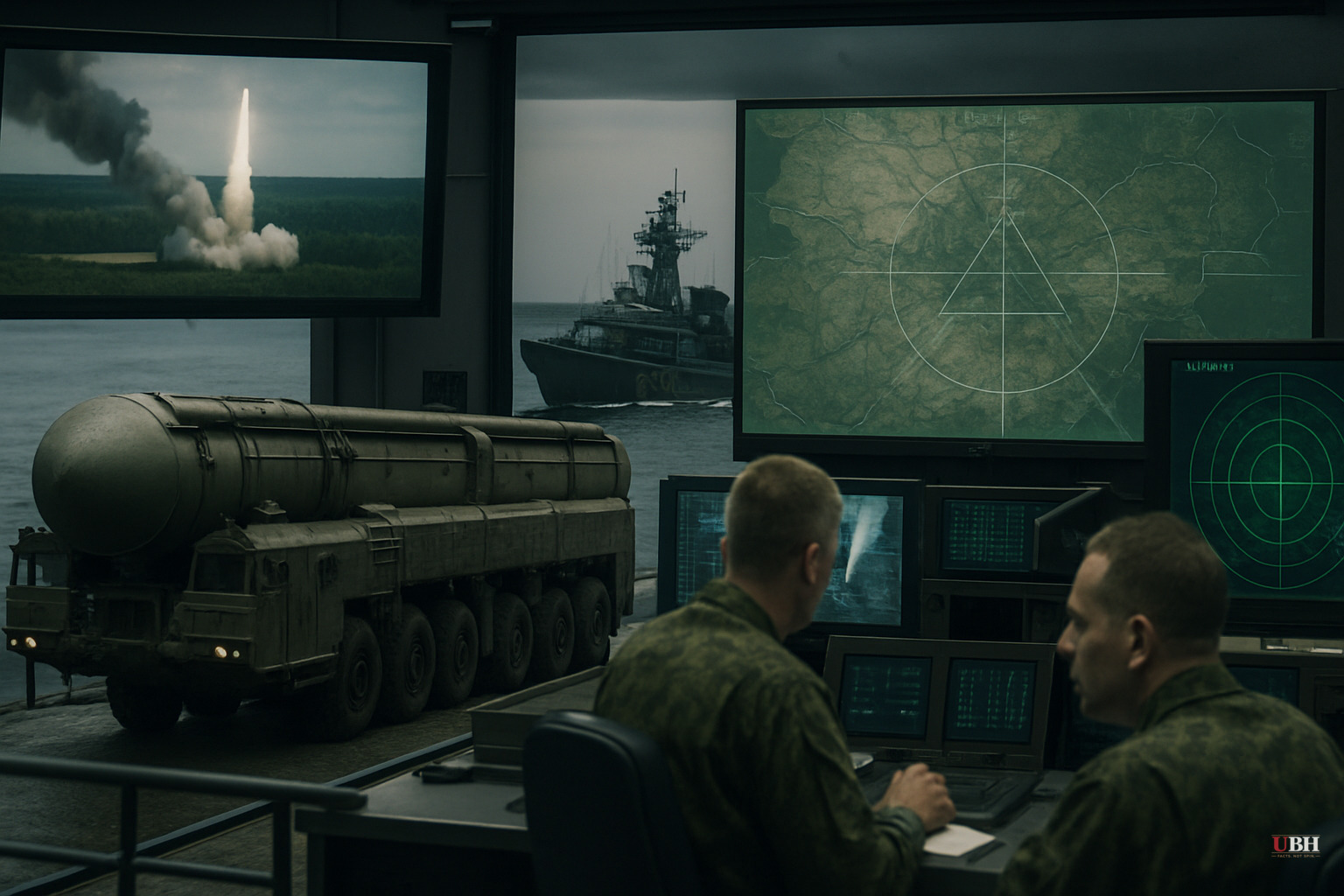
On Monday, May 18, 2026, the Belarusian Defense Ministry announced the start of surprise combat drills specifically focused on deploying and using tactical nuclear weapons.
According to the Belarusian Defense Ministry's official Telegram statement, the drills involve missile forces and aviation units practicing "delivery of nuclear munitions and their preparation for use" — in coordination with Russian forces.
The exercises specifically rehearse launching nuclear weapons from mobile, unplanned positions — meaning pop-up launch sites, not fixed installations.
The Ukraine Connection
These drills came one day after Ukraine launched its largest-ever drone attack on Moscow. According to Politico, at least three people were killed in the Ukrainian strike. Kyiv also claimed it hit Moscow's biggest refinery, an oil depot in Solnechnogorsk, and a microelectronics factory.
Belarusian officials called the nuclear drills a "scheduled event." Scheduling a public nuclear readiness announcement for the morning after an ally's capital receives a major drone strike is notable timing.
The Nuclear Infrastructure Already In Place
The hardware is already there. In 2023 — one year after Russia launched its full-scale invasion of Ukraine — Belarusian President Alexander Lukashenko formally agreed to host Russian tactical nuclear weapons on Belarusian soil, according to DW. That was the first time since the Soviet Union's collapse that Russia placed nuclear arms outside Russian territory.
Late last year, according to Politico, Russia also deployed its hypersonic Oreshnik ballistic missile system to Belarus — a system capable of delivering nuclear payloads. Lukashenko requested the deployment, claiming NATO member states were threatening Belarus.
Last week, Lukashenko announced a partial mobilization of Belarus's armed forces — a detail that received minimal attention in American mainstream coverage.
Who Controls What
Russian President Vladimir Putin has repeatedly stated that Moscow — NOT Minsk — controls the nuclear weapons stationed in Belarus. According to DW, the Kremlin's revised 2024 nuclear doctrine formally placed Belarus under Russia's nuclear umbrella.
Lukashenko hosts the weapons and makes the public statements. Putin decides if they are used. Belarus functions as a nuclear forward operating base with a Putin-aligned leadership in charge of communications.
Zelenskyy's Warning — And the Kremlin's Denial
Last week, Ukrainian President Volodymyr Zelenskyy warned publicly that Moscow may be planning new offensive operations launching from Belarus — targeting either northern Ukraine or NATO member states including Poland, Lithuania, and Latvia, according to empr.media.
The Kremlin's response came from spokesman Dmitry Peskov, who called Zelenskyy's statement "nothing other than an attempt at further incitement aimed at prolonging the war and escalating tensions," according to DW. Belarus, meanwhile, is running nuclear drills on NATO's doorstep.
Ukraine's Response — and What It's Asking For
Ukraine's Foreign Ministry said the Kremlin is "de facto legitimizing the proliferation of nuclear weapons worldwide" by turning Belarus into what it called a "nuclear staging ground near NATO borders," according to DW.
Ukraine is urging Western allies to tighten sanctions on both Russia and Belarus. It also called for "unequivocal and resolute condemnation" from all states that respect nuclear non-proliferation agreements.
Whether NATO governments respond with anything beyond statements remains unclear.
What Mainstream Coverage Got Wrong
Most outlets reported this as a standalone Belarus story. The timing relative to Ukraine's Moscow drone strike received minimal emphasis. The Oreshnik hypersonic deployment and Lukashenko's partial mobilization were either buried or absent from major American coverage.
Belarusian denials that these drills are "not directed against any country" warrant scrutiny: Russia now has tactical nuclear weapons, hypersonic delivery systems capable of carrying nuclear warheads, and a forward-stationed allied military conducting live nuclear readiness drills within striking distance of Poland, Lithuania, and Latvia — all NATO Article 5 countries.
Putin updated Russia's nuclear doctrine in 2024 to allow first-use strikes to defend territorial integrity. Belarus borders three NATO members.
What This Means
The question is not whether this is concerning — it clearly is. The question is whether Western governments are treating it with the seriousness it deserves, or whether they are issuing carefully worded statements while hoping the problem stays on the eastern side of the map.
Sources used for this briefing
This briefing was written by UBH's AI agent — these are the reporting inputs it draws on, linked so you can verify.


