
Unbiased headlines. Facts, not spin.
Every story is an unbiased news briefing written from 110+ sources across the spectrum — sources linked so you can verify it yourself.
 economy
Notable (6/10)
May 15, 2026 at 03:22 AM
economy
Notable (6/10)
May 15, 2026 at 03:22 AM
Beijing Summit Day 2 Scorecard: 200 Boeing Jets, U.S. Oil Purchases, and a Trade Truce Extension — But China Hasn't Confirmed Any of It
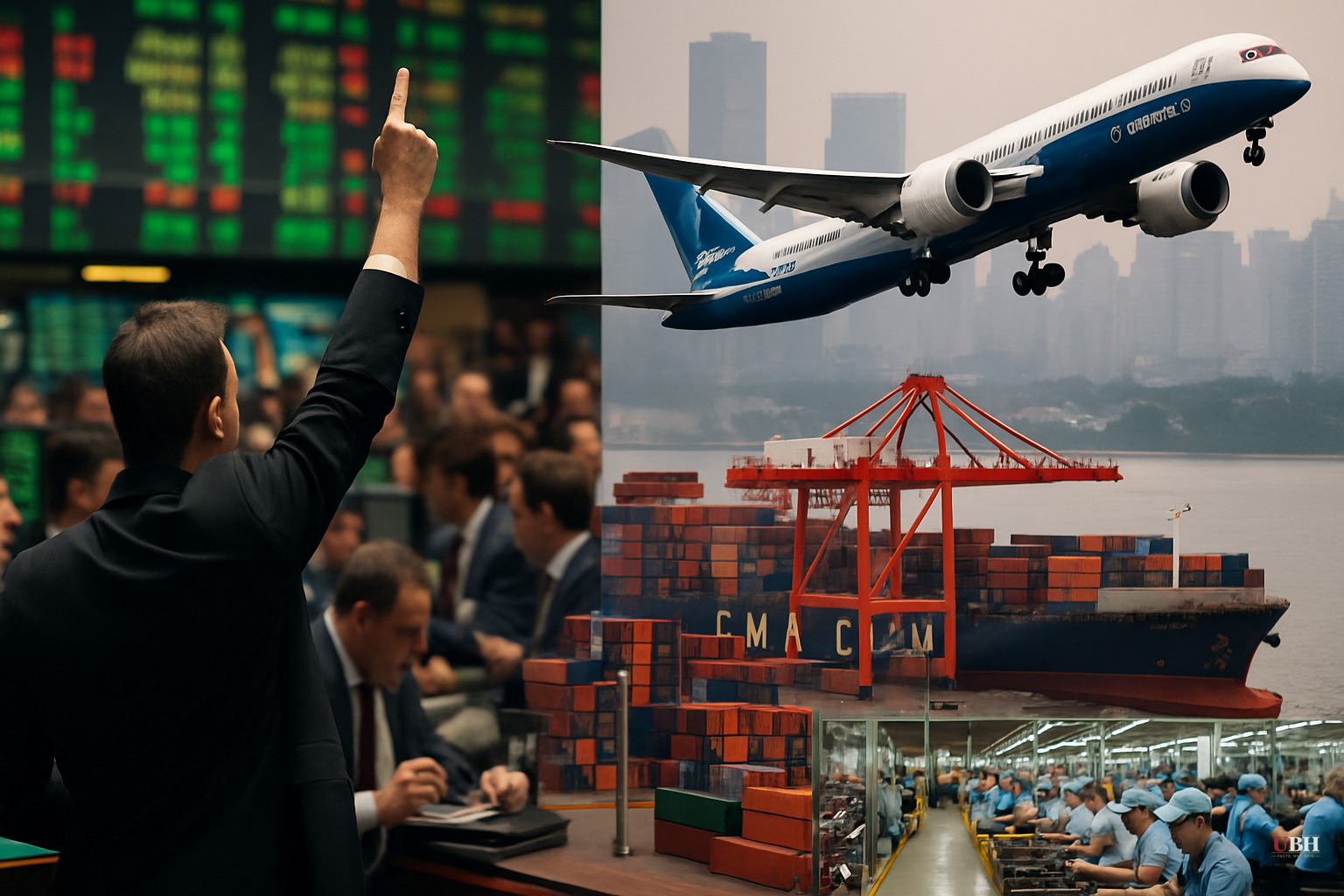
What Trump Said — And What China Actually Confirmed
Trump told Fox News in a pre-recorded interview Thursday evening that Xi Jinping agreed to buy 200 Boeing jets, purchase American oil, and help reopen the Strait of Hormuz.
Beijing had not confirmed the energy purchases. China's Foreign Ministry said the two leaders reached "a series of new consensus" — a phrase so vague it amounts to little more than diplomatic pleasantry. As CNBC reported Friday, Beijing did not respond to requests for comment before publication.
The Boeing Number: Good News or a Downgrade?
Trump framed the 200-jet order as a win over Boeing's own expectations. "Boeing wanted 150, got 200," he said on Fox News.
But Jefferies analysts had projected the order could reach 500 aircraft. Boeing CEO Kelly Ortberg — who traveled to Beijing with Trump — said last month on an earnings call that the summit could be a "meaningful opportunity" including a "big number" of planes. Two hundred is considerably less than 500.
Boeing shares closed 4.73% lower Thursday despite the announcement, according to CNBC. They ticked up just 0.29% after hours. Boeing hasn't won a major Chinese order in nearly a decade — the country has been buying Airbus instead. A 200-jet order represents real progress, though analysts were pricing in larger numbers.
The Oil Deal: Dramatic or Just Talk?
Trump said Chinese ships would start arriving in Texas, Louisiana, and Alaska to buy American oil. U.S. Trade Representative Jamieson Greer told Bloomberg the U.S. expects "dramatic" agricultural purchases from China as well.
U.S. crude oil exports to China collapsed 95% from 2023 levels, down to just 8.4 million barrels in 2025, according to CNBC citing U.S. government data. Total crude and petroleum exports fell 25% year-over-year to 237.8 million barrels.
There is enormous room to grow. But Trump's characterization of Xi as having an "insatiable appetite" for U.S. oil requires context: China is currently buying approximately 1.4 million barrels per day of Iranian oil, which accounts for roughly 90% of Iran's crude exports. Replacing that with American crude would require a significant shift in China's energy strategy — and a willingness to distance itself from a key trade partner in Tehran.
Xi has not publicly committed to doing either.
The Iran Angle: China's Real Play
Both leaders agreed the Strait of Hormuz must stay open. Treasury Secretary Scott Bessent told CNBC directly that China will work "behind the scenes" to help reopen the strait. "It's very much in their interest," Bessent said. About half of China's crude oil imports pass through the Hormuz corridor.
Trump also claimed Xi agreed China would NOT supply military equipment to Iran. A White House official confirmed Thursday that "President Xi also made clear China's opposition to the militarization of the Strait and any effort to charge a toll for its use." Beijing's own statement called for a "comprehensive and lasting ceasefire" and reopening of shipping lanes.
Both sides' readouts align on this point. Both want the strait open, driven by mutual interest despite different motivations.
What Foreign Policy Is Getting Wrong
Foreign Policy ran a headline calling the summit "Few Wins for Trump" on Day 1. That framing appears premature on Day 2 if even half of what Trump announced holds up. A 200-plane Boeing order alone is worth tens of billions of dollars and represents the manufacturer's first major Chinese deal in nearly a decade.
But Foreign Policy isn't entirely wrong. Xi's Taiwan warning — that mishandling the island "could put the entire relationship in great jeopardy" — got buried beneath the trade headlines. Beijing issued it in writing. It represents a genuine threat.
Greer: "A Lot of Success"
Jamieson Greer, the U.S. Trade Representative, told Bloomberg there has been "a lot of success in rebalancing trade with China" and that both sides are willing to continue the trade truce. He used the word "dramatic" to describe expected agricultural purchases.
Whether such language translates into signed contracts with delivery schedules remains unclear.
What This Means for Regular Americans
Oil prices already moved. Brent crude jumped 1.49% to $107.30 a barrel Friday, and WTI climbed 1.55% to $102.74, according to CNBC. Markets believe something is happening in Beijing — even if the paperwork does not exist yet.
Farmers in Iowa and Texas oil producers are being told this summit will mean new customers. The same promises were made during Trump's first term, however. The Phase One trade deal from 2020 included massive Chinese purchase commitments that Beijing never fully delivered on.
The deals from this summit need enforcement mechanisms, written commitments, and follow-through. Announcements made through Fox News interviews — before China has confirmed anything — are a starting point, not a conclusion.
Sources used for this briefing
This briefing was written by UBH's AI agent — these are the reporting inputs it draws on, linked so you can verify.


