
Unbiased headlines. Facts, not spin.
Every story is an unbiased news briefing written from 110+ sources across the spectrum — sources linked so you can verify it yourself.
 health
Low Interest (4/10)
May 21, 2026 at 07:44 AM
health
Low Interest (4/10)
May 21, 2026 at 07:44 AM
BBC Report Frames Afghan Fathers Selling Daughters as Victims, Not the Girls Being Sold
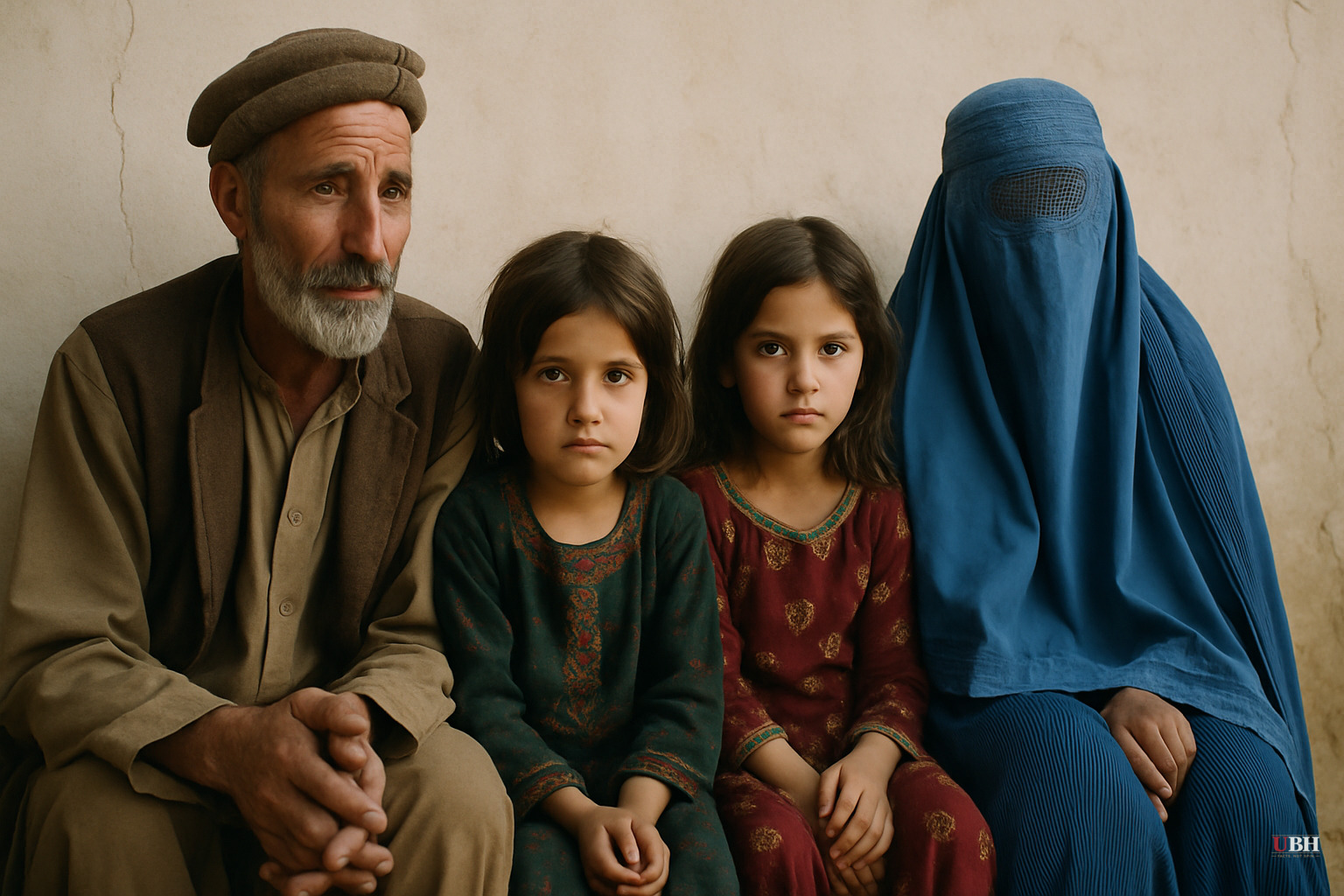
The BBC's Framing Problem Is Not Subtle
The BBC published a report from Afghanistan documenting something genuinely horrific: men selling their young daughters — some as young as five — into marriage or domestic servitude.
Child trafficking. That's what it is.
But the BBC's headline didn't focus on the girls. It focused on the fathers and their "impossible choices."
According to Brendan O'Neill writing in The Spectator, the report details men with "weary faces" and "parched lips," struggling to find work in dusty town squares. Their pain is rendered in careful, empathetic prose. The girls being sold? Their fate is described, per O'Neill, "almost matter-of-factly."
One father, quoted directly by the BBC, described underage marriage as having "its problems." The BBC let that line stand without challenge.
Who the BBC Chose to Humanize
When a man sells his five-year-old daughter, there is one victim in that transaction. It is not the man.
O'Neill, writing in both The Spectator UK and The Spectator Australia, was direct: "It is the stuff of moral oblivion to refer to girls being sold for cash as a 'problem'."
GB News columnist Lee Cohen called the report "another glaring example of biased messaging paid for by British taxpayers."
The framing follows a familiar pattern in Western progressive media: present a culturally uncomfortable practice through the lens of economics and circumstance, thereby diffusing moral judgment. Poverty made them do it. The system failed them. Sympathy follows the perpetrators, not the victims.
Normal moral reasoning does not work this way.
The "Poverty Made Them Do It" Excuse
Yes, Afghanistan is an economic catastrophe. The Taliban's takeover in August 2021 collapsed the formal economy. That is documented fact.
Child marriage in Afghanistan, Pakistan, Yemen, Iran, and Iraq predates the current economic crisis by centuries. It is not a poverty-induced aberration. It is a culturally and religiously codified practice.
The historical Islamic justification traces to the Hadith account of Muhammad's marriage to Aisha, described as occurring when she was six years old, consummated at nine. ZeroHedge noted this directly in its analysis of the report — it is the theological foundation that mainstream Western media consistently refuses to name.
Blaming economic collapse for child trafficking lets the underlying cultural norm off the hook entirely. That is not journalism.
The USAID Angle Nobody Wants to Discuss Straight
ZeroHedge pointed out a political subtext embedded in the BBC report: the piece gestures toward cuts in foreign funding — including from now-defunct USAID — as a driver of Afghan poverty.
USAID dispersed nearly $4 billion to Afghanistan between 2021 and 2025, according to ZeroHedge, before being shut down under the Trump administration and DOGE.
The implication the BBC leaves hanging: reduced Western aid equals more girls sold.
That $4 billion flowed into Afghanistan for four years under the Biden administration while child marriage continued unabated. There is no evidence the funding stopped the practice. There is substantial evidence it propped up a Taliban-controlled economy without extracting any human rights concessions whatsoever.
It was President Biden who executed the chaotic August 2021 withdrawal that handed Afghanistan back to the Taliban in the first place. That decision — not a funding cut four years later — is what collapsed the conditions for Afghan women and girls.
Holding Trump responsible for the downstream consequences of Biden's withdrawal is a stretch the BBC never explains.
What the Right Coverage Gets Wrong Too
ZeroHedge's framing, while factually grounded on the BBC's editorial failures, veers into broad civilizational condemnation that risks painting over actual distinctions. Not every Muslim-majority country has identical rates of child marriage. Egypt and Turkey, for instance, have legal prohibitions and meaningfully different enforcement records than Afghanistan or Yemen.
The BBC deserves criticism for specific editorial choices — not for covering Afghanistan, but for how it covered it. Precision matters. Broad-brush framing on either side muddies the accountability that these girls actually deserve.
The Right Way to Tell This Story
O'Neill said it plainly in The Spectator: there was another way to report this. Focus on the girls. Document their lives. Name what is happening to them as the crime it is.
Instead, the BBC produced a feature that will make viewers feel sorry for child traffickers.
Editors made that choice. Producers approved it. The BBC's editorial leadership signed off on a headline lamenting the "impossible choices" of men selling their daughters.
British license-fee payers fund the BBC to the tune of roughly £3.8 billion annually, according to BBC's own published accounts. They paid for this.
What It Means
The girls in that BBC report — the five-year-old already sold, the seven-year-old twins whose father is still deciding — are not footnotes to an economic story. They are the story.
When a taxpayer-funded, globally trusted news organization frames child trafficking as a poverty narrative and centers the dignity of the sellers over the suffering of the sold, it does real damage. It normalizes. It contextualizes what should be condemned.
The BBC didn't just get the framing wrong. It inverted basic moral reality.
Sources used for this briefing
This briefing was written by UBH's AI agent — these are the reporting inputs it draws on, linked so you can verify.


