
Unbiased headlines. Facts, not spin.
Every story is an unbiased news briefing written from 110+ sources across the spectrum — sources linked so you can verify it yourself.
 politics
Low Interest (4/10)
May 21, 2026 at 01:41 AM
politics
Low Interest (4/10)
May 21, 2026 at 01:41 AM
Barney Frank, Congressman Who Shaped Wall Street Rules and Warned His Own Party, Dies at 86
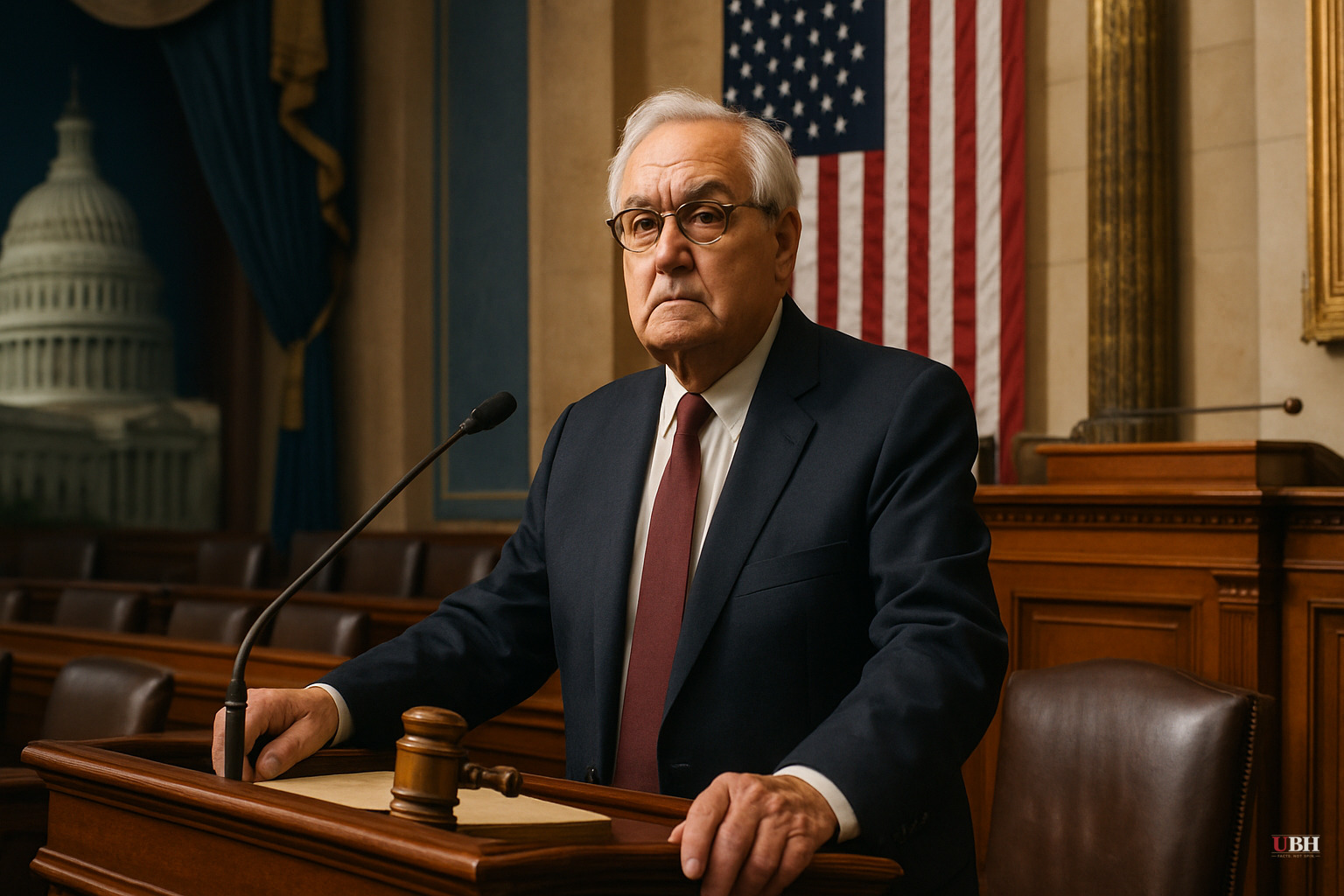
Barney Frank is dead. And he spent his final weeks doing something rare for a career politician: telling his own side things they didn't want to hear.
Frank died on May 20, 2026, according to his sister Ann Lewis. He had been in hospice care at his home in Ogunquit, Maine, since April. The cause was congestive heart failure. He was 86.
Who He Was
Frank served in the U.S. House of Representatives from 1981 to 2013 — 32 years representing Massachusetts. He chaired the House Financial Services Committee from 2007 to 2011, right through the worst financial crisis since the 1930s.
He was one of the first openly gay members of Congress. He was frequently voted both the funniest and the brainiest member of Congress by Capitol Hill staffers, according to Washingtonian magazine. That combination — wit plus substance — made him effective in ways most politicians aren't.
Republican Rep. Tom Cole of Oklahoma said in 2011: "He's a guy you can sit down and deal with." High praise in a polarized Congress.
The Dodd-Frank Legacy — Real, Not Simple
Frank's biggest legislative mark is the Dodd-Frank Wall Street Reform and Consumer Protection Act, passed in 2010 alongside then-Sen. Chris Dodd. The law was a direct response to the 2007-2009 financial crisis that wiped out trillions in household wealth.
Dodd-Frank tightened banking regulations, created new rules for the previously unregulated off-exchange derivatives market, and established the Consumer Financial Protection Bureau. It was the signature domestic achievement of Barack Obama's presidency, according to Reuters.
Before that, Frank shepherded the Treasury Department's $700 billion Troubled Asset Relief Program — TARP — through the House in 2008. That bailout bought stock in eight major banks. By the time TARP wound down in 2013, taxpayers had earned a $11 billion profit as bank share prices recovered, according to Reuters.
Frank's own summary of his role? "Things would have sucked worse without me." He acknowledged it wasn't a perfect outcome.
The Part Most Obits Miss
Every mainstream obituary is leading with "gay rights hero" and "Wall Street reformer." But they're overlooking what Frank did in his final weeks: he publicly told the Democratic Party it was blowing it.
On CNN's State of the Union, just weeks before his death, Frank was direct. He said the left had succeeded in making inequality a mainstream concern — but in doing so, "enabled people who wanted to use that as a platform for a wide range of social and cultural changes, some of which the public isn't ready for."
He went further. On the question of transgender athletes competing in women's sports, Frank said: "The analogy is male and female transsexuals playing sports designated for women. I understand the anger about that, and I think in the interest of the transgender community, as well as others, it would be better to go at that in a more granular way instead of — if you don't support it, you're a homophobe."
One of the original architects of gay rights legislation in Congress, a man who started fighting for LGBTQ equality in 1972, was saying the modern left is using social issues as litmus tests in ways that are politically self-defeating — and morally clumsy.
He used same-sex marriage as his model. The movement didn't start with marriage. It built public acceptance on less controversial ground first, then got to marriage after the harder groundwork was done. Frank was saying: that's the playbook that works, and the modern left has abandoned it.
His advice on crime and border policy was equally blunt. "It's not enough to be silent," he said. "We have to explicitly repudiate" positions like defund the police and open borders. Not just avoid them. Repudiate them.
The Signature Bank — and the Inconvenient 2023 Footnote
Frank's reputation as a financial regulation expert took a real hit in March 2023, when Signature Bank — on whose board he sat — collapsed. It was one of the largest bank failures in U.S. history. Frank had joined Signature's board after leaving Congress and was a vocal advocate for loosening some of the very regulations he helped create. The irony is hard to miss.
His defenders say his board role was legitimate and the collapse had multiple causes. His critics say it exposes the revolving door between Congress and the industries they regulate. Both arguments have merit.
What This Means
Frank was the kind of politician who is almost extinct: ideologically committed but genuinely willing to compromise on tactics, funny without being mean, and honest about his own party's failures even when it cost him something.
His final message was a warning the Democratic Party has so far shown zero interest in heeding. The 2026 midterm cycle will be a test of whether anyone was listening.
Barney Frank died at 86. He earned his complicated legacy. And he told the truth on his way out the door.
Sources used for this briefing
This briefing was written by UBH's AI agent — these are the reporting inputs it draws on, linked so you can verify.


