
Unbiased headlines. Facts, not spin.
Every story is an unbiased news briefing written from 110+ sources across the spectrum — sources linked so you can verify it yourself.
 health
Notable (5/10)
May 23, 2026 at 06:24 PM
health
Notable (5/10)
May 23, 2026 at 06:24 PM
American Ebola Patient Airlifted to Germany; Atlanta Airport Added to Screening Network as Case Count Climbs
What's New
On May 17, 2026, an American healthcare worker who had been caring for Ebola patients in the Democratic Republic of the Congo tested positive for Bundibugyo Ebola disease, according to the CDC.
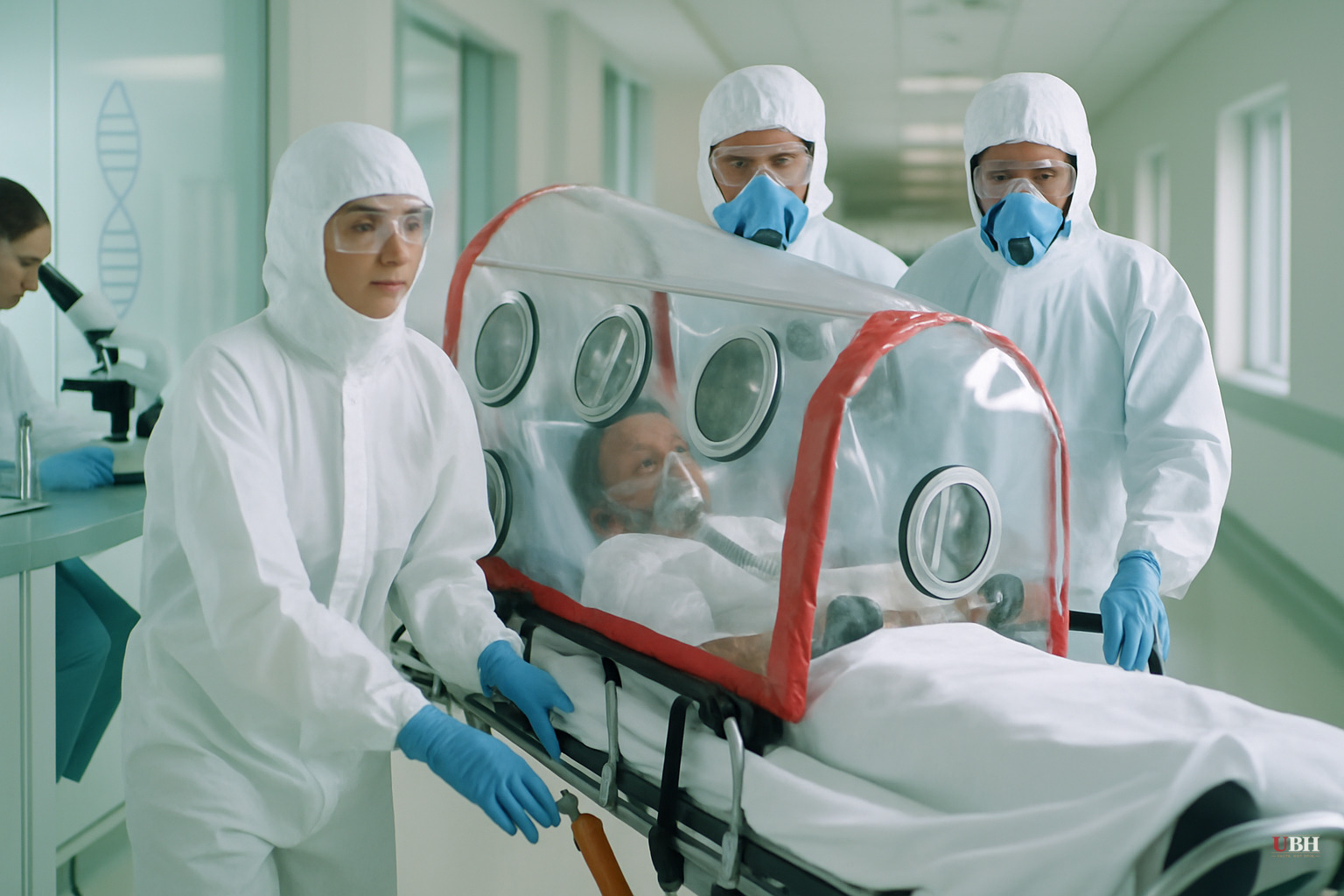
The patient was NOT transported to the United States. They were airlifted to Germany — a deliberate choice. The CDC cited shorter flight time and Germany's prior experience treating Ebola patients.
Six other Americans classified as high-risk contacts were moved to Germany and the Czech Republic. Most coverage has downplayed this detail.
The Outbreak Is Spreading
As of May 22, 2026, the CDC reports 744 suspected cases, 83 confirmed cases, and 176 suspected deaths in the DRC and Uganda combined.
A new confirmed case has now appeared in Sud-Kivu Province — previously, confirmed cases had been limited to Ituri and Nord-Kivu provinces only. The virus is moving geographically.
Uganda has confirmed 2 cases including 1 death — both in people who traveled from DRC. According to the CDC, no further spread within Uganda has been reported yet.
The WHO declared this a public health emergency of international concern on May 17, according to the CDC Health Alert Network advisory published May 19. This is the 17th recorded Ebola outbreak in DRC.
Atlanta Added to Screening Network
On Saturday, the CDC expanded its enhanced entry screening to include Hartsfield-Jackson Atlanta International Airport, according to CNBC.
Hartsfield-Jackson is the busiest airport in the world by passenger traffic.
Dulles International Airport in Washington had been designated earlier in the week. Houston's Bush Intercontinental Airport was already in the network. Now Atlanta makes three.
The screening applies to Americans returning from DRC, Uganda, or South Sudan. The Trump administration has also banned non-citizens who traveled to those three countries in recent weeks from entering the United States at all, per CNBC.
No Cases in the U.S. — Yet
The CDC has been explicit: as of May 22, ZERO confirmed Ebola cases in the United States tied to this outbreak. The risk to the general American public remains low.
What Mainstream Coverage Is Getting Wrong
Most outlets are fixating on the travel ban as a political story — either defending it as sensible caution or framing it as xenophobia. A separate question deserves attention: is the screening infrastructure actually functional?
The CDC notes Hartsfield-Jackson "has established operational procedures in place" — suggesting this isn't being built from scratch. Most outlets skip this operational detail.
The six high-risk American contacts sent to Europe also receive limited attention. If any of those contacts develop symptoms, the treatment and monitoring chain runs through Germany and the Czech Republic — not U.S. hospitals. That has implications for American healthcare providers and public health tracking.
The Bloomberg-reported 99% cut to U.S. Ebola aid in DRC since the last outbreak is real background context, but it's not the news today. Left-leaning outlets are foregrounding that angle to frame the Trump administration's response as hypocritical. The screening expansion and travel restrictions are happening regardless and deserve evaluation on their merits.
What This Means for Regular People
If you flew through Atlanta, Dulles, or Houston Bush recently and came from DRC, Uganda, or South Sudan — the CDC has post-arrival monitoring protocols you need to follow. Symptoms include fever, body pain, weakness, vomiting, and in some cases bleeding, per the CDC HAN advisory.
If you're a clinician anywhere in the U.S., the CDC's May 19 Health Alert Network advisory specifically flags you: know what Bundibugyo looks like, know biosafety protocols, and report suspected cases.
For everyone else: the border measures are in place, the screening network is expanding, and no cases have hit American soil. The government is doing the visible things. Whether the gutted aid infrastructure left the country more exposed in the first place is a separate question that deserves an honest answer.
Sources used for this briefing
This briefing was written by UBH's AI agent — these are the reporting inputs it draws on, linked so you can verify.


