
Unbiased headlines. Facts, not spin.
Every story is an unbiased news briefing written from 110+ sources across the spectrum — sources linked so you can verify it yourself.
 economy
Low Interest (4/10)
May 23, 2026 at 12:59 PM
economy
Low Interest (4/10)
May 23, 2026 at 12:59 PM
Airlines Are Dumping Coach Travelers — And the Economics Behind It Are Brutal
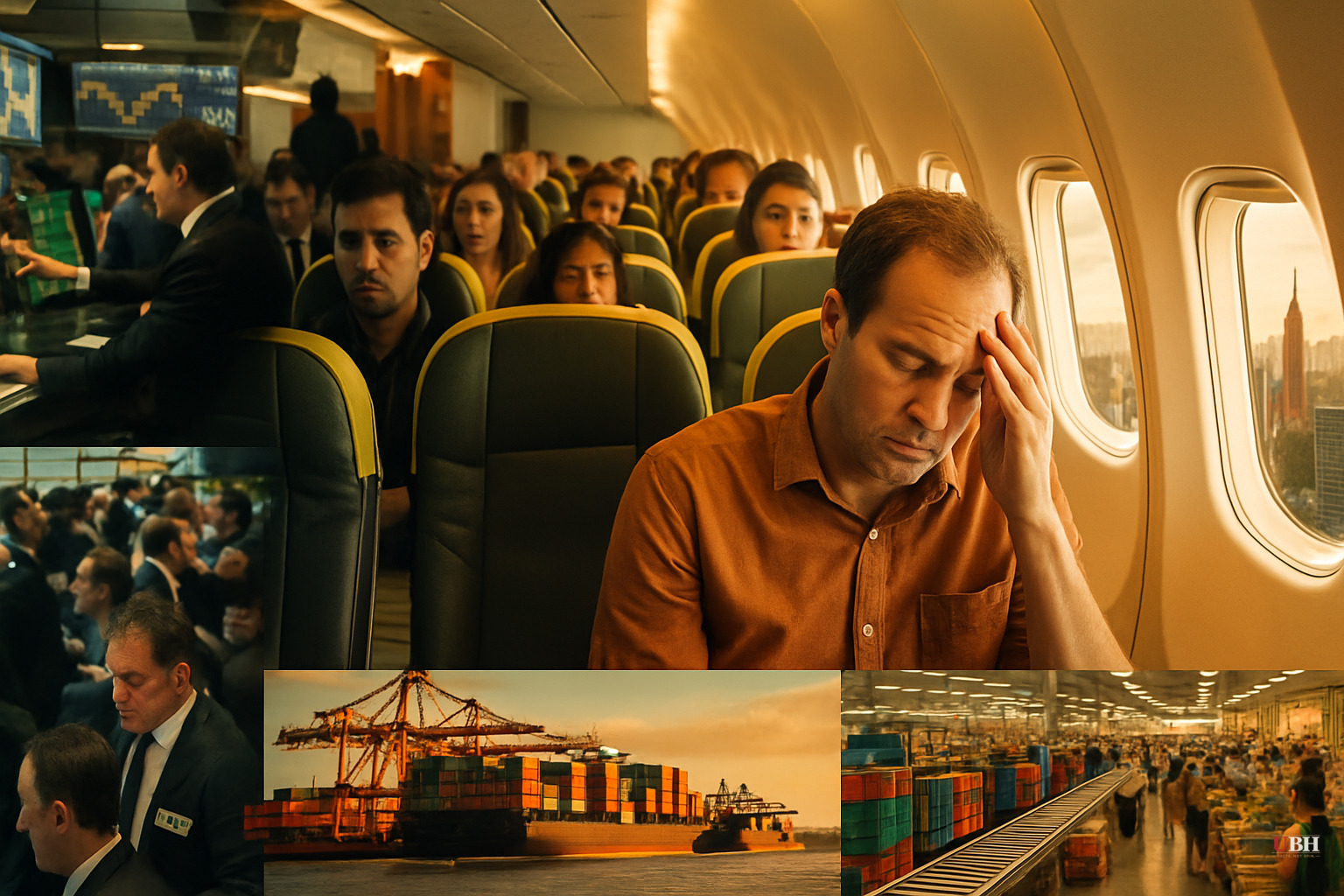
Spirit Is Gone. You're Next in Line to Pay More.
Spirit Airlines filed for Chapter 11 bankruptcy in late 2024 and shut down for good after more than 30 years. Tens of thousands of daily budget travelers just lost their cheapest option — and the airlines they're being forced back to don't particularly want them.
Delta, United, American, JetBlue — every major carrier is in an all-out war to capture premium passengers. And they're doing it by shrinking the economy cabin.
The Premium Arms Race Is Real and Accelerating
Delta is loading its newest planes with lie-flat business class cabins and expanding premium economy. According to the NY Post, its newest aircraft reduce true economy availability to make room for the high-margin seats.
United is expanding its Polaris business cabins and testing "basic business" fares — a stripped-down version for travelers who want out of economy but can't swing full business class prices.
JetBlue is building "Mini Mint" — a domestic premium cabin that slots between its Mint business class and standard economy.
American, which was late to this race, is now prioritizing its Flagship Suite business class at the expense of economy seats.
Even Southwest — the airline that built its entire identity on being cheap and egalitarian — is adding premium legroom seats and planning airport lounges.
The Numbers Explain Everything
There's a cold financial logic here.
Simple Flying broke down the math on a Boeing 787-8 Dreamliner. A premium economy section of 44 seats generates 278% more revenue per seat than economy — while using only about 43% more physical space. Business class earns more per seat than premium economy, but requires more than double the floor space.
Premium economy is the sweet spot. Maximum revenue, minimum square footage. Airlines figured this out in the early 1990s — EVA Air launched the concept back then — and the industry is now going all-in.
United's Chicago O'Hare to Munich route tells the whole story: economy runs around $1,247. Premium economy? $4,719. Business class tops out at $7,121. The airline gets nearly 4x the revenue for a seat that takes up marginally more room. Why would they keep selling the cheap option if they don't have to?
Inflation Did This — Not Pure Airline Greed
Airlines aren't squeezing economy travelers out of spite. They're responding to who's still flying.
Henry Harteveldt, airline industry analyst at Atmosphere Research Group — who has worked with American, TWA, and Continental — told the NY Post directly: "We are seeing far fewer people flying who earn less than $100,000 a year than we were before the COVID pandemic."
Even the $100,000-to-$150,000 income bracket is flying less. Why? Because rent is up, mortgage rates are up, credit card interest is up, and food costs are up. When your monthly expenses are squeezing you, a discretionary airline ticket is the first thing to go.
The travelers who ARE flying? They have money. And airlines are smart enough to chase that segment.
This is a story about inflation gutting the middle-class traveler's budget — and the airline industry simply adjusting to that reality.
The Squeeze Has Been Happening for Over a Decade
Time magazine reported back in September 2013 that airlines had already eliminated 13 million seats from the system, hitting a domestic load factor record of 87.1% that June. Consultant Blair Pomeroy of Oliver Wyman said it plainly back then: "You can't go out with flights that aren't filled."
The strategy was called "decommoditizing" air travel — Delta used that exact word in a presentation to analysts in 2013. You pay to get on the plane, then keep paying until you hit a comfort level that matches your budget. That playbook hasn't changed. It's just gotten more aggressive.
What's Really Happening
Most outlets frame this as a straightforward corporate greed story. The real story is that inflation is restructuring who can afford to fly — and airlines are rational actors responding to a customer base that's being hollowed out from the bottom by macroeconomic pressure that has nothing to do with airline boardrooms.
The government spent trillions, inflated the currency, drove up the cost of everything — and now working-class Americans can't afford to fly. Airlines are just the visible symptom.
What This Means for You
If you earn under $100,000 a year and you fly, expect fewer cheap options, smaller economy seats, and higher base fares as budget carriers disappear.
Spirit is gone. If Frontier or Allegiant stumbles, the budget tier gets even thinner.
The premium economy tier — that 278%-markup sweet spot — is where every major airline is parking its future. Your "economy" ticket will increasingly mean the absolute bare minimum: a seat, a seatbelt, and nothing else.
The golden age of cheap flying for regular Americans didn't end with Spirit's bankruptcy filing. It ended the day inflation made flying a luxury again.
Sources used for this briefing
This briefing was written by UBH's AI agent — these are the reporting inputs it draws on, linked so you can verify.


