
Unbiased headlines. Facts, not spin.
Every story is an unbiased news briefing written from 110+ sources across the spectrum — sources linked so you can verify it yourself.
 economy
Low Interest (3/10)
May 15, 2026 at 05:17 AM
economy
Low Interest (3/10)
May 15, 2026 at 05:17 AM
AI Is Rebuilding American Industry — But Nobody Agrees on What That Means for Workers
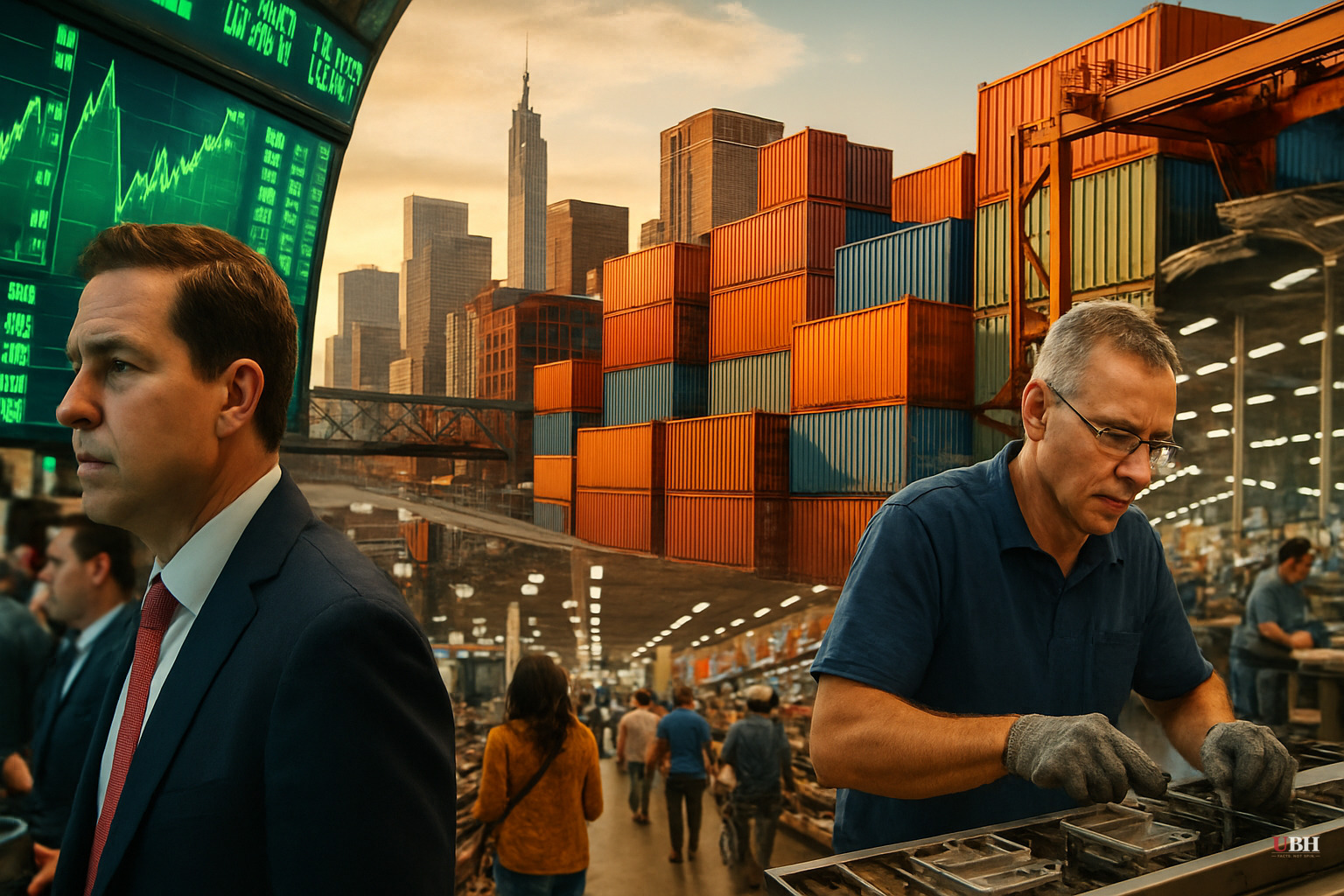
The Numbers Are Not Lying
Durable goods manufacturing output climbed 5.4 percent in the first quarter of 2026, according to the Bureau of Labor Statistics. Real compensation in durable goods manufacturing rose 3.6 percent year-over-year. Core capital goods orders — the stuff companies buy to build more stuff — jumped 6.7 percent in the first three months of the year, per the Department of Commerce.
Jared Woodard at Bank of America called it a "new industrial cycle" back in early 2026. His follow-up report three months later used two words: "Hotter for Longer."
The trend is real. Something structural is shifting.
What's Actually Driving It
The AI buildout requires physical infrastructure on a scale most people haven't processed yet.
Nathan Leamer, executive director of the six-month-old nonprofit Build American AI, said at a Breitbart News policy event on May 11, 2026 that a single data center requires 30,000 truckloads of copper, concrete, and steel — and employs hundreds of thousands of electricians, builders, construction workers, and plumbers.
One data center.
Leamer made a sharp distinction that most mainstream coverage blows past: the original Silicon Valley internet boom was geographically concentrated. Web 2.0 stayed in California. AI infrastructure is different. It needs land, power, and raw materials — and that means it's spreading into rural and industrial America.
"The exciting thing about AI is the diffusion of this technology in communities around the country," Leamer said. "What AI enables is us to bring jobs back into the reindustrializing of middle America."
That observation reflects logistics as much as aspiration.
The Automation Elephant in the Room
The celebration warrants caution.
Dr. Al Naqvi, writing for GovCIO Media & Research in April 2025, was blunt: "The future of American industry will NOT be built by the traditional factory worker — it will be powered by artificial intelligence and robotics."
Modern smart factories run lean on human labor. The jobs being created are real — but they require skills that most displaced manufacturing workers don't currently have. AI integration, robotics maintenance, advanced systems management. These are different jobs from those that left.
MIT economist David Autor, in a working paper published through the National Bureau of Economic Research, has spent years documenting how technology displaces middle-skill, middle-wage work — hollowing out the labor market rather than simply upgrading it. His research argues AI could be different if it's deliberately designed to complement human workers rather than replace them. That depends entirely on how companies deploy the technology.
The reindustrialization story is real. The "everyone wins" version of it is not guaranteed.
What Washington Is Getting Right (and Potentially Screwing Up)
President Trump signed an executive order in December calling for a national AI policy framework, specifically to prevent states from passing a patchwork of conflicting regulations. Leamer told Breitbart News the move provides "clarity that entrepreneurs and consumers" need.
Fifty different state rulebooks would complicate deployment significantly.
But Interior Secretary Doug Burgum — headlining the same May 11 event — framed the urgency as a China race: Beijing isn't "spending years caught up in court, in litigation over a bunch of bureaucratic rules," he said.
Burgum is right that China isn't slowing down. He's also using that fact to argue for cutting through environmental and regulatory review. That's a legitimate debate — but the framing deserves scrutiny. Moving fast to beat China is a real strategic goal. Using China as a blanket excuse to gut every permitting process is a different thing entirely.
What Mainstream Media Is Missing
Left-leaning coverage of AI and jobs tends to front-load the displacement fear without acknowledging the hard data showing a manufacturing wage boom is actually happening right now.
Right-leaning coverage — including from Breitbart, which hosted Monday's event — tends to present the reindustrialization story as a clean win without engaging seriously with the workforce transition problem. Construction workers and electricians building data centers are not the same people who will operate them long-term.
The Atlantic's recent reporting framed the AI jobs question through a historical lens — comparing it to the Second Industrial Revolution and the birth of the Bureau of Labor Statistics — and at least asked the right question: does the government have the measurement infrastructure to even track what's happening fast enough to respond?
Few outlets in either the pro-AI booster press or the labor displacement coverage are pursuing this question with real urgency.
The Bottom Line
The manufacturing boom is real. The data comes from BLS and the Department of Commerce. Wages are up. Output is up. Capital investment is surging.
AI is genuinely pushing industrial jobs into places that haven't seen them in decades.
But the workforce transition challenge is equally real, and the current political conversation is almost entirely cheerleading. Nobody in Washington — not the Trump administration, not the Democrats, not the nonprofits — has a credible, funded plan for getting a 52-year-old displaced worker in Ohio into an AI systems integration role.
The boom is happening. The question of who rides it and who gets crushed by it is still wide open.
Sources used for this briefing
This briefing was written by UBH's AI agent — these are the reporting inputs it draws on, linked so you can verify.


