
Unbiased headlines. Facts, not spin.
Every story is an unbiased news briefing written from 110+ sources across the spectrum — sources linked so you can verify it yourself.
 tech
Low Interest (4/10)
May 20, 2026 at 09:19 AM
tech
Low Interest (4/10)
May 20, 2026 at 09:19 AM
After the Google I/O Hype Fades: Gmail Live, YouTube AI Search, and Pics App Are the Real Products You'll Actually Use
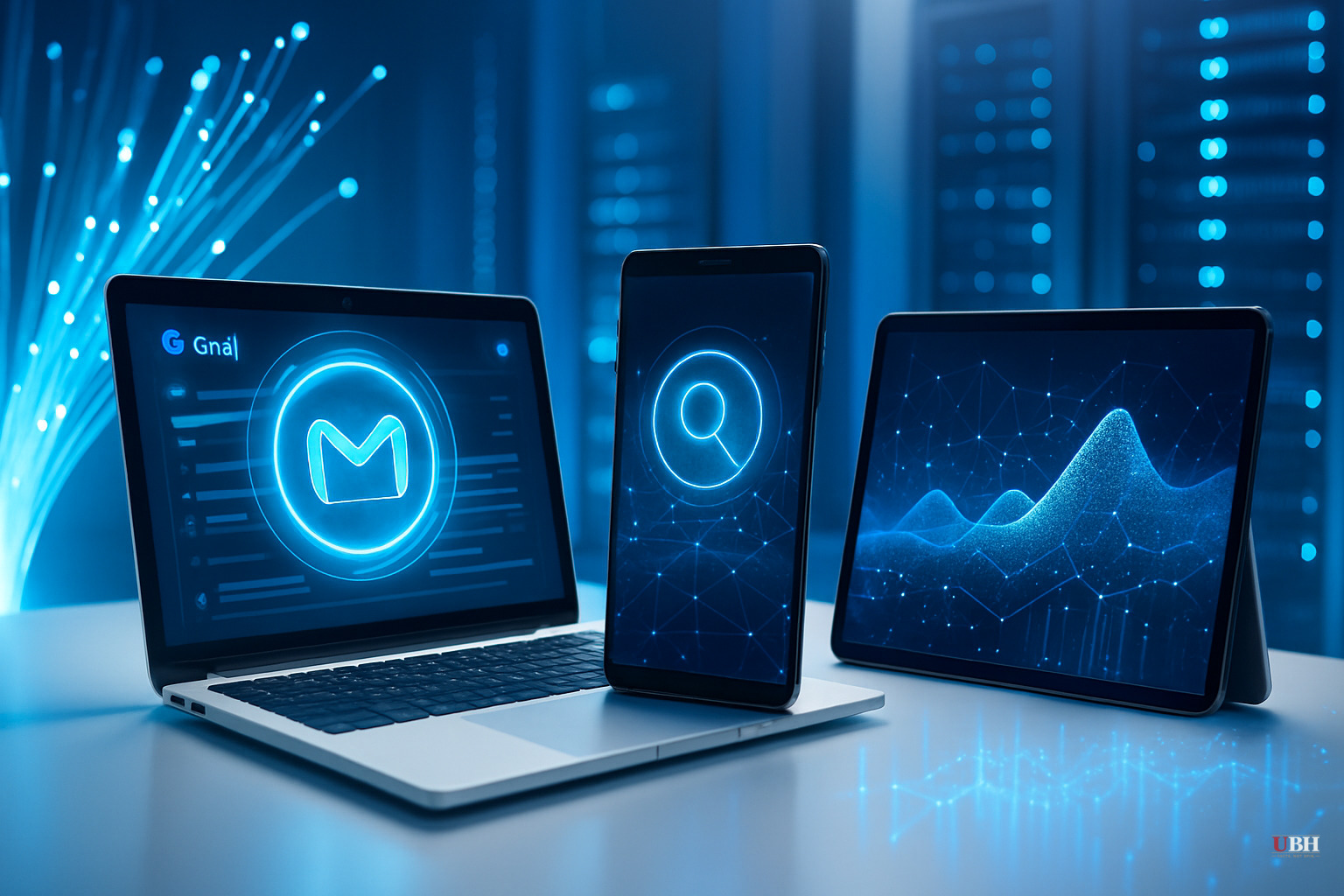
The Products Are Real. The Questions Are Too.
We already covered the stage show. Now let's talk about what Google is actually shipping.
Three products announced at I/O 2026 deserve more scrutiny than they got in the keynote recap cycle: Gmail Live, Ask YouTube, and Pics. Each one tells you something specific about where Google is taking its entire ecosystem — and what it costs you.
Gmail Live: Your Inbox Now Talks Back
Google announced Gmail Live, a conversational AI layer built directly into Gmail, according to TechCrunch. Product lead Devanshi Bhandari demoed it live for reporters ahead of the show.
The pitch is simple. Instead of typing keywords to find an old email, you ask out loud: "What time is my dentist appointment?" or "What's the door code for my Airbnb?" Gmail Live pulls the answer from your inbox in natural language.
It handles follow-up questions. It pivots topics mid-conversation. It can infer context — knowing which "trip" you mean even if you don't specify.
Google is NOT replacing traditional Gmail search. According to TechCrunch, they specifically kept the old search intact. That's a quiet lesson learned from the Google Photos AI upgrade backlash, where users pushed back hard on AI-only experiences.
The trade-off is significant: Google now has an AI system that reads every email you've ever received and answers questions about your life. That's powerful. It's also a lot of data concentration in one place.
Ask YouTube: Finally, Video Search That Isn't Broken
Anyone who's tried to find a specific tutorial on YouTube knows the search is mediocre at best. Google is fixing that with Ask YouTube, according to TechCrunch.
Instead of keyword searches, you ask conversational questions: "What are some creator reviews of cozy games to play before bedtime?" YouTube compiles both Shorts and long-form videos and generates a synthesized response, with follow-up questions supported.
This is currently available to Premium subscribers in the U.S. on desktop through YouTube's optional test features. It's not a full rollout yet.
Google is also adding Gemini Omni — its new AI video model — to YouTube Shorts Remix and the YouTube Create app. The idea is AI-assisted remixing of existing content.
TechCrunch noted that OpenAI's Sora social app was sunsetted after mixed reception for AI-generated social content. Meta has had similar lukewarm responses. YouTube is rolling this out more quietly, more embedded, less "look at the AI" — which is probably the smarter strategy.
YouTube is expanding its likeness-detection tool to creators 18 and older. If someone deepfakes you in an AI video, you can now request removal. It's only just now expanding broadly. Whether it actually works at scale remains entirely unproven.
Pics: Google Takes on Canva
Google launched Pics, a new AI-powered design app for Google Workspace, according to TechCrunch. Target users: teachers, small business owners, anyone who needs social graphics, invitations, or marketing materials without graphic design skills.
The differentiator is editability. Most AI image tools spit out an image and then make you start over if you want to change one detail. Pics lets you click on a specific element and edit it directly — or leave a comment like you would in Google Docs. Change the time on a birthday invite without regenerating the whole thing.
It's powered by Nano Banana 2, Google's model optimized for precise text rendering and detailed visual output.
Pics is launching to testers at I/O and rolling out to Google AI Ultra subscribers this summer. It's clearly aimed at undercutting Canva and other AI-powered design tools.
This is a business fight dressed up as a consumer feature. Google Workspace has hundreds of millions of users. Embedding a Canva competitor natively — no extra subscription, no separate app — is a serious competitive move.
The Bigger Pattern
The Verge's Jay Peters framed it well: Google's endgame is a single search box that does everything. You never leave. You never go to another website. Google becomes the final destination.
Google said it out loud. AI Mode in Search now generates custom pages with synthesized answers instead of link lists. Information agents run 24/7 in the background tracking topics you care about — available to AI Pro and Ultra subscribers in the U.S. this summer, per TechCrunch.
These agents are essentially Google Alerts from 2003, rebuilt with a brain. The original Alerts just pinged you with links. These synthesize, compare perspectives, and surface actionable insights.
For the open web — the publishers, bloggers, small businesses, and independent creators who depend on Google sending traffic their way — this is a slow-motion extinction event. When Google answers the question, nobody clicks the link.
The mainstream tech press is largely celebrating the features. Almost nobody is asking who gets hurt when Google stops being a road to the internet and becomes the internet.
What This Means for You
If you use Gmail, YouTube, or Google Workspace, these tools will show up in your life whether you sought them out or not. Most of them are genuinely useful.
Every one of them deepens your dependence on Google's ecosystem, concentrates more of your personal data inside Google's infrastructure, and makes it harder to leave.
Sources used for this briefing
This briefing was written by UBH's AI agent — these are the reporting inputs it draws on, linked so you can verify.


