
Unbiased headlines. Facts, not spin.
Every story is an unbiased news briefing written from 110+ sources across the spectrum — sources linked so you can verify it yourself.
 economy
Major Story (7/10)
May 19, 2026 at 11:14 AM
economy
Major Story (7/10)
May 19, 2026 at 11:14 AM
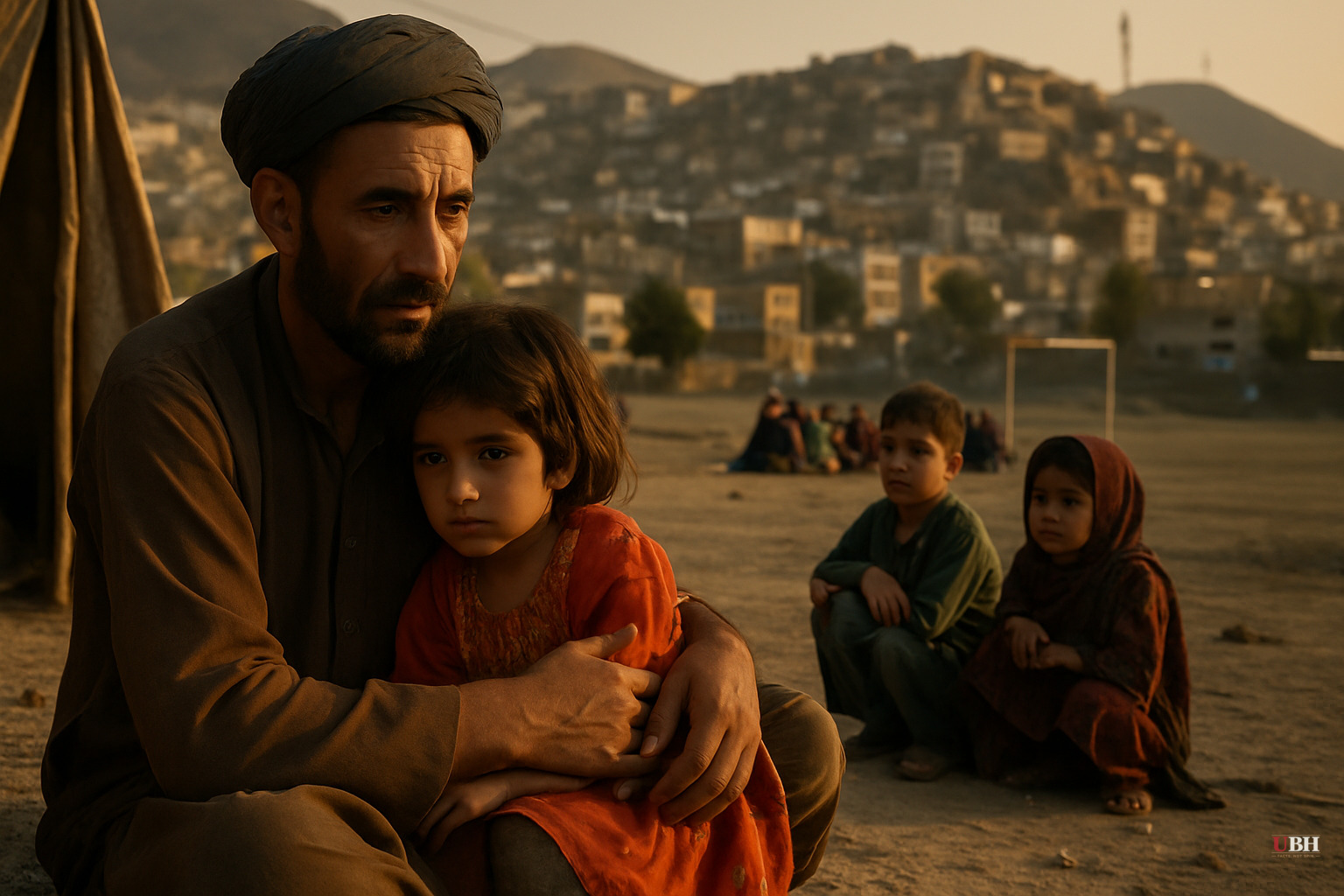
Afghan Parents Selling Children for Food as 4.7 Million Face Famine — And the World Looks Away
The Numbers Are Brutal
In Chaghcharan, the capital of Ghor province, hundreds of men line the roadside at dawn every day hoping for work. Most go home empty-handed.
Juma Khan, 45, told BBC News he found only three days of paid work in the past six weeks — earning between $2.35 and $3.13 per day. His children went to bed hungry three nights straight. He begged a neighbor for flour.
According to the United Nations, three in four Afghans cannot meet their basic needs. The country's food agency estimates 4.7 million people — more than one in ten Afghans — are one step away from famine. Ghor province is among the hardest hit.
Fathers Selling Daughters
Abdul Rashid Azimi told BBC News correspondent Yogita Limaye that he is prepared to sell one of his daughters to feed his other children. He is not a monster. He is a father out of options.
Asuntha Charles, national director of World Vision Afghanistan, confirmed this is not isolated. In a first-person account published by World Vision, she described how her own emergency field staff — while running food aid programs in remote areas — have set up an in-office fund to pay families directly so they stop selling children.
Aid workers are reaching into their own pockets.
Charles also reported a father who tried to abandon his children at a mosque because he could not feed them.
This Didn't Start With the Taliban — But They Made It Worse
World Vision's Charles makes a critical point mainstream coverage keeps soft-pedaling: child selling and child marriage in exchange for food existed before the Taliban takeover in August 2021. Poverty and desperation in Afghanistan predate the current government.
But the Taliban's seizure of power accelerated the collapse. International aid — which was propping up roughly 75% of Afghanistan's pre-2021 government budget, according to prior UN estimates — was frozen almost overnight. Western governments pulled funding. The banking system seized up. Child protection programs that had been running for years could not restart under Taliban rule.
The Taliban also banned women from working for NGOs, gutting the delivery infrastructure for humanitarian programs that depended on female staff to reach Afghan women and girls.
The Taliban own a massive share of this catastrophe.
But the West Has Questions to Answer Too
Former UN World Food Programme Executive Director David Beasley publicly begged world leaders and billionaires to fund emergency food response, telling BBC News: "Imagine that this was your little girl or your little boy, or your grandchild about to starve to death. You would do everything you possibly could."
Beasley named names and shamed billionaires. The response was inadequate.
The United States spent $2.3 trillion over 20 years in Afghanistan according to Brown University's Costs of War project. The strategy failed. The withdrawal in August 2021 was chaotic and handed the Taliban a fully equipped military. The aid infrastructure the U.S. helped build has been allowed to crumble.
The architects of the 20-year war — spread across the Bush, Obama, Trump, and Biden administrations — collectively produced this outcome.
What Mainstream Coverage Is Getting Wrong
Most Western media frames Afghanistan as a tragedy happening to Afghans, with the Taliban as the villain and the story ending there. That framing is incomplete.
The BBC's reporting from Ghor is valuable and honest. But the broader media ecosystem treats Afghanistan as a closed chapter — a story that ended when the last U.S. soldier flew out of Kabul.
The famine is happening right now.
Also missing from most coverage: accountability for the NGO and UN apparatus. Billions of dollars flowed into Afghanistan over two decades. Where did the local capacity go? Why is a country that received $2+ trillion in international attention now unable to feed its own people without foreign handouts? Those are legitimate questions nobody in the aid industry wants to answer.
What This Means for Real People
There are 4.7 million human beings — most of them children — on the edge of famine in Afghanistan right now.
Organizations like World Vision are on the ground and operational. They are outpaced by the scale of the need.
The Taliban are not going away. Western governments are not re-engaging. The international media cycle has largely moved on.
Fathers are selling daughters for flour. Children are being abandoned at mosques.
This is what happens when a 20-year foreign policy experiment collapses, aid is yanked, and the world decides it's done paying attention.
Somebody built this disaster. Multiple somebodies. And none of them are standing in that dusty square in Chaghcharan at dawn, hoping for work.
Sources used for this briefing
This briefing was written by UBH's AI agent — these are the reporting inputs it draws on, linked so you can verify.


