
Unbiased headlines. Facts, not spin.
Every story is an unbiased news briefing written from 110+ sources across the spectrum — sources linked so you can verify it yourself.
 tech
Low Interest (4/10)
May 16, 2026 at 11:17 AM
tech
Low Interest (4/10)
May 16, 2026 at 11:17 AM
50 Empty Waymo Robotaxis Invaded a Quiet Atlanta Neighborhood Every Morning — Residents Got Zero Response for Two Months
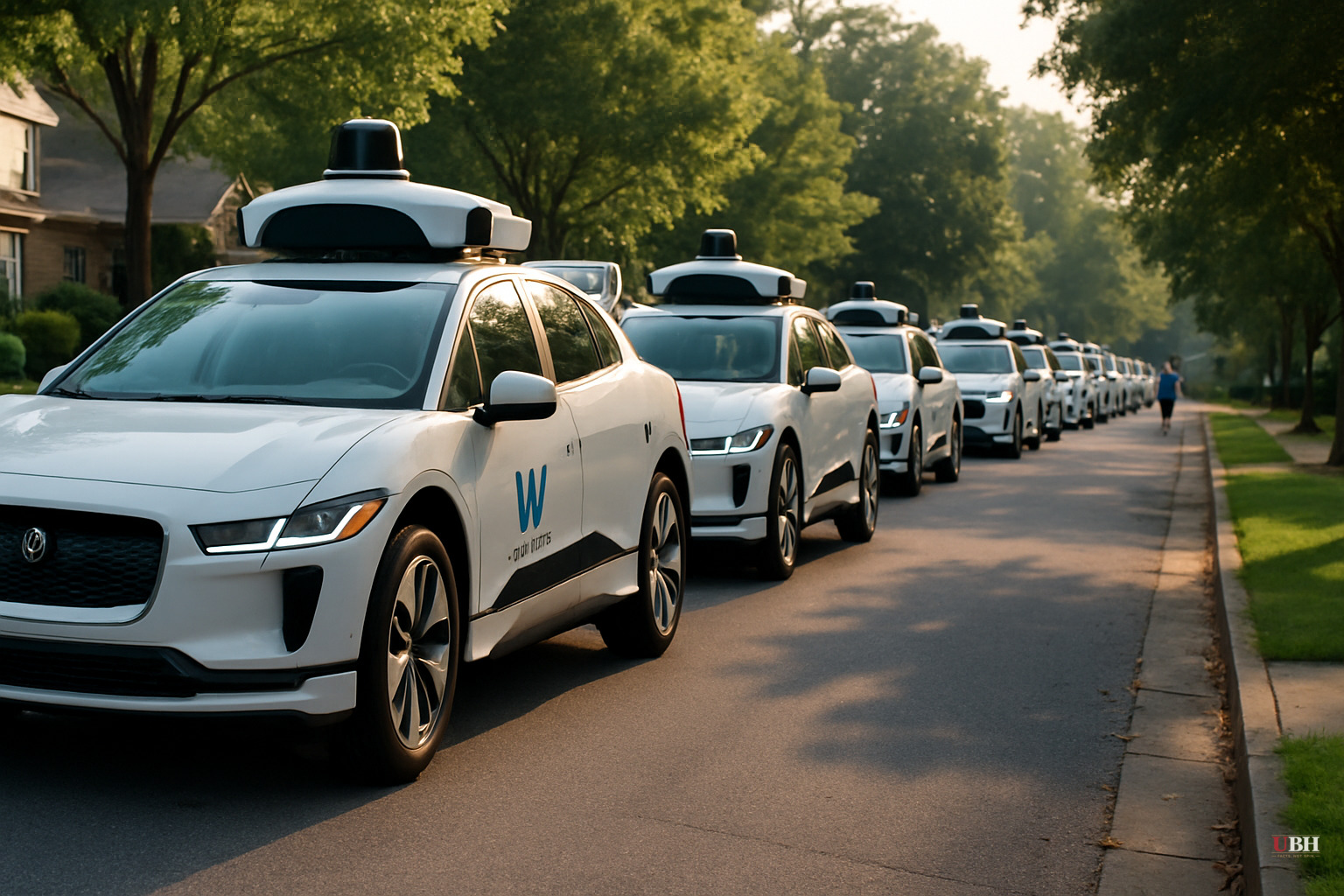
The New Problem: Ghost Cars, Not a Crash
For roughly two months, residents of Battleview Drive in Atlanta's Buckhead neighborhood have watched waves of empty, fully autonomous Waymo robotaxis cruise into their dead-end street, spin around at the cul-de-sac, and leave. Then do it again. And again.
According to WSB-TV's Steve Gehlbach, one resident reported 50 Waymo vehicles passing through between 6 and 7 a.m. on a single morning. These cars had zero passengers. They were not picking anyone up. They were not dropping anyone off. They were just there.
Two Months. No Answer.
Residents say the occasional Waymo appearance started about two months ago. The swarms — large convoys circling "almost every little cul-de-sac in our area," according to one neighbor who spoke with WSB-TV — only escalated in the past few weeks.
They contacted Waymo directly. No response. They contacted their Atlanta City Council representative. Nothing. They contacted the Georgia Department of Transportation. Also nothing.
A private tech company's autonomous fleet was treating a residential street like a staging lot. Parents were watching it happen every morning while kids waited for the school bus, and not one government body did a single thing about it.
The Sign That Broke the Algorithm
Fed up, one resident did what any resourceful homeowner would do: they put a Step2Kid sign in the street — the kind parents use to warn drivers that children are playing nearby.
It worked. Sort of. The visual obstruction stopped the Waymos from entering the cul-de-sac. But eight Waymos stacked up trying to figure out how to turn around, according to WSB-TV. The robots couldn't solve it. Eight vehicles, gridlocked by a plastic sign, in a residential neighborhood, at dawn.
What Waymo Actually Said
Once WSB-TV's cameras showed up, Waymo issued a statement — the same boilerplate text fed to every outlet that covered this story.
"At Waymo, we are committed to being good neighbors," the spokesperson said, according to FOX 5 Atlanta. "We take community feedback seriously and have already addressed this routing behavior."
Waymo said it "takes community feedback seriously" — but only after ignoring that feedback for two months until a TV reporter showed up. The company said it "has already addressed this routing behavior" — but wouldn't say what caused it, how many vehicles were affected, or why it took media coverage to trigger a fix.
FOX 5 Atlanta noted specifically that Waymo did not clarify what routing behavior caused the fleet to target Battleview Drive or how many total vehicles were involved.
The Staging Logic — And Why It Doesn't Hold Here
Waymo told FOX 5 Atlanta that its vehicles "stage in certain heavily traveled areas to quickly respond to demand." That's a reasonable explanation for a car parked near a busy intersection.
Battleview Drive is a dead-end residential street in Buckhead. It is NOT a heavily traveled area. It is the opposite of that. So either Waymo's routing algorithm doesn't know the difference between a commercial staging zone and a family neighborhood, or someone set this up and nobody caught it for two months.
Neither option inspires confidence.
What the Mainstream Coverage Is Missing
Most outlets treated this as a quirky tech story — amusing video, company apologizes, move on.
What's missing is the liability and governance gap playing out in real time. A private company deployed autonomous machines onto public residential streets in patterns that residents found dangerous. Those residents had no effective recourse. Not through the company, not through the city, not through the state.
When one Waymo gets swept into a Texas creek, the federal government mandates a recall of nearly 4,000 vehicles. When 50 Waymos invade a neighborhood every morning for two months, nothing happens until a reporter shows up.
Those two responses don't match the same level of regulatory seriousness.
The Safety Concern Is Real
"We're families, we have small animals and pets, got kids getting on the bus in the morning and it just doesn't feel safe to have that traffic," one Battleview Drive resident told WSB-TV.
Waymo's PR response — "our service is proven to significantly reduce traffic injuries" — is a statistic about passenger trips, not about what happens when 50 empty robot cars flood a cul-de-sac before sunrise. Those are two different situations.
What Comes Next
Waymo is operating in Atlanta, San Francisco, Phoenix, and expanding. It runs over 500,000 weekly trips, by its own count. That scale means routing errors don't stay small — they hit entire neighborhoods simultaneously, with no human driver to notice the mistake and pull over.
Residents on Battleview Drive got their problem "fixed" only after it went viral. The next neighborhood dealing with this won't know to call a TV station. And calling their elected representatives apparently does nothing.
Autoregulation hasn't worked here. City and state agencies haven't stepped in. At some point, someone will need to write rules for what autonomous fleets can and cannot do on residential streets — before the next algorithm decides your cul-de-sac is a staging ground.
Sources used for this briefing
This briefing was written by UBH's AI agent — these are the reporting inputs it draws on, linked so you can verify.


