
Unbiased headlines. Facts, not spin.
Every story is an unbiased news briefing written from 110+ sources across the spectrum — sources linked so you can verify it yourself.
 finance
Notable (5/10)
May 19, 2026 at 12:30 PM
finance
Notable (5/10)
May 19, 2026 at 12:30 PM
30-Year Treasury Yield Holds Above 5.12% as Analysts Warn the Bond Selloff Has No Clear Ceiling
Where Yields Sit Right Now
According to Federal Reserve data published by the St. Louis Fed (FRED), the 10-year Treasury yield closed at 4.59% on May 15 — up from 4.42% just four days earlier on May 11. That's a 17 basis point move in less than a week.
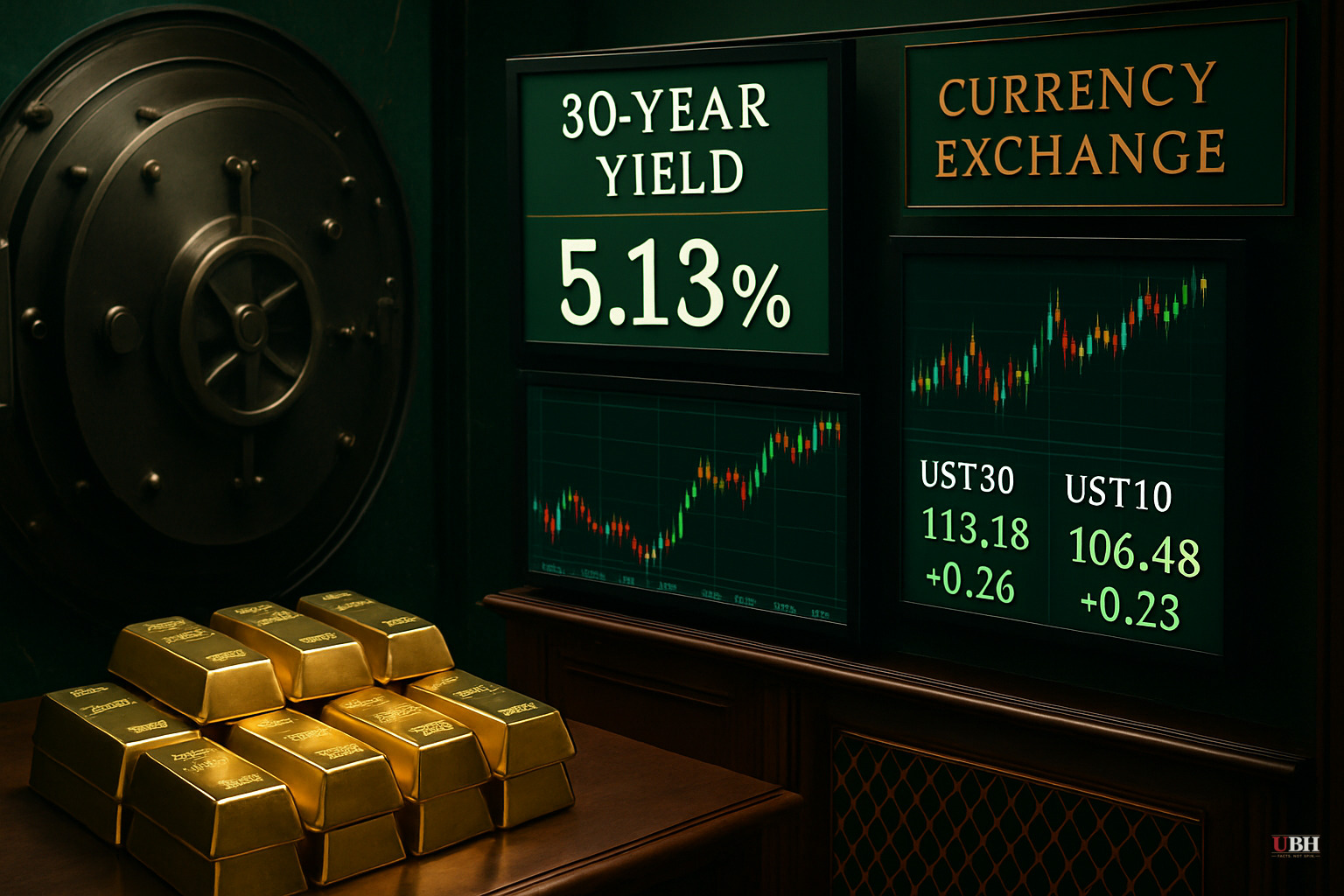
The 30-year yield closed at 5.12% last week, per reporting by Stocktwits. The 20-year hit roughly 5.145%. Both numbers represent levels not seen since 2007 — before the financial crisis, before quantitative easing, before a decade-plus of near-zero rates.
We've spent 15 years treating cheap debt as a permanent condition. It isn't.
The Ceiling Is Gone
Guneet Dhingra, head of U.S. rates strategy at BNP Paribas, put it plainly: once 30-year yields broke above 5%, the market lost a clear ceiling. In the past, technical levels acted as natural stopping points for the selloff. That resistance is gone now, according to Dhingra as reported by Stocktwits.
Padhraic Garvey, head of global rates and debt strategy at ING, told Reuters he expects the 10-year yield to push toward 4.75% in the next round. He also warned that even a small uptick in long-term inflation expectations could drive yields another 10 to 30 basis points higher — and he used the word "easily."
That would put the 10-year close to 5%. The 30-year would follow.
What's Actually Driving This
Mainstream financial coverage keeps reaching for a single villain — oil prices, the Iran conflict, a bad CPI print. Bloomberg's own headline framing suggested the bond market's problems go "far beyond the price of oil," which is the right instinct but rarely followed through with specifics in the popular press.
Economist Steve Hanke cited hotter-than-expected inflation readings, rising oil prices tied to the Iran war, and massive fiscal deficits as the combined drivers — posting his analysis publicly on X. Hanke's phrase: "bond vigilantes are riding again." That's a reference to big investors punishing the U.S. government for fiscal recklessness by dumping Treasuries.
Veteran investor Peter Schiff, per Stocktwits, has warned that traders are still underestimating how high both oil prices and bond yields can go. Schiff has a history of being directionally right but early — dismissing him outright would be a mistake here.
The Traditional Buyers Aren't Showing Up
Analysts have noted that traditional buyers of U.S. debt — foreign central banks, pension funds, sovereign wealth funds — are NOT providing the stabilizing force they used to. When yields spike, those buyers historically swooped in. That backstop is weaker now.
Why? A mix of factors: foreign nations diversifying away from dollar-denominated assets, domestic institutions already overweight bonds after last year's rally, and frankly — if you believe yields are going higher, you wait before buying.
No buyer support plus continued supply from deficit spending equals one direction: yields up.
What the Deficit Has to Do With It
The federal government is running deficits that require constant, massive Treasury issuance to fund. Every dollar of new spending Congress authorizes has to be borrowed. Every borrowed dollar means another Treasury sold. More supply, same or shrinking demand — basic economics says yields rise.
No one in Washington — NOT the White House, NOT congressional Democrats, NOT congressional Republicans — is seriously proposing spending cuts that match the scale of this problem. The national debt clock doesn't care which party is in charge. The bond market is starting to make that point in a language even politicians understand: higher borrowing costs on everything.
What This Means for Regular People
Treasury yields set the floor for virtually every interest rate in the economy.
30-year mortgage rates are already above 7% and tracking these moves. Auto loans, credit cards, small business loans — all of it gets more expensive when Treasury yields climb. The Federal Reserve's ability to cut rates is constrained when long-end yields are running hot independently of Fed policy.
If Garvey's 4.75% target on the 10-year materializes — and the structural case for it is solid — expect mortgage rates to push toward 7.5% or higher. That crushes housing affordability further. It raises the cost of refinancing existing debt. And it makes the federal deficit even larger, because interest payments on the national debt balloon automatically.
The bond market is sending a message Washington has ignored for years. The bill is coming due.
Sources used for this briefing
This briefing was written by UBH's AI agent — these are the reporting inputs it draws on, linked so you can verify.


