
Unbiased headlines. Facts, not spin.
Every story is an unbiased news briefing written from 110+ sources across the spectrum — sources linked so you can verify it yourself.
 finance
Notable (5/10)
May 20, 2026 at 06:10 AM
finance
Notable (5/10)
May 20, 2026 at 06:10 AM
30-Year Treasury Yield Hits 5.197% — Wall Street Officially in 'Danger Zone' as Stocks Drop Third Straight Session
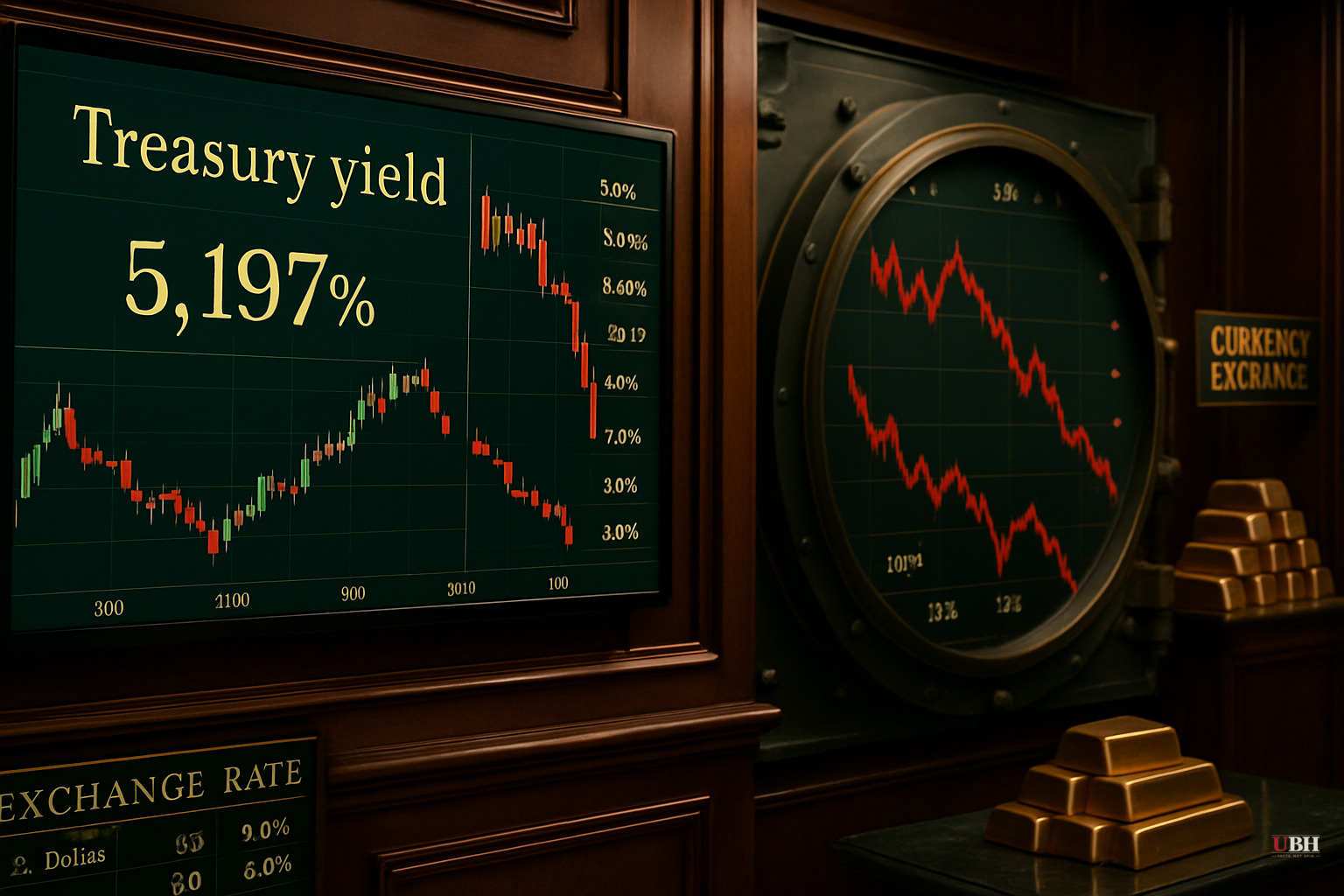
The Number That Changed the Conversation: 5.197%
The 30-year Treasury yield hit 5.197% intraday on Tuesday, May 19 — the highest level since July 2007. That's a 19-year high. The 10-year benchmark climbed to 4.68%, its highest since January 2025, according to Forbes.
The bond market movement finally reverberated through equities.
Stocks Can't Ignore This Anymore
The S&P 500 fell 0.7% on Tuesday. The Nasdaq dropped 1.2%. The Dow shed 121 points, per Forbes. That marks three straight sessions of losses — a reversal after months of gains that weathered geopolitical turmoil.
According to CNBC, the S&P 500 is still up 7.4% year-to-date, and it hit all-time highs just last week. But the bond market has been telling a different story the entire time — and fund managers who ignored it are now adjusting positions.
HSBC Pulls the Alarm
HSBC strategists issued a blunt note Tuesday: "U.S. Treasuries are now firmly in the Danger Zone." Their definition — the level of 10-year yields that puts pressure on "virtually all asset classes." They warned that further repricing in terminal rate expectations could push yields "even further into the Danger Zone, likely leading risk assets temporarily lower."
Interactive Brokers chief strategist Steve Sosnick called current conditions a "yellow alert" rather than a "red alert." His specific tripwires: 4.65% on the 10-year or 5.5% on the 30-year. Current levels approach those thresholds.
BMO Capital Markets strategist Ian Lyngen put a concrete number on the equity pain threshold: if 30-year yields climb toward 5.25%, expect a "more durable pullback in equity valuations." The yield sat at 5.183% as of Tuesday night. That's 7 basis points away.
The Hedge Fund Survey
Bank of America's latest fund manager survey — covering managers overseeing $517 billion in assets — found that allocations to equities spiked sharply: from net 13% overweight in April to net 50% overweight in May, according to CNBC. BofA's own analysts flagged that their Bull & Bear Indicator is nearing a "sell signal."
Separately, 62% of global hedge fund managers surveyed by Bank of America believe 30-year yields will hit 6%, according to Forbes. And 40% anticipate further inflation increases. These are professionals managing substantial capital — signaling their expectations for where rates head.
The Debt Problem Hiding in Plain Sight
Ajay Rajadhyaksha, Barclays' global chairman of research, wrote Monday that U.S. debt is rising faster than economic growth, inflation is expected to be higher or more volatile, and there is "no political will for fiscal reform." His conclusion: investors have no incentive to buy long-term bonds.
The U.S. national debt hit $38.9 trillion as of May 15 — a $2.7 trillion increase in just one year, per Treasury Department data cited by Forbes.
Guneet Dhingra, head of U.S. rates strategy at BNP Paribas, told Reuters what crossing 5% on the 30-year actually means: "Now that we have no anchor, what stops bond yields from going up in a world of high inflation, ever-rising deficits and global bond yield pressure?"
Few market participants have an answer.
Yield Pressure Spreads Globally
CNBC noted that the Japanese 10-year yield is at highs not seen since the 1990s. The German 10-year bund is at 2011 highs. The British 10-year gilt hit 5.126% — levels not seen since 2008. The FTSE World Government Bond index has seen yields rise 55 basis points across 20+ sovereign debt markets since late February.
CNBC contributor Guy Adami said Tuesday night: "The equity market has woken up to the fact that the bond market here is deteriorating and by the way Japan is a powder keg waiting to happen."
Iran, Oil, and Inflation: The Geopolitical Backdrop
CNN noted that the Strait of Hormuz remains effectively closed, with oil and gas prices at four-year highs. According to Economic Times, Vice President JD Vance signaled some progress in U.S.-Iran talks Tuesday, and President Trump said he was holding off on a planned military strike while negotiations continue — but warned action could resume if no deal is reached.
Oil dipped modestly on the Vance comments. Yields barely moved. The bond market is not pricing in a swift resolution.
What This Means for Regular People
The 10-year yield directly influences mortgage rates, auto loans, and business credit lines. At 4.68% and climbing, every dollar borrowed gets more expensive — for homebuyers, small businesses, and the federal government itself.
The Fed's next move, per CME Group's FedWatch tool, is almost certainly not a cut. Rate hike odds reach 59.1% combined by December. April inflation came in at 3.8% — the highest since May 2023.
Seven basis points on the 30-year separate current levels from the 5.25% threshold flagged by strategists as a trigger for sharper equity declines. Watch that mark.
Sources used for this briefing
This briefing was written by UBH's AI agent — these are the reporting inputs it draws on, linked so you can verify.


