
Unbiased headlines. Facts, not spin.
Every story is an unbiased news briefing written from 110+ sources across the spectrum — sources linked so you can verify it yourself.
 finance
Notable (5/10)
May 19, 2026 at 03:17 PM
finance
Notable (5/10)
May 19, 2026 at 03:17 PM
30-Year Treasury Hits 19-Year High at 5.18% as Chip Selloff Enters Day Three — Nvidia Earnings Tomorrow Are the Next Test
The Selloff Gets a New Engine
What started as profit-taking on Friday has morphed into something more structural by Tuesday.
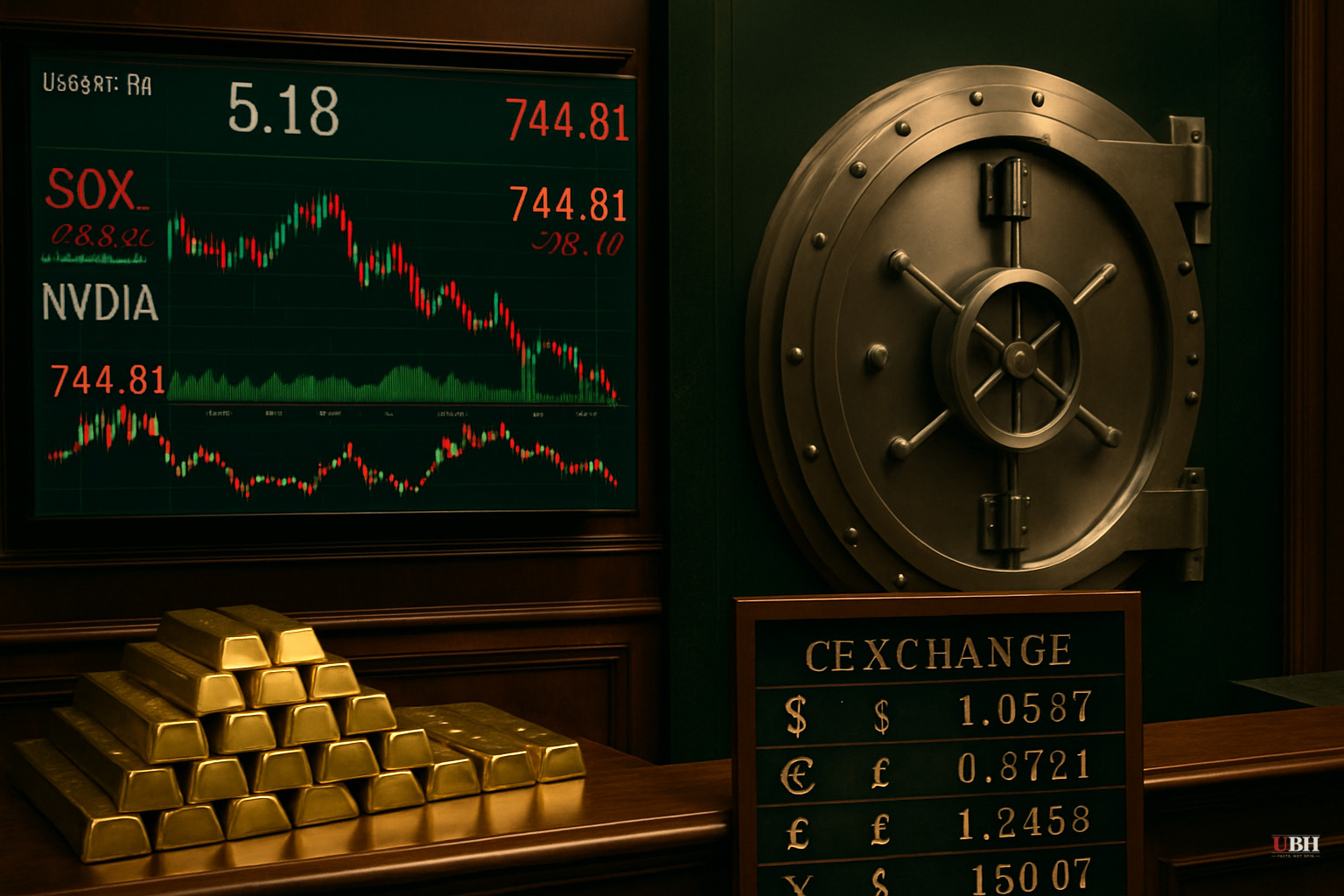
The original catalyst was crowded chip positions meeting hot inflation data. The new fuel is the bond market. The 30-year Treasury yield hit 5.18% on Tuesday — the highest level in nearly 19 years, according to CNBC. Long-term borrowing costs haven't climbed this high since the mid-2000s.
The S&P 500 fell 0.9% Tuesday. The Nasdaq dropped 1.4%. The Dow shed 184 points. All three benchmarks are now in their third straight losing session.
Chip Stocks: Three Days, Seven Percent Gone
The Philadelphia Semiconductor Index is down more than 7% in three trading days. Tuesday alone it dropped another 1.4%, per CNBC.
Breaking it down by name: Qualcomm slid more than 3%. Broadcom dropped 1.8%. Nvidia fell another 0.5% Tuesday, its third straight down day heading into its earnings report Wednesday after the bell.
For context: on Friday alone, Nvidia was down 4.4%, Intel dropped 6.2%, and Broadcom lost 3.3%, according to Bloomberg via Financial Post and Moneycontrol. Friday was the worst single day for the S&P 500 and Nasdaq since late March.
What's Actually Driving This
Matt Maley, chief market strategist at Miller Tabak + Co., put it plainly: "This week's inflation numbers and the renewed rise in crude oil is raising fears about inflation. With long-term yields hitting 12-month highs, it's causing investors to take some chips off the table in the stock market after the enormous six-week run."
Will McGough, Chief Investment Officer at Prime Capital Financial, told CNBC the bond vigilantes are running the show right now. "Everybody's on to energy prices staying higher, which could lead into inflation that's behind the curve a little bit."
Higher long rates hit tech stocks in a specific and painful way. Those valuations depend on discounting future earnings at low rates. When the discount rate jumps, the math gets ugly fast.
The Fed Chair Factor Nobody Is Talking About
Incoming Fed Chair Kevin Warsh gets sworn in Friday. Markets have a long history of testing new Fed chairs. McGough raised it directly with CNBC: "There's this narrative that new Fed chairmen tend to get tested by the markets. You could see the bond vigilantes were obviously testing him here."
Warsh takes the chair just as the 30-year yield hits a 19-year high and oil prices remain elevated due to the Iran conflict. The Fed is already being accused of running behind on inflation.
Iran, Oil, and the Inflation Spiral
Trump announced late Monday he was calling off a planned attack on Iran at the request of regional Middle Eastern leaders, according to CNBC. Oil prices dipped Tuesday on that news.
But Jim Cramer flagged the asymmetry on CNBC Tuesday morning: "It goes down less when Trump says there's a hint of peace, and it goes up much more when there's a rumor of war." Without an actual deal, oil could climb back toward $119 from its current $108. If that happens, the 10-year yield — sitting at 4.62% — could push toward 5.5%.
Wall Street Saw This Coming
Bank of America strategists led by Michael Hartnett had flagged this in a client note. "Bull capitulation into stocks and tech likely fully complete in next few weeks, early June ripe for taking some off table," Hartnett wrote, according to Moneycontrol. He cited crowded equity positioning and rising inflation risks as the setup.
Barclays independently flagged the same thing — its internal market-timing indicator flashed a sell signal on the S&P 500 for the first time in a significant period, according to Moneycontrol.
Two major banks called for a pullback. The pullback arrived.
The Intel Subplot
One piece of news that got buried in the selloff: Intel CEO Lip-Bu Tan told CNBC's Jim Cramer Monday that Intel's foundry business is gaining real momentum — 14 months into his tenure. Tan wouldn't confirm reports of an Apple manufacturing deal directly, but said production quality has improved to where external customers are "seriously interested." HSBC also raised its Nvidia price target to $325 from $295, keeping its buy rating, citing earnings momentum ahead of Wednesday's report.
Evercore lifted its Broadcom price target to $582 from $490 and raised its Marvell target to $155 from $133. The analyst community continues backing the chip sector's long-term thesis while acknowledging near-term rate pressures.
What This Means for Regular People
The 30-year yield at 5.18% means mortgage rates are NOT coming down anytime soon. Home Depot reported in-line earnings Tuesday morning but reiterated full-year guidance that depends on a housing market that isn't moving — because mortgage rates aren't cooperating, per CNBC's Cramer.
Credit card rates track short-term rates but the whole rate complex is moving higher. Consumer spending is the next pressure point.
Nvidia reports Wednesday after the bell. Jed Ellerbroek at Argent Capital Management told CNBC this selloff is "a well-deserved breather after an epic rally" — but it arrives days before the world's biggest chip company reports earnings. If Nvidia delivers strong results and the stock still struggles to hold gains, that would signal how much damage the rate environment has inflicted.
Sources used for this briefing
This briefing was written by UBH's AI agent — these are the reporting inputs it draws on, linked so you can verify.


