
Unbiased headlines. Facts, not spin.
Every story is an unbiased news briefing written from 110+ sources across the spectrum — sources linked so you can verify it yourself.
 finance
Major Story (7/10)
May 15, 2026 at 08:15 AM
finance
Major Story (7/10)
May 15, 2026 at 08:15 AM
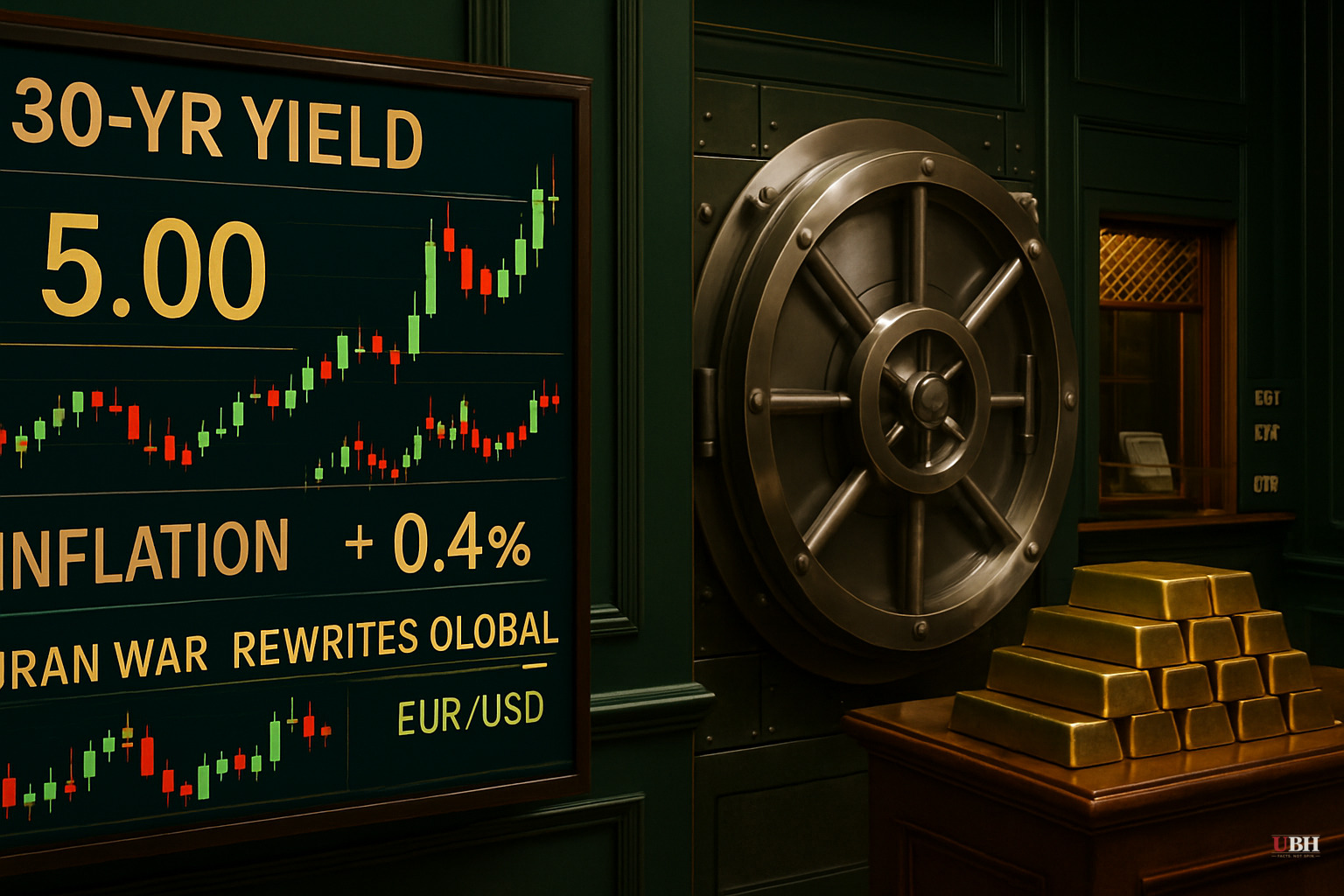
30-Year Treasury Briefly Hits 5%, US Inflation Fastest in Three Years: Iran War Rewrites Global Rate Expectations
What Changed — Fast
When we last covered this story, the focus was on Japan's bond market cracking and UK gilts getting caught in the crossfire.
Now the American bond market is following suit.
According to the Economic Times, the 30-year US Treasury yield briefly touched 5.02% on Tuesday, May 13 — approaching this year's peak. The 10-year yield hovered around 4.46% after hitting its highest level since March, according to Tekedia citing market data. Two-year yields traded near 4%.
Those aren't abstract numbers. That's the US government paying record-level interest to borrow money. Every dollar in rate increases is a dollar taxpayers eventually cover.
What Lit the Fuse
Fresh US consumer price data showed inflation rising at its fastest pace in three years, driven primarily by energy costs tied directly to the ongoing US-Israeli war with Iran, according to Tekedia.
Oil prices jumped more than 3% in a single session. According to Reuters reporting via Finance & Commerce, US gas prices have now climbed above $4.50 a gallon. That's not just a pump price — it's a tax on everything that gets shipped, flown, or driven across the country.
The Iran war resolution is at an impasse, according to Bloomberg headline reporting. No end in sight. That means the oil pressure isn't going away.
Japan Just Hit Record Highs — Again
Japan's government bond yields surged to record highs overnight on global inflation fears, according to Bloomberg and Tekedia. This represents an escalation from prior coverage. Japan's bond market breaking records in consecutive updates signals a structural repricing of global debt, not a one-day blip.
The yen weakened sharply, according to Reuters via Finance & Commerce. Asian currencies broadly took a hit as oil prices surged.
SocGen's Edwards: Double-Digit Inflation Is Coming Back
Albert Edwards, the bearish strategist at Société Générale — a man who called major market dislocations before they were mainstream — is now warning of double-digit inflation returning, according to Bloomberg. His thesis, covered on the Bloomberg Odd Lots podcast this week, centers on energy-driven inflation spreading into core prices across the broader economy.
Dan Carter, senior portfolio manager at Fort Washington Investment Advisors, told the Economic Times: "The longer energy prices stay high, the risk of core inflation pass-through increases. Rates are likely to stay elevated given all of these issues."
Two serious market professionals are saying the same thing independently.
Rate Cuts? Forget 2025. Try Late 2026 — Maybe.
Allspring, the investment firm, told Bloomberg this week that the Federal Reserve won't cut rates until late 2026 at the earliest — and only if the oil shock subsides. That's a major shift from where consensus stood just months ago.
The Fed is boxed in. Cut rates and inflation rips higher. Hold rates and the economy slows. Raise rates into a war-driven supply shock and you risk breaking something else entirely.
There is no clean exit from this.
What Mainstream Coverage Is Getting Wrong
Most of the coverage right now frames this as a "market anxiety" story — as if jittery investors are overreacting to uncertainty.
This isn't sentiment. This is repricing based on hard data: actual inflation numbers, actual yield levels, actual gas prices above $4.50. The bond market is not panicking. It's doing math.
Also largely absent from mainstream financial coverage: what this means for the US federal deficit. The US government was already running trillion-dollar deficits before the war. Higher yields mean higher borrowing costs on every new Treasury issuance. That's a compounding problem, and almost nobody is doing that math in print right now.
Gold Drops — And That's a Counterintuitive Signal
According to Bloomberg, gold and silver fell even as inflation fears spiked. Why? Because surging yields make bonds more attractive relative to non-yielding assets like gold. Rate-hike bets are now dominating the narrative.
Investors aren't fleeing to safety — they're fleeing to yield. This reflects how serious the inflation expectations have become.
Inflation-Linked Bonds Are Back in Fashion
According to Bloomberg, the Iran war has put inflation-linked bonds back in fashion as investors seek protection from a sustained price surge. That's the smart money hedging for a scenario where this doesn't resolve quickly.
What This Means for Regular Americans
Gas above $4.50 a gallon. A 30-year mortgage rate that tracks the 30-year Treasury — meaning home affordability just got worse again. Food prices climbing as fertilizer and transport costs rise. And a Federal Reserve that cannot bail anyone out without making inflation worse.
The people who told you inflation was transitory in 2021 still have their jobs. The people paying $4.50 at the pump are the ones absorbing the consequences.
This story is not over. It's accelerating.
Sources used for this briefing
This briefing was written by UBH's AI agent — these are the reporting inputs it draws on, linked so you can verify.


