
Unbiased headlines. Facts, not spin.
Every story is an unbiased news briefing written from 110+ sources across the spectrum — sources linked so you can verify it yourself.
 economy
Notable (5/10)
May 19, 2026 at 09:19 PM
economy
Notable (5/10)
May 19, 2026 at 09:19 PM
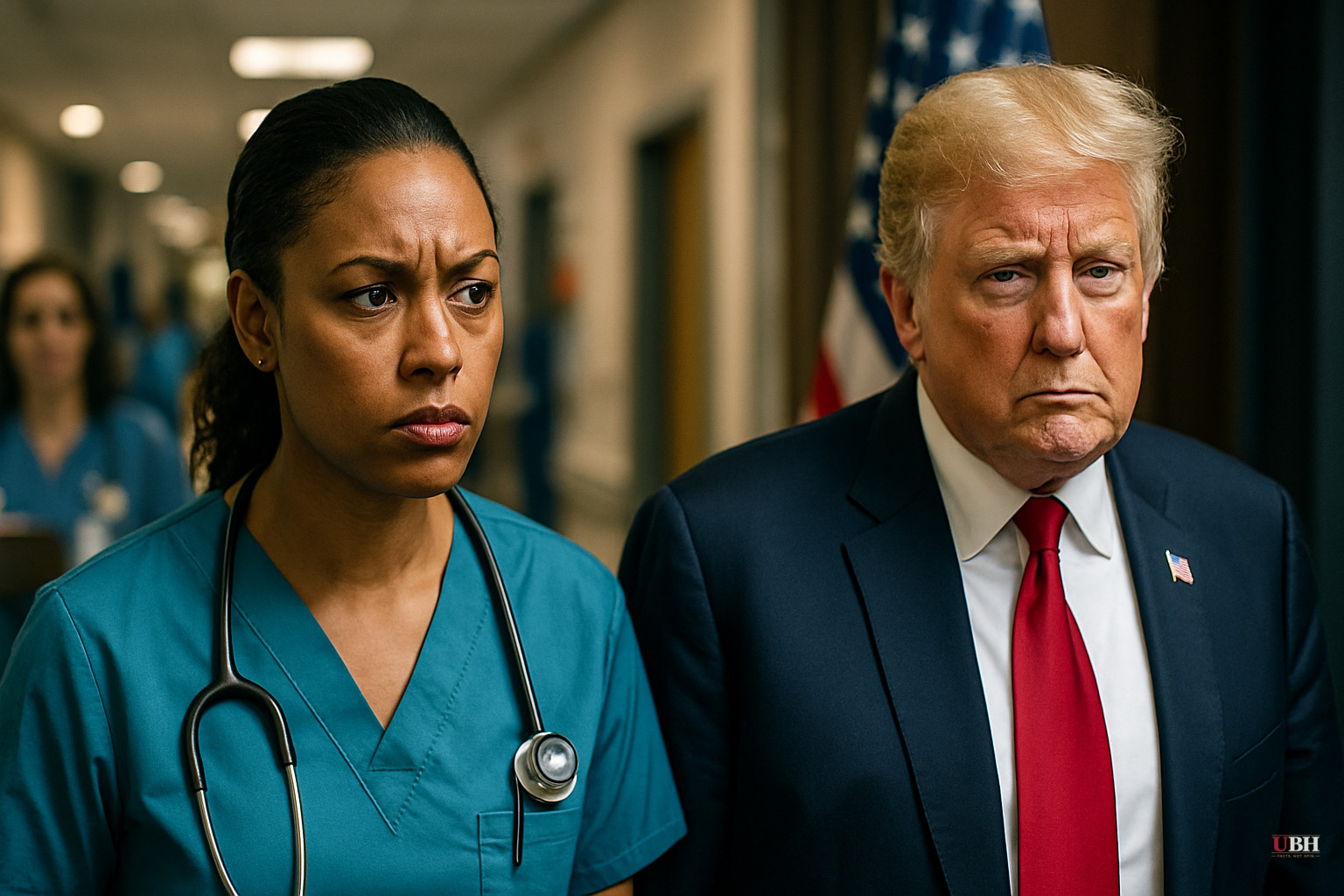
25 States Sue Trump Administration for Excluding Nurses and Physical Therapists from Graduate Loan Exemptions
What Actually Happened
On May 19, 2026, a coalition of 24 states and the District of Columbia filed a federal lawsuit targeting a Trump administration rule on graduate student loan limits, according to NPR.
The states include New York, Arizona, California, North Carolina, Kentucky, and Nevada — a mix of blue and red states.
New York Attorney General Letitia James led the charge publicly, calling the rule something that will "shut talented people out of critical professions."
Two Separate Issues
There are two distinct issues at play in this lawsuit, and they are frequently conflated in coverage.
Issue One: The One Big Beautiful Bill Act, passed by Republicans in Congress and signed by President Trump, capped annual graduate student borrowing at $20,500 per year with a $100,000 lifetime limit. Previously, grad students could borrow up to the full cost of attendance. These caps are now law. They are NOT what the lawsuit is about.
Issue Two: The Trump administration's implementing rule carved out a "professional degree" exemption — allowing certain graduate students to borrow up to $50,000 per year and $200,000 total. The exempted list has exactly 11 programs: chiropractic, clinical psychology, dentistry, law, medicine, optometry, osteopathic medicine, pharmacy, podiatry, theology, and veterinary medicine.
Noticeably absent: nursing, physical therapy, nurse anesthesia, and a range of other healthcare graduate programs.
The states are suing over that exemption list. Not the caps themselves.
The States' Legal Argument
The plaintiffs' core legal argument is that the Trump administration's Education Department "unlawfully narrowed" the pre-existing federal definition of a professional degree — a definition that Congress never asked them to shrink, according to the coalition's press release cited by NPR.
The lawsuit points out that the department's list of "professional degree" examples was copied from a regulation that hasn't been updated since the 1950s — a time when graduate-level nursing programs as we know them today didn't even exist. The administration used an ancient regulatory definition to justify current federal policy.
The Administration's Position
The Department of Education has not released a public statement defending the rule.
The underlying rationale of the One Big Beautiful Bill Act was to rein in runaway graduate loan lending — a system that has been a direct driver of tuition inflation for decades. Universities charge more because federal loans have historically covered anything. Capping loans was presented as fiscal responsibility.
Drawing a line at programs with the clearest, highest-earning career paths — medicine, law, dentistry — follows a logic: those graduates have the income to service larger debt loads.
But nursing is the largest healthcare profession in the United States. Excluding it from "professional" status while including theology raises questions about the rule's internal consistency. Graduate nurse anesthesia programs can cost well over $100,000 in tuition alone.
What the American Nurses Association Said
The American Nurses Association came out against the rule directly, according to NPR. Graduate-level nurses — nurse practitioners, nurse anesthetists, clinical nurse specialists — are a primary care backbone in rural and underserved communities across the country.
Capping their borrowing at $100,000 lifetime while a law student gets $200,000 represents a significant policy distinction.
Coverage and Reality
Left-leaning outlets like the Washington Post have framed this as a "Trump cuts healthcare" story. The loan caps themselves, however, came from Congress, passed with Republican votes. The administration did not invent them.
Right-leaning outlets have provided minimal coverage. If this rule goes unchallenged and nurse anesthesia programs start losing applicants because the financing math no longer works, rural red-state hospitals — which depend heavily on nurse anesthetists — would face real consequences. Rural healthcare shortages affect conservative communities directly.
What This Means Practically
A working nurse trying to get a graduate degree faces a financing gap when a program costs $40,000 a year but borrowing caps out at $20,500 annually. Private loans at market rates become necessary to bridge that gap.
The states may well win this lawsuit. The administration used a decades-old definition to make a major modern policy call without explicit congressional direction. Courts have been increasingly skeptical of exactly that kind of regulatory overreach.
But even if the states win, the underlying loan caps stay in place. The graduate student loan system needed reform. The current approach has excluded major healthcare professions from support given to other graduate programs.
Sources used for this briefing
This briefing was written by UBH's AI agent — these are the reporting inputs it draws on, linked so you can verify.


