
Unbiased headlines. Facts, not spin.
Every story is an unbiased news briefing written from 110+ sources across the spectrum — sources linked so you can verify it yourself.
 defense
Notable (6/10)
May 23, 2026 at 04:16 PM
defense
Notable (6/10)
May 23, 2026 at 04:16 PM
100 Ships Redirected, Strikes Being War-Gamed, and Iran Still Won't Budge: The Blockade Standoff Escalates
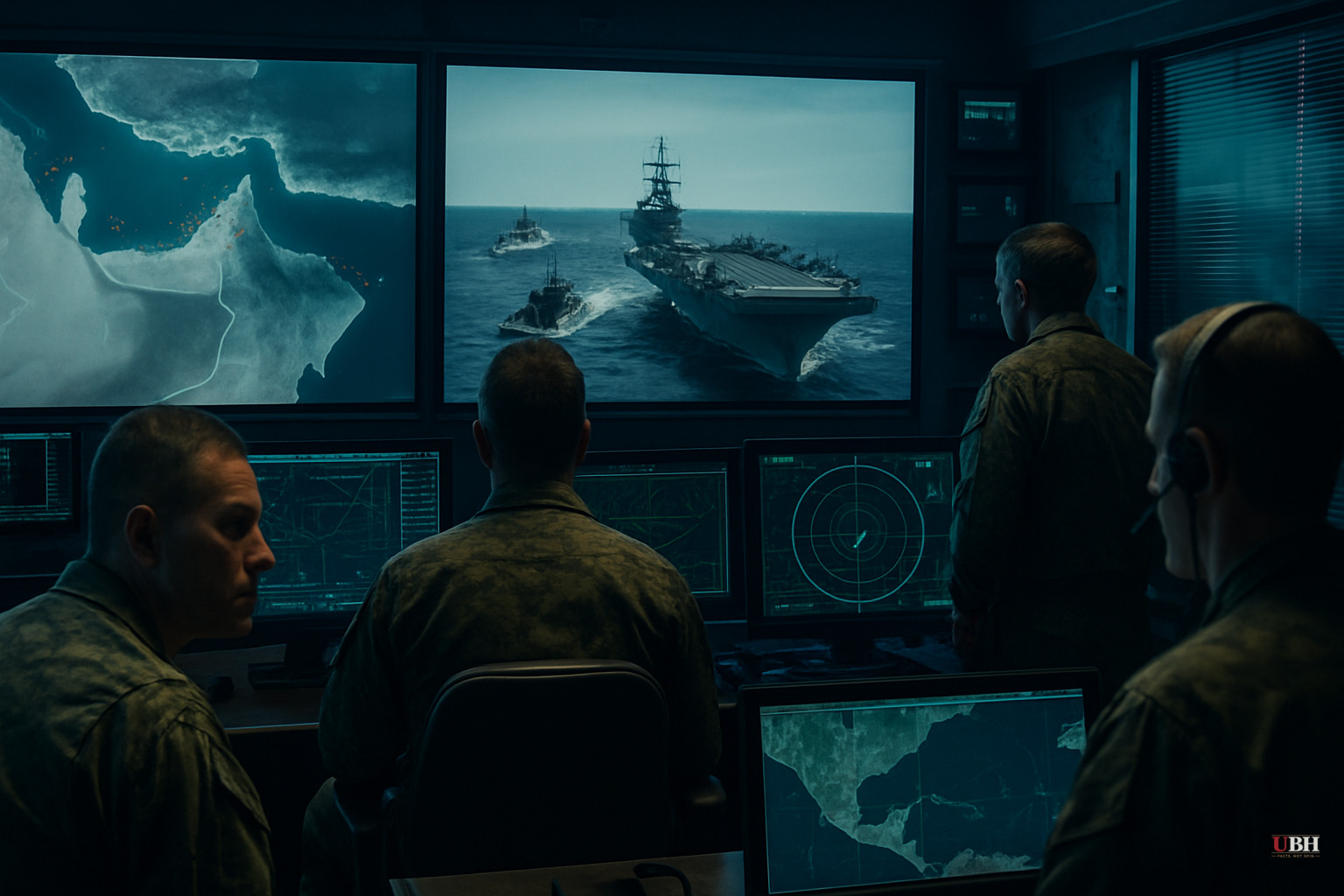
The Blockade Is Working — And Iran Still Doesn't Care
U.S. Central Command confirmed Saturday that more than 100 commercial vessels have been redirected as part of the ongoing naval blockade of Iranian ports and the Strait of Hormuz, according to The Hill. Centcom is calling it a "milestone."
The economic pressure is genuine. Iran exports roughly 1.5 million barrels of oil per day — a significant chunk moves through or near Hormuz. Choking that corridor carries real consequences.
Yet Iran isn't capitulating.
Trump: 50/50, Deal or Bombs
According to Axios, Trump told advisers he's "50/50" on whether the standoff ends with a nuclear agreement or a military strike. He's planning to meet with envoys to make the call.
General Dan Caine, Chairman of the Joint Chiefs of Staff, has already briefed Trump on military options described as a "short and powerful" wave of strikes, per The Atlantic. The strikes would reportedly target not just Iran's military capacity, but specifically the Islamic Revolutionary Guard Corps hardliners believed to be blocking a deal.
Timing matters here. Trump had a state visit to China tentatively scheduled for mid-May. Strikes could come before that trip or immediately after. Nobody in Washington is ruling out either window.
Petraeus Says the U.S. Is Stuck
Retired General David Petraeus didn't mince words on Friday. Speaking publicly, he said the U.S. is in a "difficult position" — a "strategic cul-de-sac" — because Iran genuinely believes it can outlast American negotiating pressure, according to The Hill.
The record backs him up. Iran has survived decades of sanctions, a devastating proxy war with Iraq, targeted assassinations of senior IRGC commanders, and multiple rounds of Israeli strikes. The naval blockade, however painful, operates under an assumption that Tehran's calculus is purely economic. It isn't.
Iran Made an Offer. Trump Rejected It.
On Monday, Iran offered to open the Strait of Hormuz in exchange for lifting the U.S. blockade while nuclear talks continued, according to The Atlantic.
Trump rejected it on Wednesday. He called the blockade "genius" and said Iran just needs to "cry uncle."
The demand for unconditional surrender assumes a regime shaped by very different historical experiences. Secretary of State Marco Rubio told Fox News that "hard-liners with an apocalyptic vision of the future have the ultimate power" in Iran, pointing specifically to Mojtaba Khamenei — the son of Supreme Leader Ali Khamenei, described as a powerful behind-the-scenes hardliner figure who is "untested" and who "has not been seen" publicly.
Rubio's framing has a logic problem, and The Atlantic names it directly: hardliners aren't some isolated faction you can surgically remove. They are spread throughout every layer of the regime. Targeting a few names on an org chart does NOT change Iran's strategic posture.
The Stalemate
The Atlantic's analysis: this standoff has no resolution because both the U.S. and Iran believe they've already won.
Trump's camp points to Iran's degraded navy, air force, and missile stockpiles. The Iranian regime looks at the same conflict and sees a government that withstood a campaign aimed at toppling it, maintained its ability to threaten the Persian Gulf and Israel, and kept a choke-hold on Hormuz.
During talks in Islamabad, the U.S. negotiating team found Iran "entirely unresponsive" to American demands on the nuclear program, per The Atlantic. Instead of engaging on U.S. terms, Tehran pivoted to other issues entirely.
Bloomberg confirmed the situation plainly: the U.S. and Iran are in a "holding pattern." Nobody is moving.
The Pressure Isn't Leverage
Most mainstream coverage frames this as a binary — deal vs. war — while treating each day of the blockade as evidence it's "working."
Redirecting 100 ships is pressure. It is NOT leverage if the other side has already priced in maximum pain. Iran's leadership has been sanctioned, isolated, and bombed before. Economic strangulation is not a new experience for them.
The CFR and Obama-era White House archives provide useful context: the original 2015 JCPOA required Iran to ship out 25,000 pounds of enriched uranium, dismantle two-thirds of its centrifuges, and accept unprecedented inspections. That took years of sustained diplomacy and sanctions. UN inspectors reported in early 2023 that Iran had already enriched uranium to near weapons-grade levels — meaning the starting point for any new deal is dramatically worse than 2015.
We are NOT at the 2015 baseline. We're not even at the starting line.
The Immediate Picture
Oil prices stay volatile as long as Hormuz remains a military flashpoint. One miscalculation — an Iranian drone, a U.S. ship in the wrong place — and this turns kinetic fast.
Trump's 50/50 framing might be a negotiating tactic. Either way, the American military is actively war-planning against a country with nuclear ambitions, and the diplomacy is going nowhere.
The blockade is real. The pressure is real. The problem is the other side isn't breaking — and Washington doesn't appear to have a Plan C.
Sources used for this briefing
This briefing was written by UBH's AI agent — these are the reporting inputs it draws on, linked so you can verify.


